Family History Exhibit
Sawle, Fox & Co.
Tin, capital and kinship in industrial Cornwall
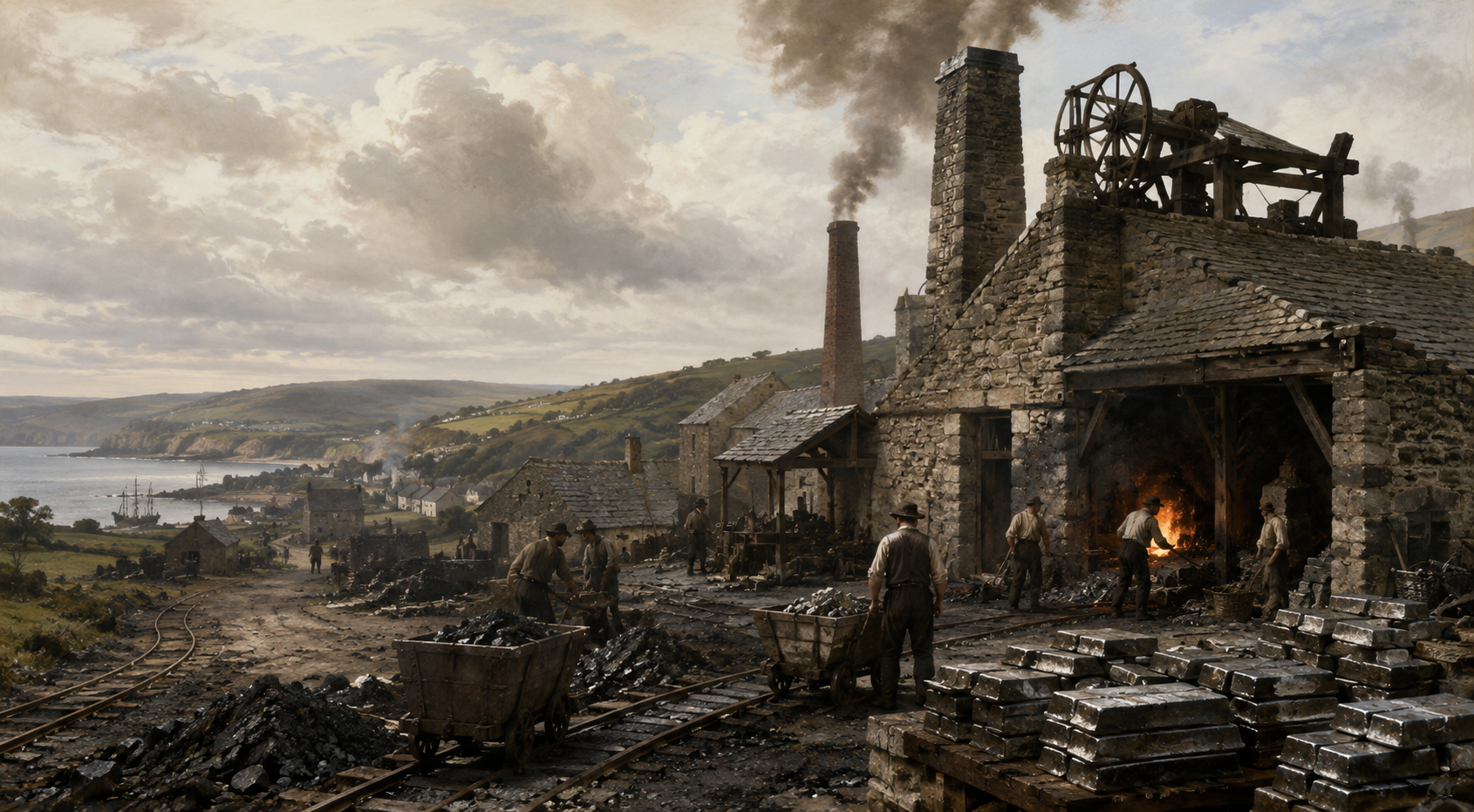
In 1781, a lease records a smelting house being built at Blowing House Hill in St Austell. Fourteen years later, eleven people entered into a formal co-partnership for buying black tin, converting it into white tin and selling the finished metal.
- Documented smelting-house origins
- Formal co-partnership
- End of the agreement’s stated term
- St Austell, Cornwall
- 11 Signatories
- £52,347 Recorded Capital
Principal records: Kresen Kernow, CF/1/301, 17 July 1781;
RD/1149, Articles of Co-Partnership, 5 May 1795.
The story behind the partnership
Sawle, Fox & Co. was more than a tin-smelting enterprise. Its partners were connected through marriage, kinship, law, land, estate administration and shared investment. This exhibit explores both the industrial company and the network of people who stood behind it.
Industrial Context
Why Tin Mattered
Tin did not leave the mine as a finished metal. Sawle, Fox & Co. entered the trade at its commercial and industrial hinge: the point where black tin became white tin.
Industrial Process
From the mine to the market
Scroll to follow the process →
-
01
Mine
Workers extracted tin-bearing rock from underground workings or surface deposits.
-
02
Dressing
Stamping, crushing and washing concentrated the ore and removed much of the waste.
-
03
Black tin
Smelters weighed, sampled and assayed the mineral concentrate before purchase.
-
04
Smelting
Furnace heat separated molten tin from slag and other impurities.
-
05
White tin
Smelters refined and cast the finished metal into blocks or ingots.
-
06
Merchant
Merchants financed purchases, arranged transport and connected producers with buyers.
-
07
Market
Manufacturers used the metal for coatings, alloys, solder and finished goods.
From the mine to black tin
Miners raised tin-bearing rock and sent it through a series of dressing processes. Stamping broke the rock into smaller pieces, while washing and separation concentrated the heavier tin ore and removed much of the surrounding material.
The resulting concentrate was known as black tin. Its value depended on its quality and expected metal content, so smelting firms relied on weighing, sampling and assay when deciding what to pay.
From black tin to white tin
Smelters mixed black tin with fuel and other materials before charging it into the furnace. Under intense heat, molten tin separated from the remaining slag and impurities.
Further refining and casting produced blocks or ingots that could be inspected, transported and sold. This finished metallic product was known as white tin.
Where the partnership entered the process
Sawle, Fox & Co. purchased black tin, managed its conversion and sold the resulting white tin. The partnership connected Cornwall’s mines with the merchants and manufacturers who consumed Cornish metal.
Key term
Black tin
Crushed, washed and concentrated tin ore that had not yet been converted into metal.
Key term
White tin
Metallic tin produced by smelting and refining black tin.
Industrial Origins
Before the Partnership: 1781
Fourteen years before the surviving co-partnership agreement, a lease records a smelting house being built at Blowing House Hill in St Austell.
Archival Record
Lease of land
Plot of ground at Blowing House Hill, St Austell
- Place
- Blowing House Hill, St Austell
- Term
- Fifty years
- Landowner
- John Sawle
- Representatives
- Henry Lakes and Charles Rashleigh
- Activity
- Smelting house under construction
- Reference
- Kresen Kernow, CF/1/301
Land and Water
A site for the Old Blowing House
John Sawle leased a parcel of ground formerly used as a garden for an industrial site associated with the Old Blowing House. Henry Lakes and Charles Rashleigh acted on behalf of the wider group of partners.
The provision joined access to land with access to the water required by the smelting works. It places the partnership within a working industrial landscape rather than describing only a financial arrangement.
"so as no wilful waste be made of the said water nor injury done to any mill of John Sawle that can be avoided"
As described in Kresen Kernow catalogue entry of CF/1/301.
Reading the Evidence
What the record establishes
CF/1/301 establishes that a partnered smelting operation connected with John Sawle, Henry Lakes and Charles Rashleigh existed by 1781. It records the industrial site, associated water rights and a smelting house then under construction.
It also shows that the enterprise involved a wider partnership from the outset. Lakes and Rashleigh acted for partners associated with the Old Blowing House rather than for themselves alone.
The Foundational Artifact
The 1795 Co-Partnership Agreement
On 5 May 1795, eleven people entered into a fourteen-year agreement to continue a joint business in the purchase, smelting and sale of tin.
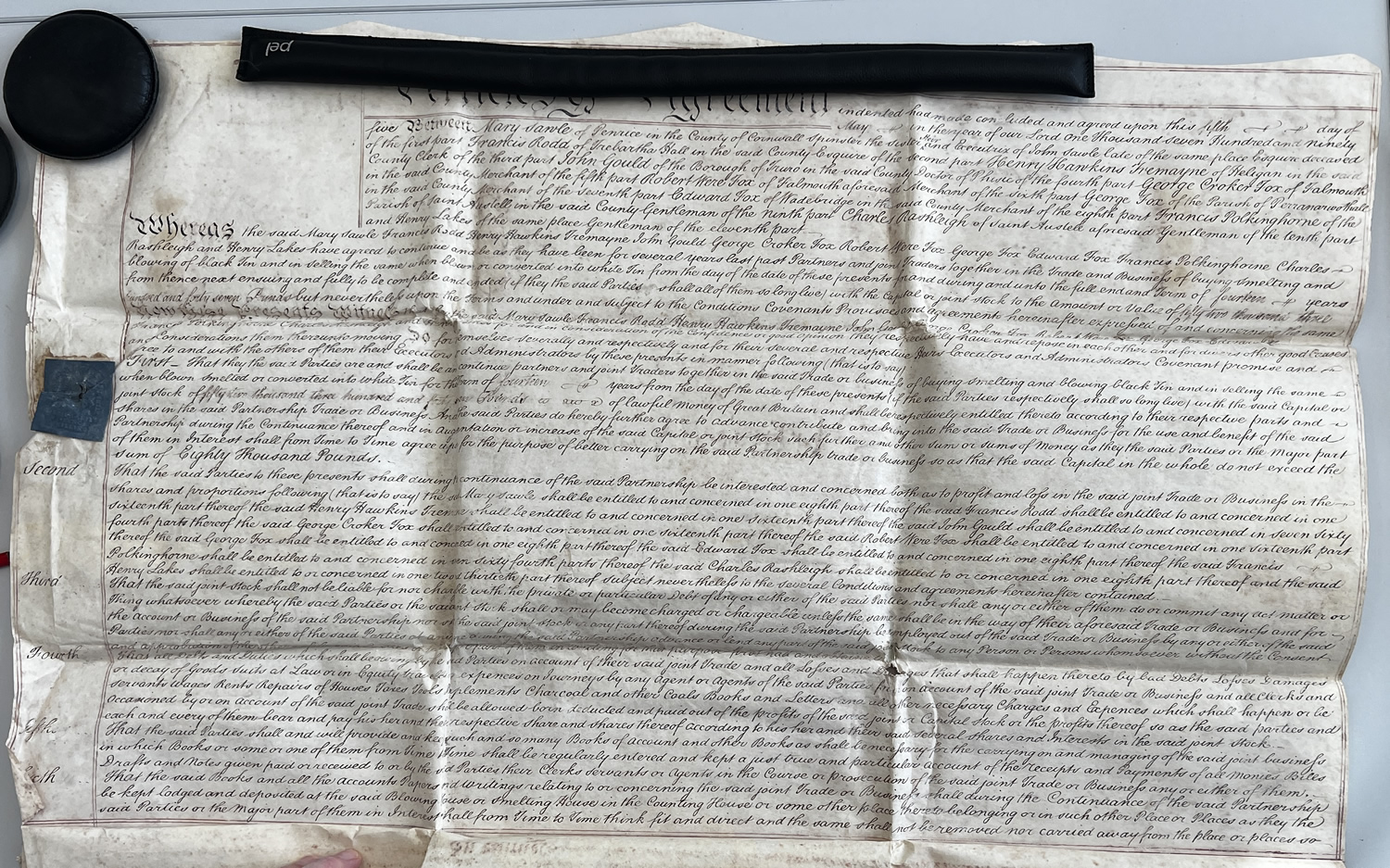
First page of the Articles of Co-Partnership, dated 5 May 1795. Kresen Kernow, RD/1149.
Open full image ↗Archival Identity
A joint-stock company formed through co-partnership
The manuscript identifies the people who entered the company, states the business they intended to conduct and records the capital committed to the undertaking.
Principal Terms
Date
5 May 1795
The date on which the surviving articles were executed.
Duration
Fourteen years
The stated term of the co-partnership agreement.
Joint capital
£52,347
The capital recorded for the joint undertaking.
Purpose
Tin smelting
Buying black tin, producing white tin and selling it.
Reading the Record
What the agreement tells us
The document establishes the company’s purpose, membership, financial scale and legal duration. These facts provide the foundation for interpreting the partnership.
Commercial Purpose
It defines the business
The company purchased black tin, converted it into white tin and sold the finished metal. The agreement places the firm within the smelting and merchant stages of the trade.
Membership
It names the participants
Eleven people formally entered the partnership. Their names, residences and recorded social descriptions provide the starting point for reconstructing the company’s composition.
Financial Structure
It records shared capital
The recorded capital of £52,347 shows the scale of the undertaking. The partners organized investment, risk and commercial benefit collectively rather than through a single proprietor.
Legal Framework
It establishes a stated term
The articles set a fourteen-year term for the partnership. That term identifies the intended legal duration but does not, by itself, establish what happened to the business when the period reached 1809.
Signed and Sealed
The Signatories
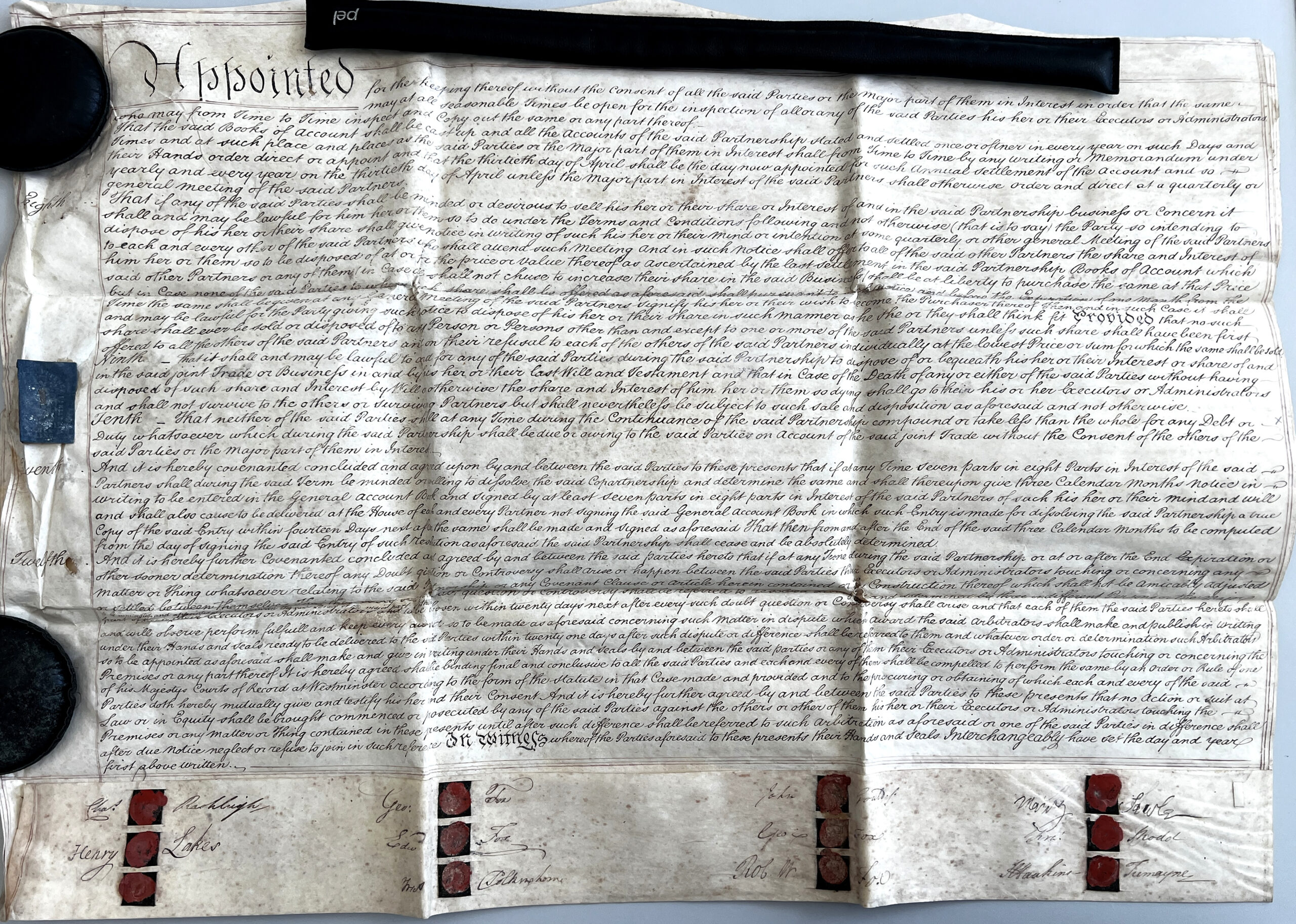
Eleven people signed and sealed the agreement. Their recorded residences and social descriptions show a partnership extending from St Austell into merchant, landed and professional communities across Cornwall.
Partnership Register
The eleven parties
Social descriptions reproduce the terms used in the agreement. They do not define each person’s responsibilities within the company.
The complete signature page records the partners together at the conclusion of RD/1149. The individual entries below provide closer views of each signature and seal.
 View full document
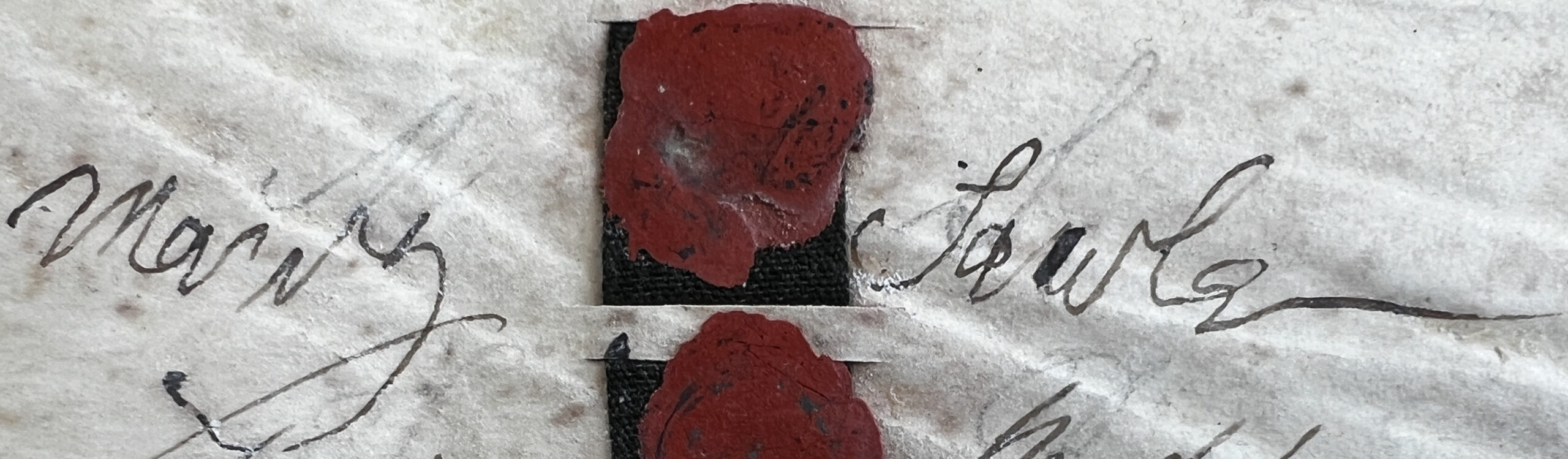
Mary Sawle
Spinster
- Residence
- Penrice
- Recorded as
- Spinster
As John Sawle’s sister and executor, Mary represented the inherited Sawle interest named first in the agreement.
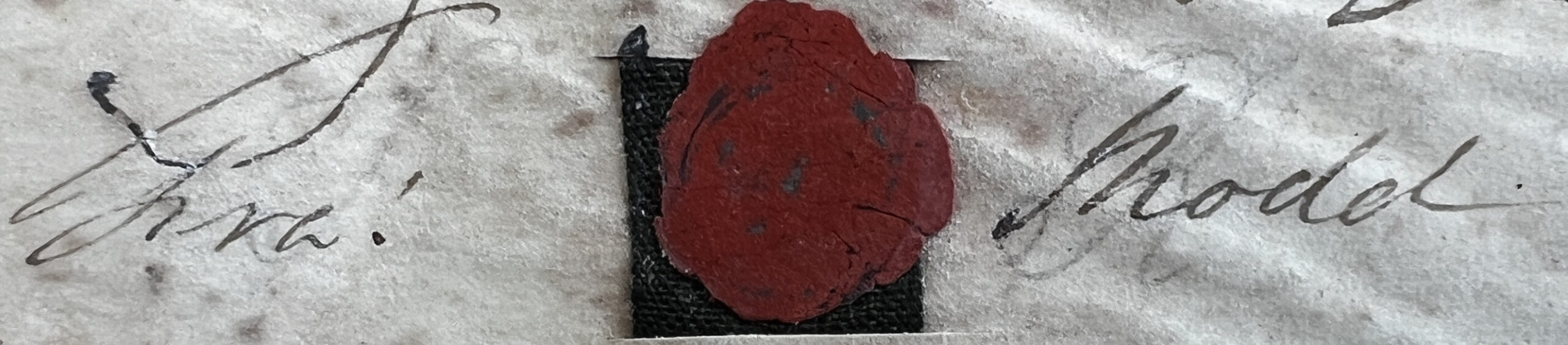
Francis Rodd
Esquire
- Residence
- Trebartha Hall
- Recorded as
- Esquire
His title and residence at Trebartha Hall identify his landed social standing without defining a company office.
Henry Hawkins Tremayne
Clerk
- Residence
- Heligan
- Recorded as
- Clerk
In this context, “clerk” identifies Tremayne as a clergyman associated with the Heligan estate.

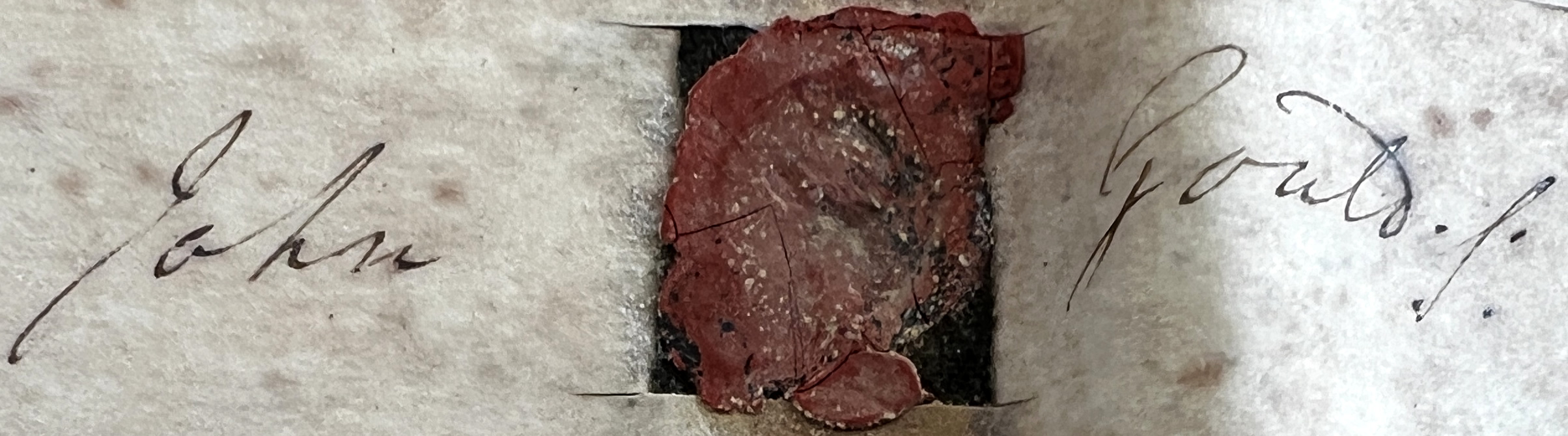
John Gould
Doctor of Physic
- Residence
- Truro
- Recorded as
- Doctor of Physic
Gould’s participation places professional wealth alongside landed and merchant investment in the company.
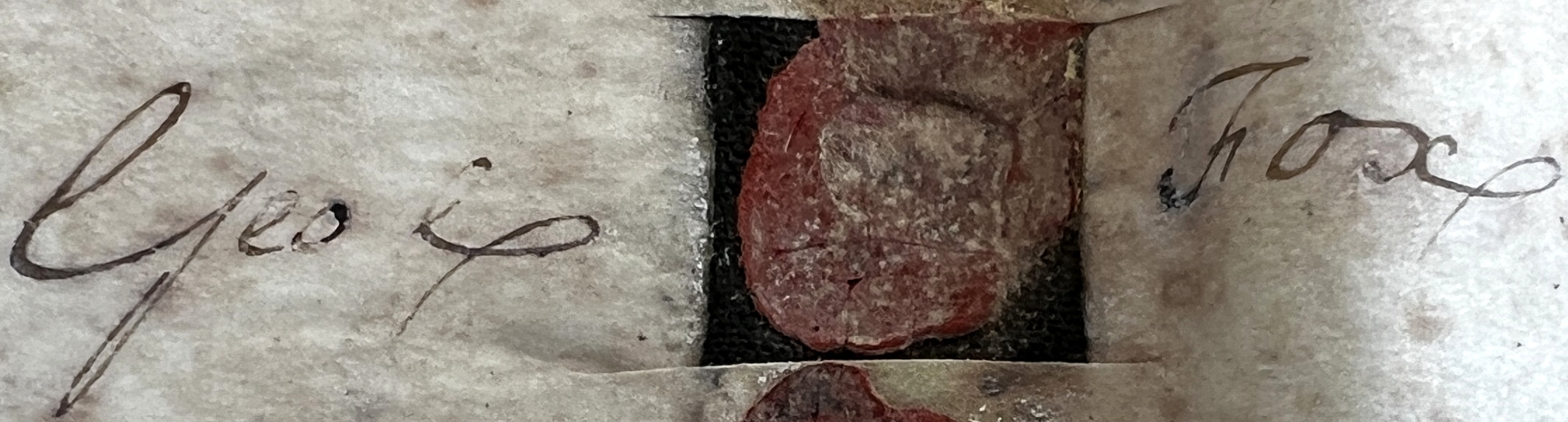
George Croker Fox
Merchant
- Residence
- Falmouth
- Recorded as
- Merchant
George Croker Fox was one of four Fox signatories whom the agreement expressly described as merchants.
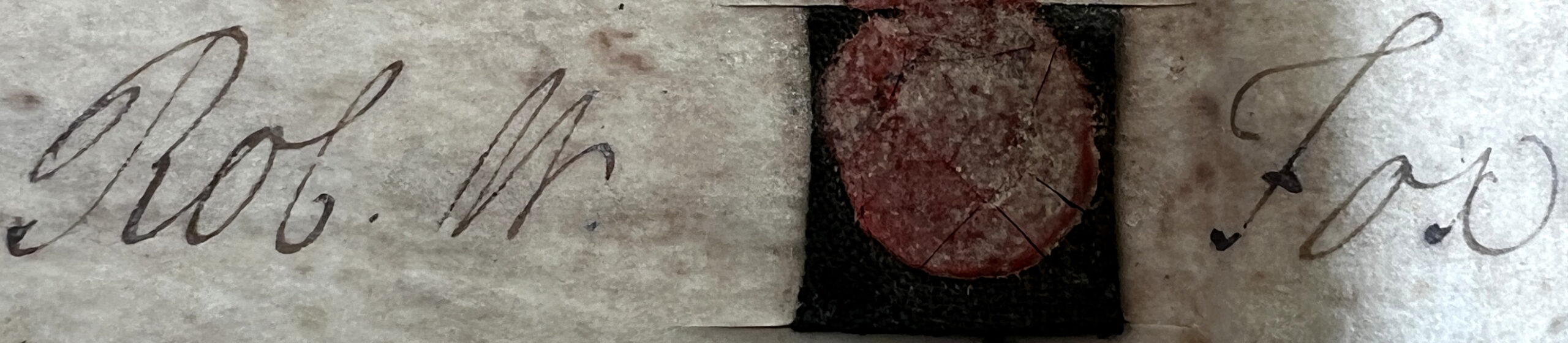
Robert Were Fox
Merchant
- Residence
- Falmouth
- Recorded as
- Merchant
Robert Were Fox formed part of the Falmouth merchant presence within the partnership.
George Fox
Merchant
- Residence
- Perranarworthal
- Recorded as
- Merchant
His residence extends the recorded Fox merchant presence beyond Falmouth.
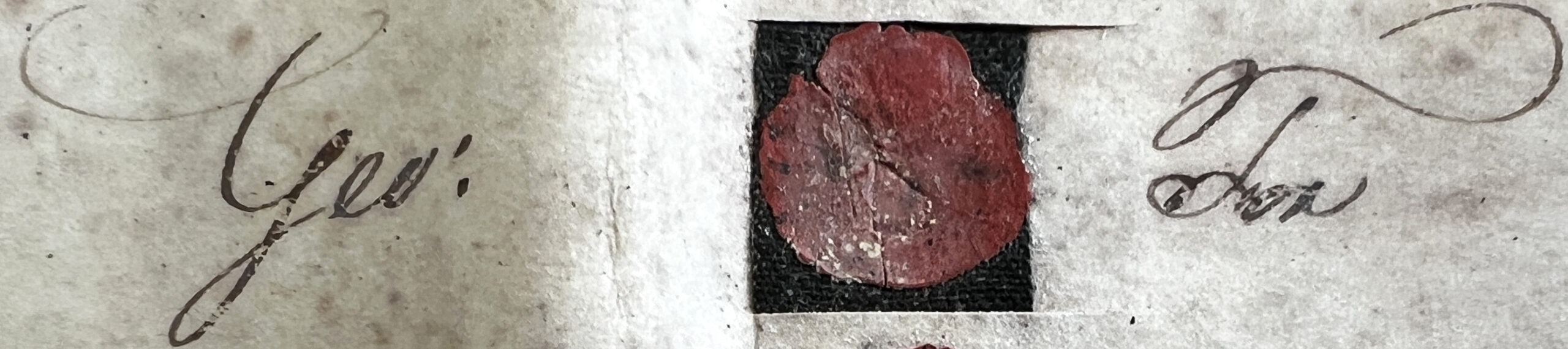
Edward Fox
Merchant
- Residence
- Wadebridge
- Recorded as
- Merchant
His Wadebridge residence shows the partnership’s recorded reach into north Cornwall.
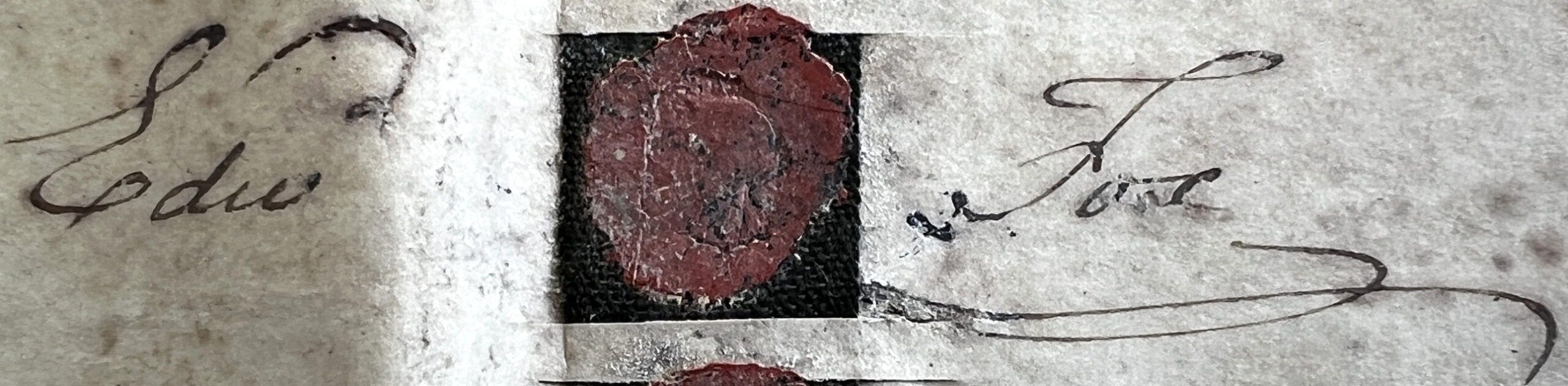
Francis Polkinghorne
Gentleman
- Residence
- St Austell
- Recorded as
- Gentleman
The agreement names Polkinghorne as a St Austell gentleman but does not define his responsibilities within the company.
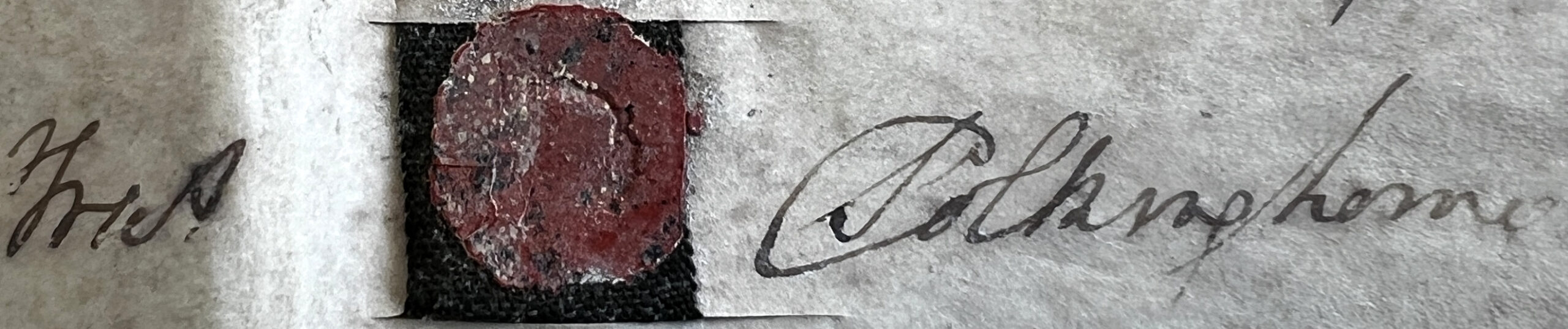
Charles Rashleigh
Gentleman
- Residence
- Duporth House, St Austell The agreement records St Austell.
- Recorded as
- Gentleman
Rashleigh had acted with Henry Lakes for the Old Blowing House partners named in the 1781 lease.

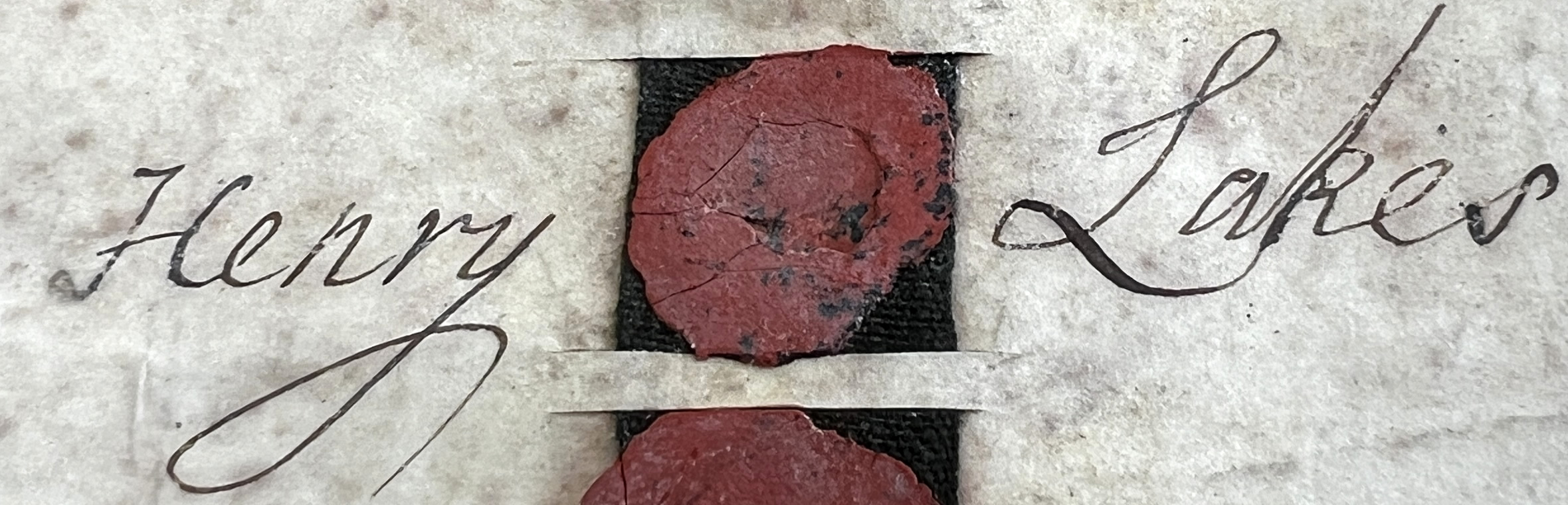
Henry Lakes
Gentleman
- Residence
- Trevarrick Hall, St Austell The agreement records St Austell.
- Recorded as
- Gentleman
Lakes had acted with Charles Rashleigh for the Old Blowing House partners named in the 1781 lease.
Geographic Context
A partnership across Cornwall
The recorded residences connect the St Austell smelting business with estates, professional centres and merchant communities across the county.
- Penrice Mary Sawle
- St Austell Francis Polkinghorne, Charles Rashleigh and Henry Lakes Rashleigh at Duporth House; Lakes at Trevarrick Hall.
- Heligan Henry Hawkins Tremayne
- Truro John Gould
- Falmouth George Croker Fox and Robert Were Fox
- Perranarworthal George Fox
- Wadebridge Edward Fox
- Trebartha Hall Francis Rodd
Investment and Association
Capital, Commerce and Influence
The agreement joined substantial capital with merchant experience, landed interests, professional wealth, local knowledge and earlier involvement in tin smelting.
Question 01
How much capital was committed?
The partners committed £52,347 in joint capital to the company. The agreement also allowed them to increase the capital to £80,000.
The capital supported the purchase of black tin, fuel, labour and the operation of the smelting works. It also carried the cost of the material between purchase and the eventual sale of white tin.
The partners shared the financial exposure through a joint-stock structure. Their individual fractions show how the agreement distributed ownership within that structure. On a conservative consumer-price basis, the recorded capital equates to about £5.6 million in July 2026 purchasing power .
Approximate purchasing-power comparison, not a company valuation.
Question 02
How was ownership divided?
The fractions recorded in RD/1149 total sixty-four sixty-fourths. The bars compare each holding with the largest individual interest of one eighth.
| Partner | Fraction | Percentage | Relative holding |
|---|---|---|---|
| Mary Sawle | 1/8 | 12.5% | |
| George Fox | 1/8 | 12.5% | |
| Charles Rashleigh | 1/8 | 12.5% | |
| Edward Fox | 1/8 | 12.5% | |
| John Gould | 7/64 | 10.9375% | |
| Francis Polkinghorne | 7/64 | 10.9375% | |
| Francis Rodd | 1/16 | 6.25% | |
| Henry Hawkins Tremayne | 1/16 | 6.25% | |
| George Croker Fox | 1/16 | 6.25% | |
| Robert Were Fox | 1/16 | 6.25% | |
| Henry Lakes | 1/32 | 3.125% | |
| Total | 64/64 | 100% | Complete recorded ownership |
Question 03
What resources did the partners bring?
Their recorded descriptions, residences and earlier appearances in the archive place several forms of wealth and experience within the same undertaking.
Merchant experience
The agreement describes George Croker Fox, Robert Were Fox, George Fox and Edward Fox as merchants.
Land and estate interests
Mary Sawle represented an inherited Sawle interest. Francis Rodd’s Trebartha Hall residence and Henry Hawkins Tremayne’s Heligan residence place landed settings within the register.
Professional wealth
John Gould entered the agreement as a doctor of physic, while “clerk” identified Henry Hawkins Tremayne as a clergyman.
Local knowledge
Francis Polkinghorne, Charles Rashleigh and Henry Lakes were recorded at St Austell, where the smelting enterprise operated.
Earlier smelting experience
The 1781 lease names Charles Rashleigh and Henry Lakes as representatives of the Old Blowing House partners.
Conclusion
What the Records Establish
Read together, the records of 1781 and 1795 trace the development of an organized tin-smelting enterprise at Blowing House Hill.
A partnered smelting operation already existed
The lease recorded Charles Rashleigh and Henry Lakes in connection with a blowing house at Blowing House Hill. It also secured land and water rights needed for the works.
Eleven parties formalized a substantial tin business
The co-partnership agreement organized the purchase of black tin, its conversion into white tin and the sale of the finished metal. The partners recorded joint capital of £52,347.
The partners brought several kinds of wealth and experience
The signatories connected industrial activity around St Austell with merchant, landed and professional communities in other parts of Cornwall.
Records, evidence and further research
Sources and Open Questions
Two surviving records provide the foundation for this account. Genealogical, estate, banking and industrial sources add context, while several aspects of the company’s operation and later history remain unresolved.
Principal Records
The first record establishes partnered smelting activity in 1781. The second records the formal co-partnership created in 1795.
Lease at Blowing House Hill
17 July 1781A lease involving John Sawle and Henry Lakes and Charles Rashleigh, who acted on behalf of their partners. It records land associated with a smelting house under construction, access to water and a term of fifty years.
Repository: Kresen Kernow
Articles of Co-Partnership
5 May 1795A fourteen-year agreement among eleven parties for purchasing black tin, smelting it into white tin and selling the finished metal. The document records joint capital of £52,347 and divides ownership among the signatories.
Repository: Kresen Kernow
Supporting Evidence
These sources test family relationships, place the signatories in their wider setting and identify possible routes for further research.
Records and research used alongside the principal documents
- Parish and civil records used to establish births, baptisms, marriages, deaths and parent-child relationships.
- Probate and estate records concerning the Sawle, Rashleigh, Lakes, Gould and connected families.
- Banking and commercial records relating to Francis Rodd, John Gould, the Miners’ Bank and other Cornish financial concerns.
- Property and mining records concerning Blowing House Hill, leases, sett rights, mineral interests and smelting sites.
- Family histories and pedigrees used as guides and checked against contemporary records wherever possible.
- Industrial histories used to explain black tin, white tin, smelting practice, commerce and Cornwall’s mineral economy.
Wider banking context includes John Dirring, “Banking in Cornwall – Part 2: The early Miners’ Bank, 1771–1828,” Cornish Story .
Evidence Key
Four categories separate statements found in surviving records from reconstructed relationships, historical interpretation and questions that remain open.
Documented evidence
Information stated in a contemporary manuscript, deed, agreement, register or other surviving record.
Genealogical reconstruction
A family relationship assembled from several records rather than stated in one source.
Historical interpretation
An explanation based on the available evidence and wider knowledge of industry, society or place.
Open question
A matter that the available evidence has not resolved and that requires further archival research.
Open Questions
These questions identify the records most likely to change or deepen the present account of the company.
-
What was the legal and operational relationship between the enterprises documented in 1781 and 1795?
Shared people, place and activity suggest continuity, but the two records do not prove that the concerns were legally identical.
Partnership deeds · estate papers · accounts -
What happened after the agreement’s stated term reached 1809?
The named term does not establish whether the partners renewed, reorganized, sold or dissolved the business.
Later agreements · notices · probate · property records -
Where did the partnership acquire its black tin?
Mine accounts, ore purchase books and correspondence may identify the mines or adventurers that supplied the smelting house.
Mine accounts · assay books · purchase ledgers -
To whom did the partnership sell its white tin?
Merchant correspondence, port records and account books may reveal customers, destinations and routes to market.
Sales ledgers · shipping records · correspondence -
Did the works process ore associated with Lemon or Daniell mining interests?
This remains a research question about ore supply and industrial geography. No family or business connection should be inferred without records linking named mines or setts to the smelting works.
Sett records · mine accounts · ore-sale records -
What roles did the individual signatories perform?
The agreement records social descriptions and ownership interests but does not provide a complete division of management, purchasing, smelting or sales responsibilities.
Correspondence · wage books · account books · minutes -
How were the four Fox partners related, and how did their merchant businesses connect?
Family records can establish kinship, while business papers may show whether they traded through shared or separate merchant houses.
Fox family papers · merchant correspondence · ledgers -
How did the ownership fractions govern contributions, profits, losses and later capital calls?
The fractions total one complete ownership interest. Further records may show how the partners applied those proportions during the fourteen-year term.
Partnership accounts · capital books · profit distributions -
What records clarify Francis Polkinghorne’s place in the enterprise?
Evidence outside RD/1149 may explain his administrative, professional or local role without turning association into an unsupported job title.
Rashleigh papers · correspondence · local records