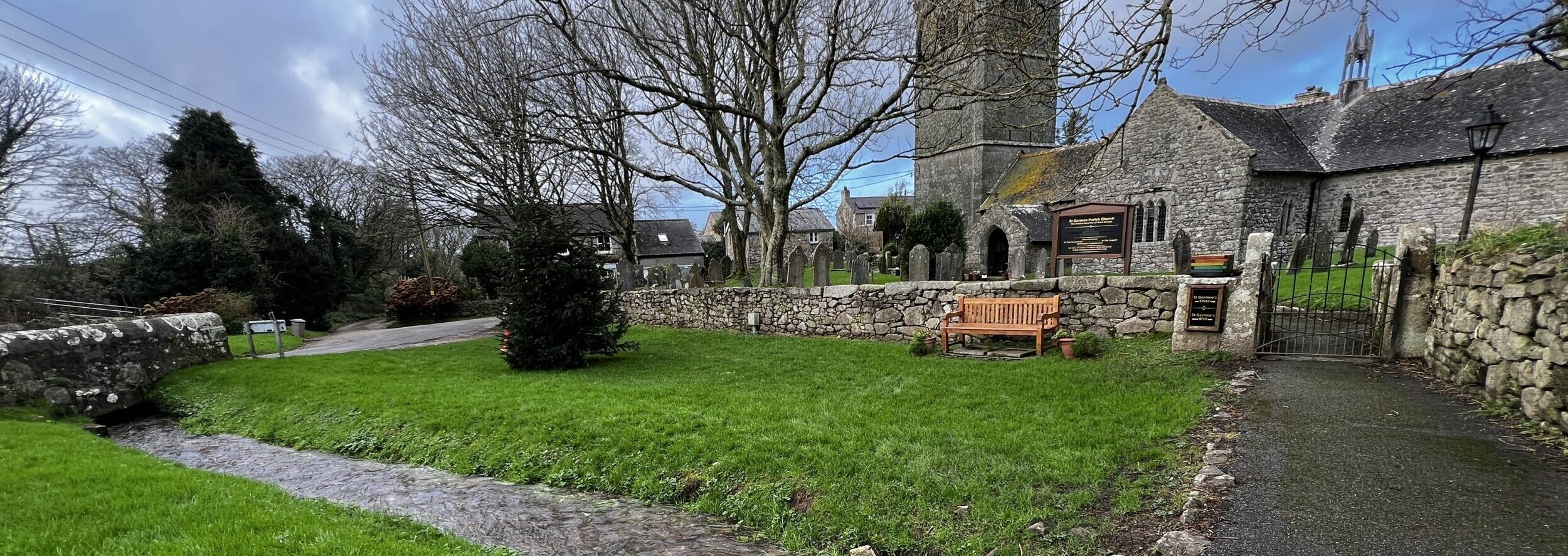
In January 2024, I drove from Penzance to Germoe, the Cornish village where I can trace my Lemon family for more than 330 years. I had travelled the route several times through Google Street View, but I had never stood in the churchyard where generations of the family were buried.
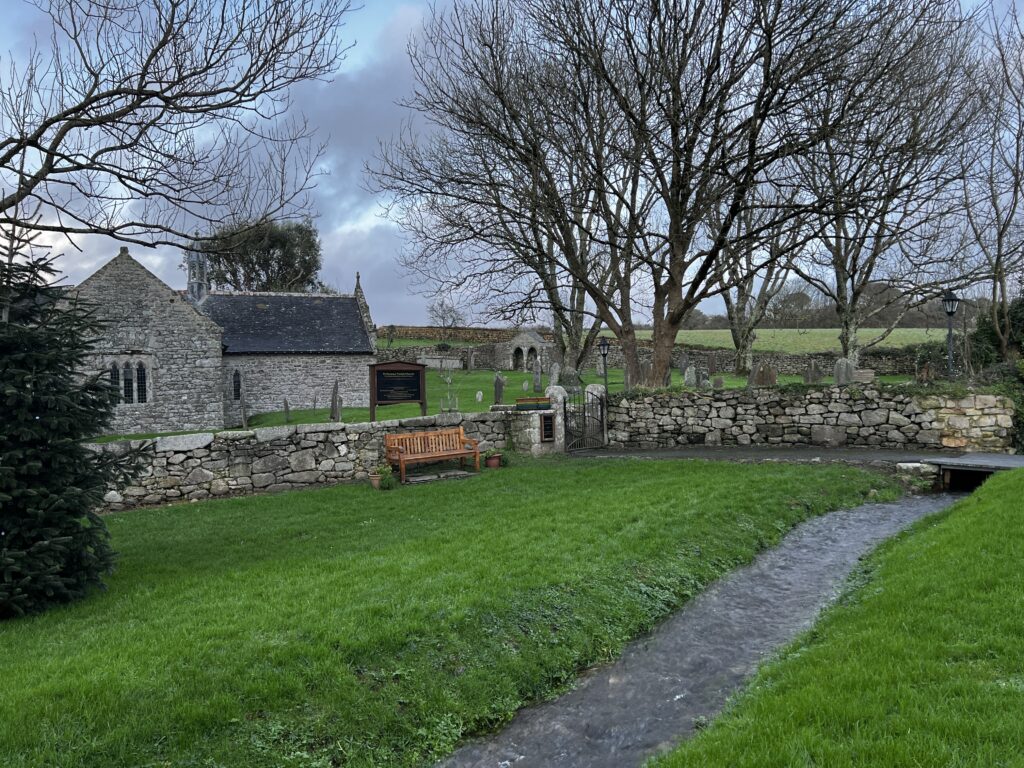
The drive took about thirteen minutes. After leaving the A394, I followed a narrow road bordered by hedges until I reached the green beside St Germoe Church. The wind had picked up, but I heard little traffic. A stream, swollen by recent rain, ran between the car park and the churchyard.
The church stood less than a minute’s walk from the car. I took ten.
Local tradition traces the village’s name to Germochus, an Irish saint associated with St Breaca. The parish account places their arrival near the Hayle Estuary between 550 and 600. According to the story, Breaca settled near what became Breage, while Germochus chose the sheltered valley that became Germoe.
The tradition comes from accounts written long after the saints’ supposed lifetimes, so I treat it as part of the village’s inherited story rather than a documented biography.
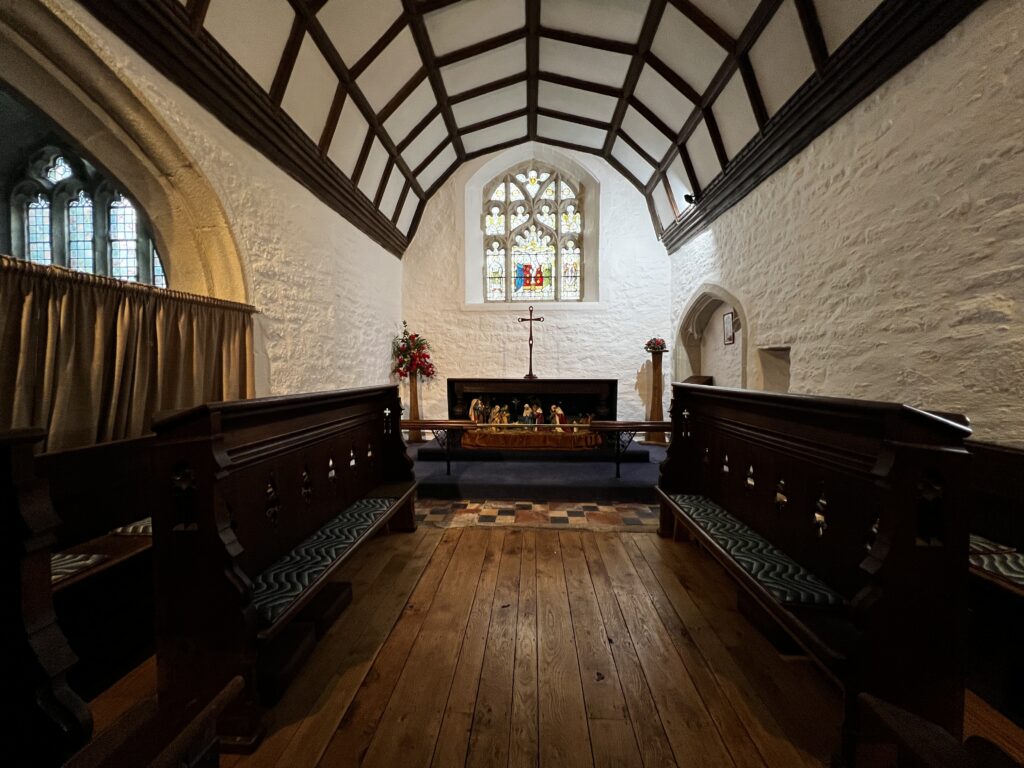
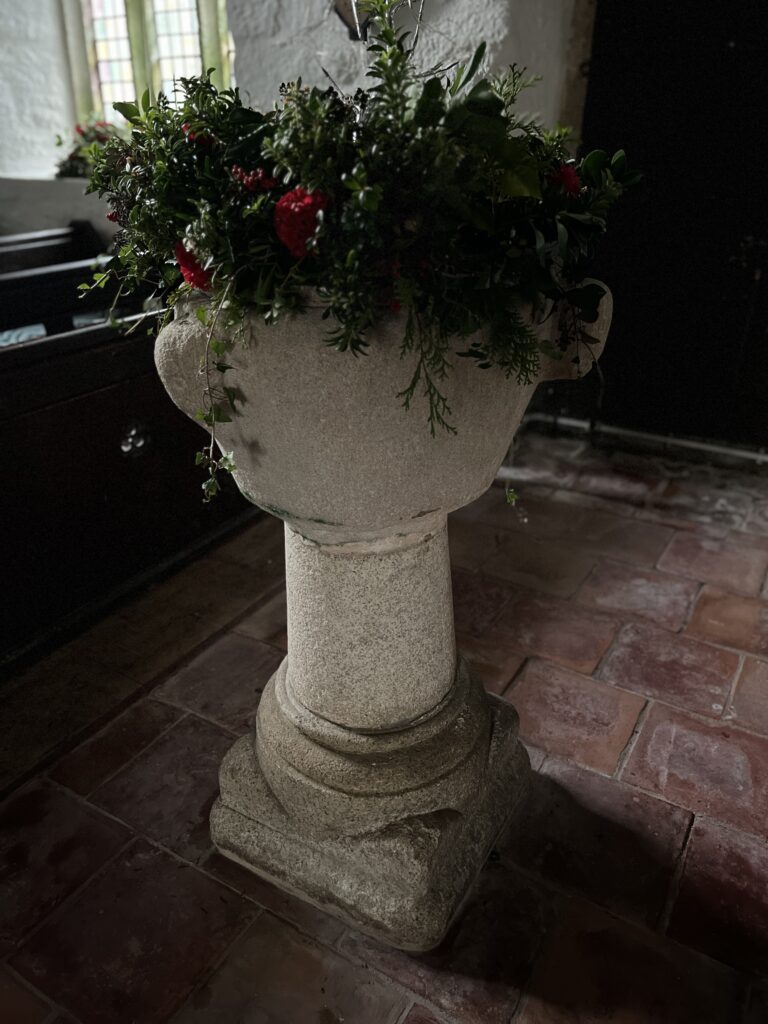
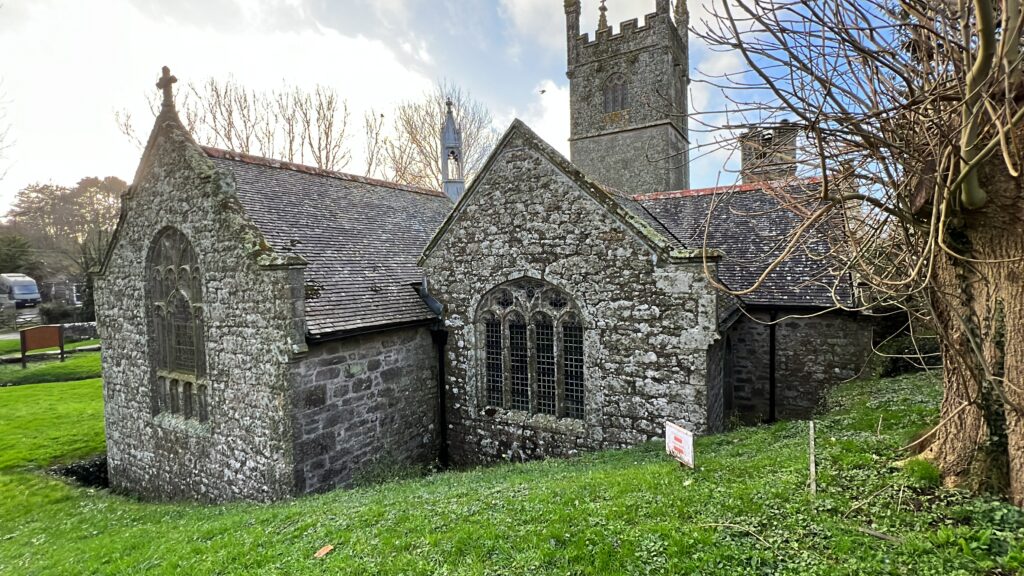
Parts of the present church date from around 1100. The south walls of the nave and chancel contain the earliest surviving fabric, while later generations enlarged the building. The font bowl dates from the early Norman period, and the tower belongs to the later medieval church. Cornwall Historic Churches Trust provides a useful account of its architecture.
Germoe and its saint
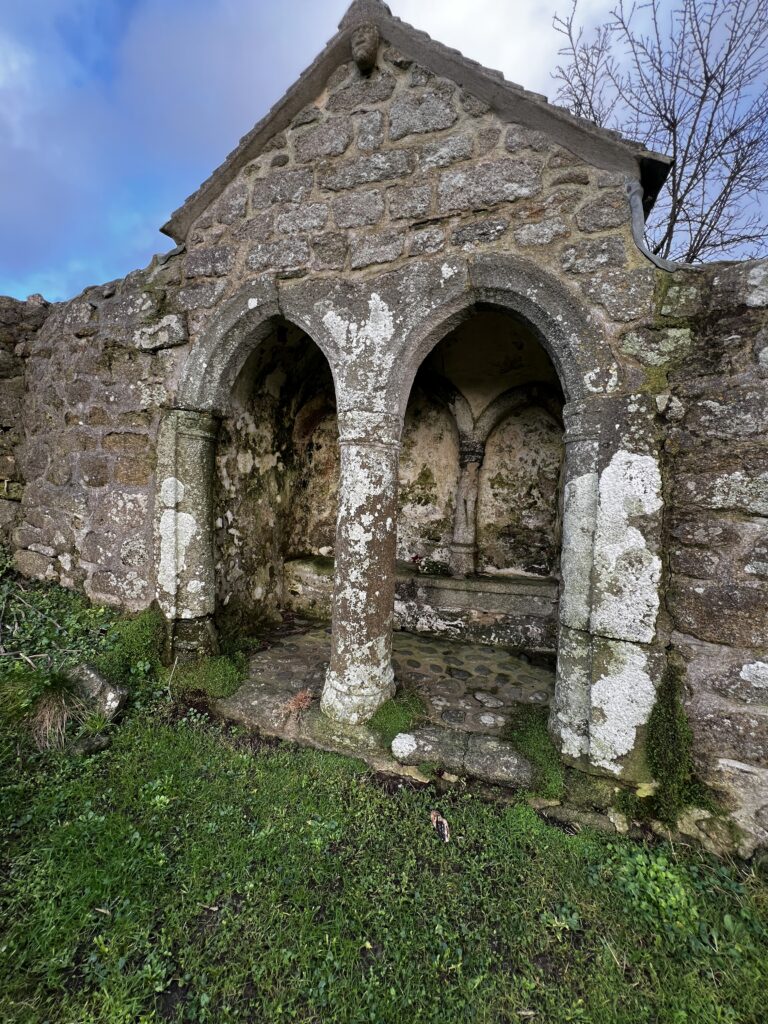
The churchyard, enclosed by a stone wall, extends from the church down the length of the property. Along the furthest wall is a shrine to St. Germoe, referred to as his Chair. For centuries, this was a place of pilgrimage and is still used in Palm Sunday traditions, where parishioners pay their respects to the old Saint, once thought to be his final resting place.
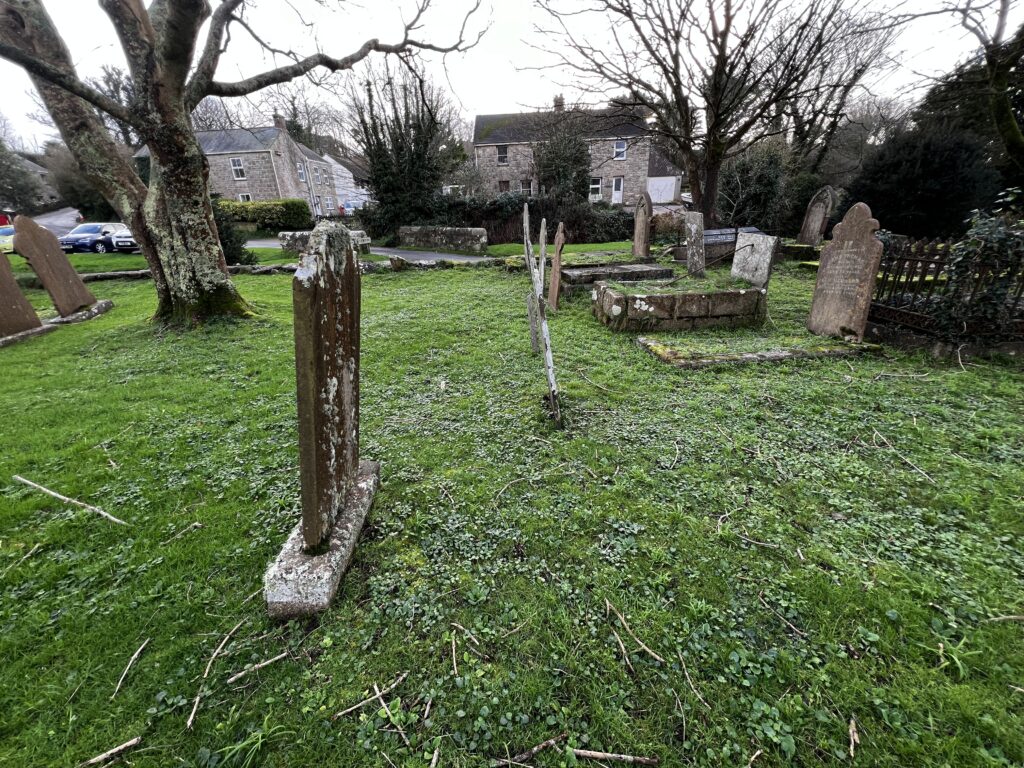
As I wandered through the churchyard, I tried to read as many headstones as I could. So many of my ancestors are buried here, though many now rest in unmarked graves, their stones worn away by time.
Leaving the churchyard through the same wrought iron gate, I paused once more to listen to the rushing brook. I found comfort in the thought that my ancestors might have stood in that same spot, hearing that same sound, on a windy January day.
Inside the church
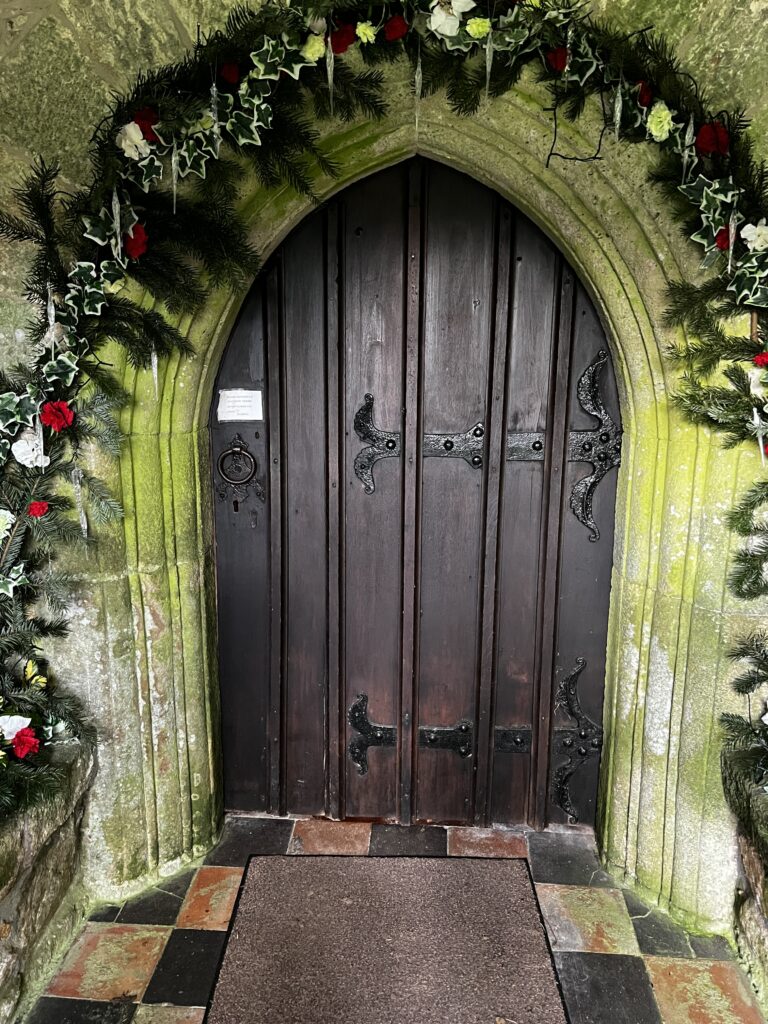
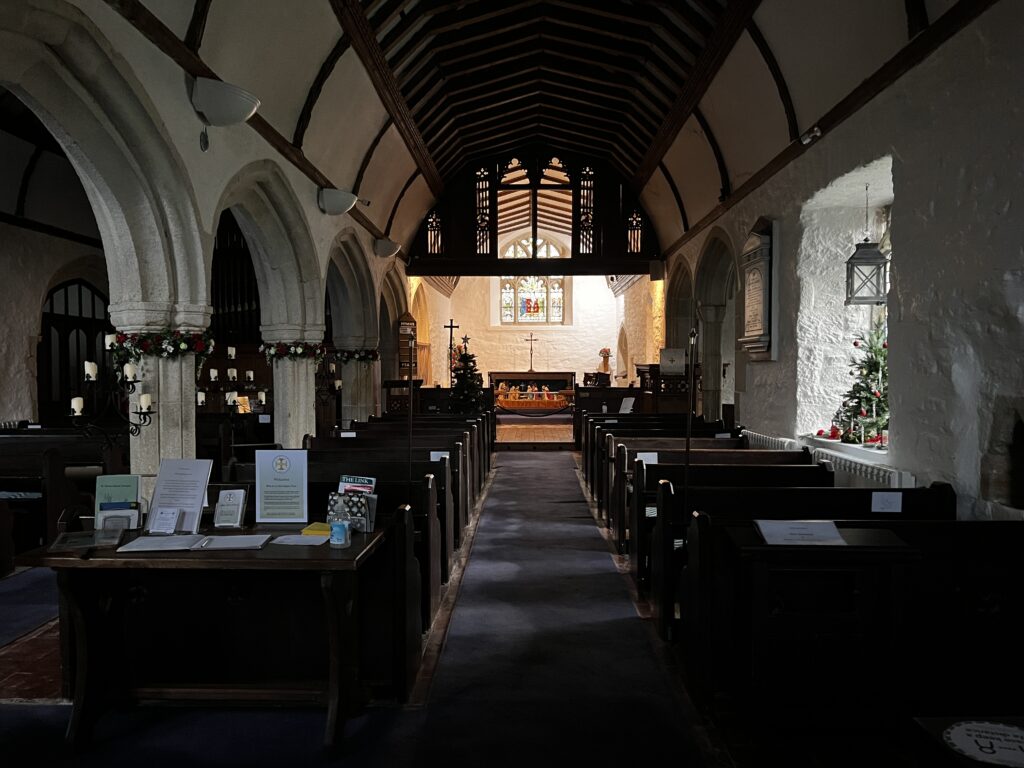
I entered through the heavy wooden door and found the church empty. I could not locate the light switch, so I began exploring by the winter light coming through the windows. Wind rattled the doors and their old metal latches.
I do not practise a religion. My connection to this church comes through the people who occupied its pews, brought their children for baptism and gathered here for funerals. For the first time, I could stand inside a building that formed part of their lives.
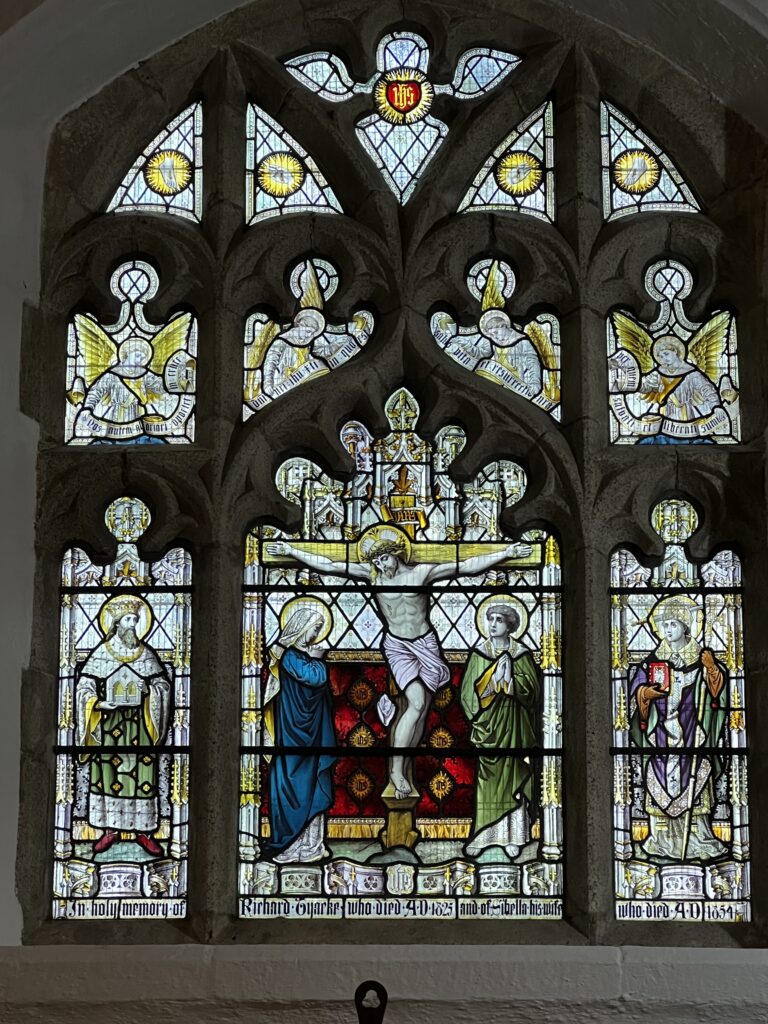
Above the altar, a stained-glass window carries this inscription:
In holy memory of Richard Tyacke who died AD 1825 and of Sibella his wife who died AD 1854.
Richard Tyacke’s sister Mary married James Lemon, a member of a collateral branch of my Lemon family. James’s parents, William Lemon and Elizabeth Plomer, were my sixth great-uncle and great-aunt. The Tyacke window would soon connect with another memorial elsewhere in the church.
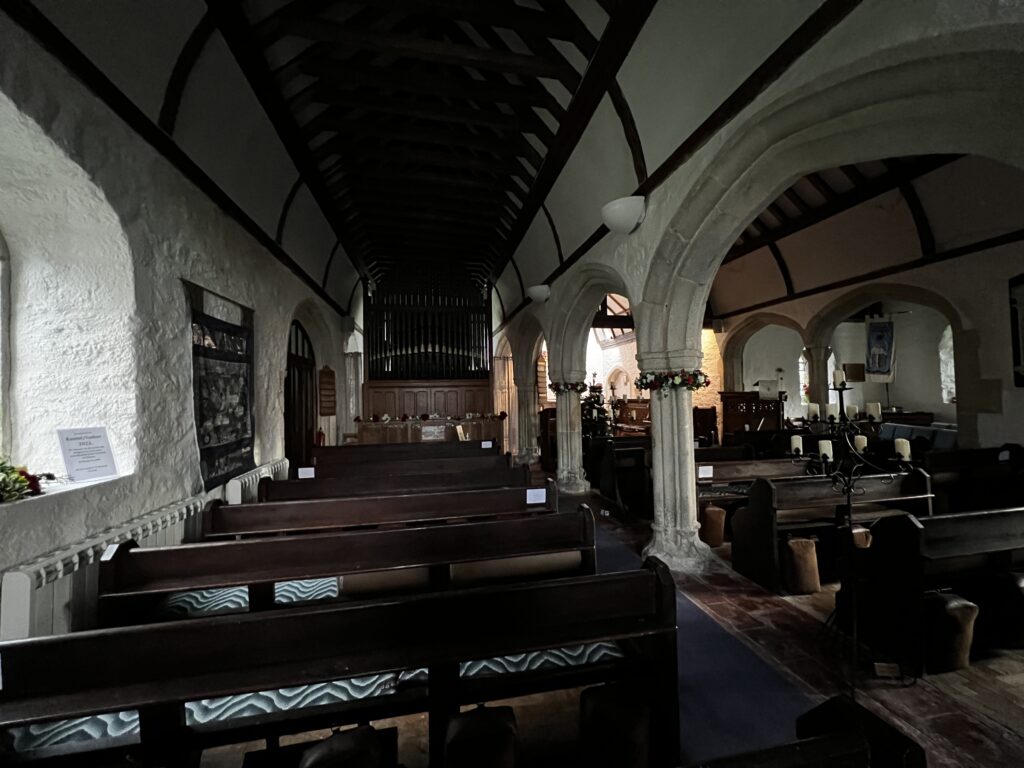
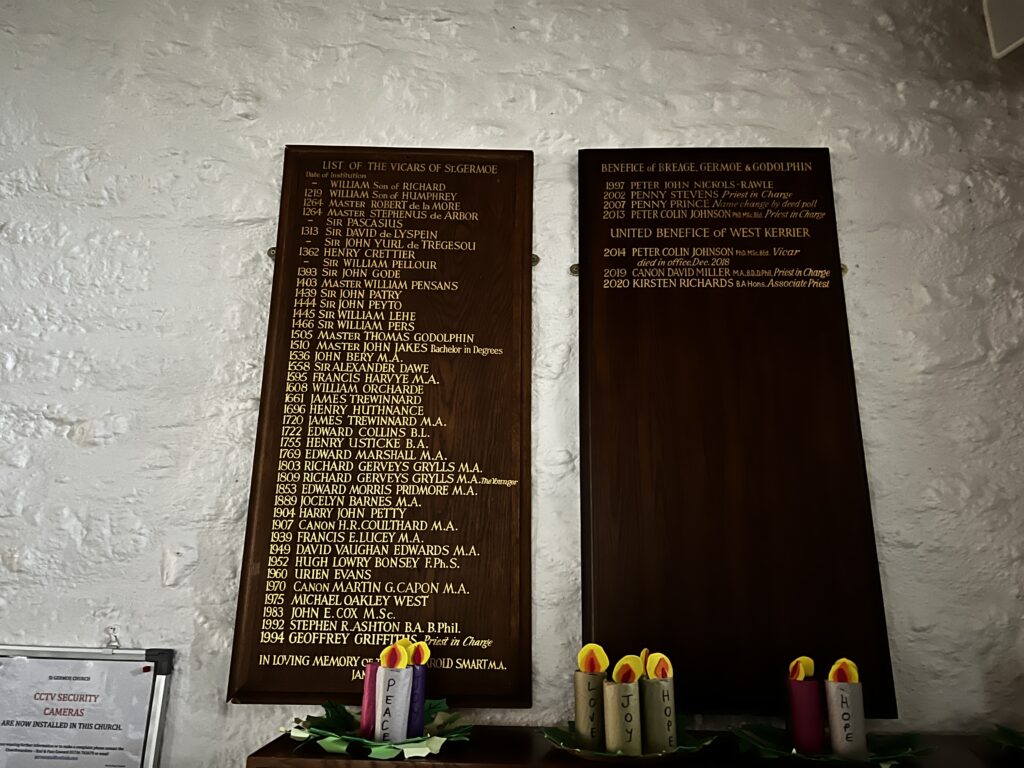
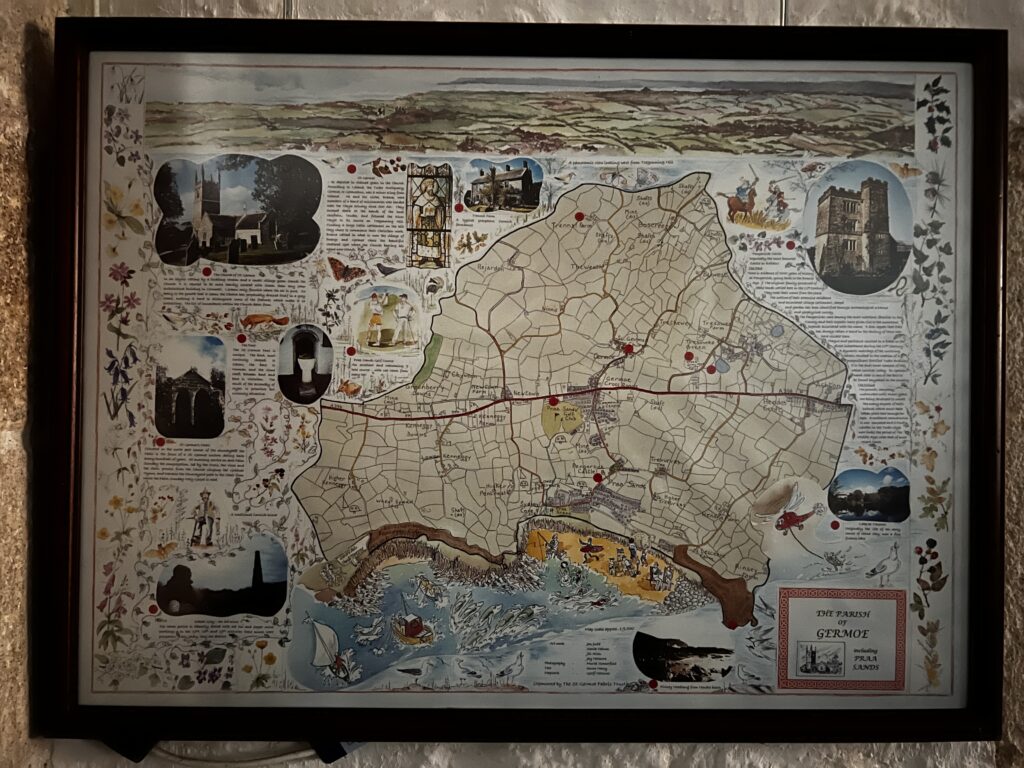
A list of vicars on the wall began in 1219. Beside it hung a parish map marked with names I knew from leases and family records.
One was Rejarden, where members of the Lemon family lived. Another was Trennal, where my seventh great-grandfather Samuel Lemon held land under a lease granted by Lord Godolphin in 1760. The lease ran for ninety-nine years.
Before this visit, Rejarden and Trennal had existed for me as words in documents. The map showed their positions within the parish and their relationship to the roads around Germoe.
Samuel Lemon and the church bells
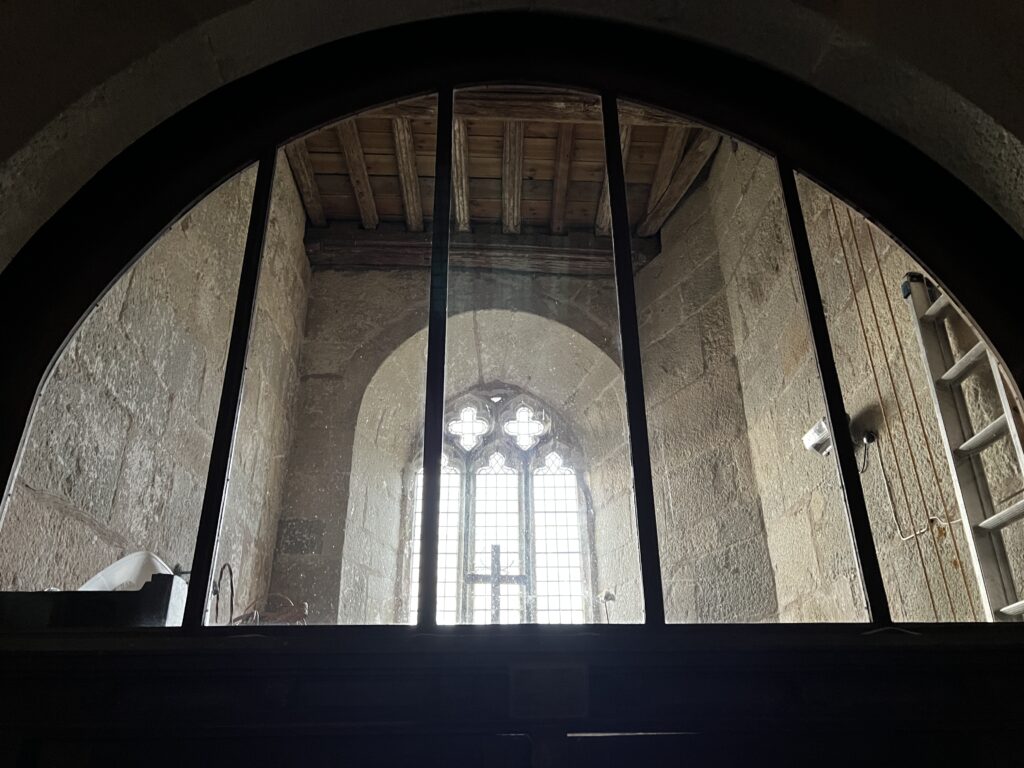
From inside the church, I could look through glass panes towards the wooden floor of the bell chamber. A church history written in 1995 by K. Y. Ashwell provided more information about the bells above me.
The parish purchased three bells through public subscription in 1753. The tenor bell, weighing seven hundredweight, records the names of the vicar Edward Collins and the churchwardens Samuel Lemon and Simon Harry.
That Samuel Lemon was my seventh great-grandfather.
The second bell carries the words “Prosperity to the parish,” while the third identifies its founder with the inscription “Abel Rudhall cast us all.”
I had known Samuel through leases and other records, but the bell placed him within the life of the parish. In 1753, his neighbours had trusted him with the responsibilities of churchwarden. His name remains on a bell hanging above the church more than 270 years later.
Another Lemon memorial
The pulpit contained a second family connection. Its inscription commemorates James Plomer Lemon, who served for many years as churchwarden and died at Rejarden on 2 January 1887. It also names his wife, Henrietta, who died at Marazion on 3 May 1903. Their only son, James Frederick Lemon, erected the memorial.
James Plomer Lemon was my second cousin six times removed. His parents were James Lemon and Mary Tyacke.
Mary’s brother Richard was the man commemorated with his wife, Sibella, in the stained-glass window above the altar. The window and pulpit therefore preserve two connected branches of the same extended family.
These inscriptions offered something that a pedigree chart could not. They showed how the Tyackes and Lemons remained connected within the church, across several generations.
St Germoe’s Chair
After leaving the church, I walked through the churchyard and tried to read the surviving headstones. Many inscriptions have worn away, and some of my ancestors now lie in graves that I could not identify.
Against the wall at the far end of the churchyard stands the structure known as St Germoe’s Chair. Historic England dates this small granite building to around the early thirteenth century and describes it as a detached sedilia. The parish associates it with medieval Palm Sunday observances, a tradition that the congregation continues when the weather permits. The parish history explains how clergy and parishioners used it during the procession.
The structure has outlasted the people whose names brought me to Germoe. So has the church itself, although each generation has repaired it, enlarged it and left new memorials within its walls.
I returned through the wrought-iron gate and stopped beside the stream. My visit had given me a clearer sense of where Rejarden and Trennal sat within the parish. It had also shown me that the Lemon family’s connection to Germoe extended beyond births, marriages and burials.
Samuel Lemon had served the parish as churchwarden. His name remained on a bell above me, while later members of the family appeared in the window and pulpit below.
I stood beside the water for a few minutes before returning to the car. The stream formed part of the village my ancestors knew, and I wanted to remember its sound.
Thanks Cuz! 🙂 Give my best to Ruth and Paul! My visit with them will be an upcoming post as I make my way through writing about the trip!
What a wonderful tribute to your ancestors! Eloquently written! Look forward to reading more!
Interesting to hear about your ancestry visit, and the Cornish side of your family. I’m currently in Cornwall visiting my sister, from the other side of your ancestral line back to my paternal great grandfather. Have also traced family history back to the 1600s in south Devon on my mother’s side of the family.
I really enjoyed your story Amie, I was right there with you the entire way. What a great tribute to your family to research them and make the trek there.