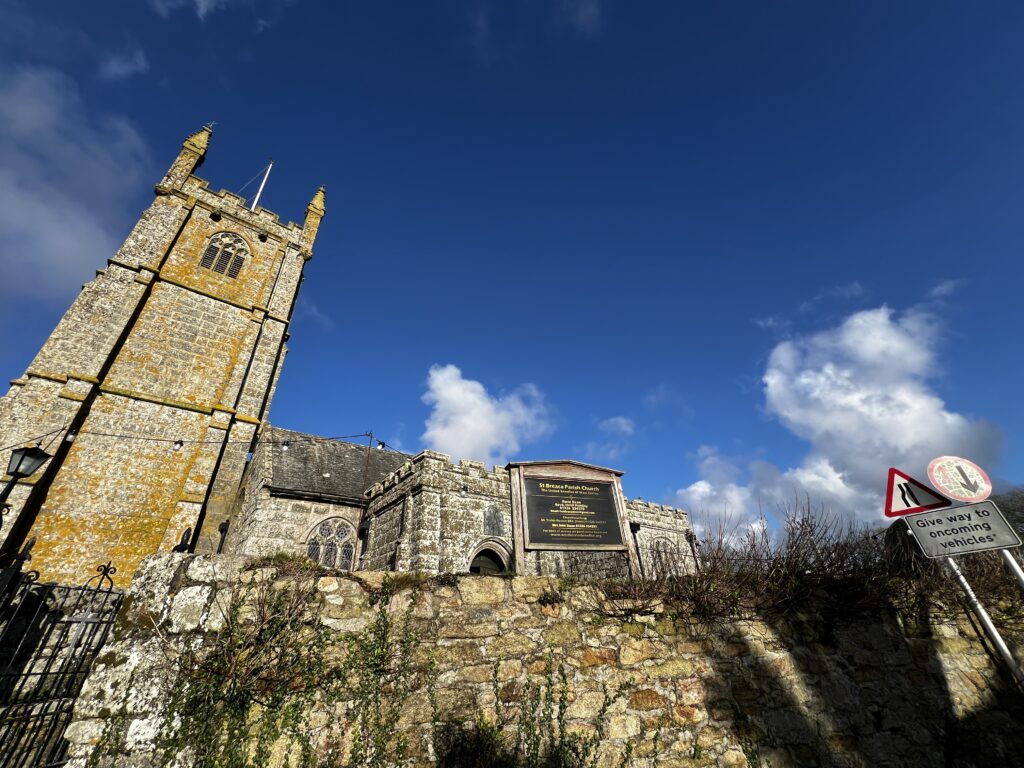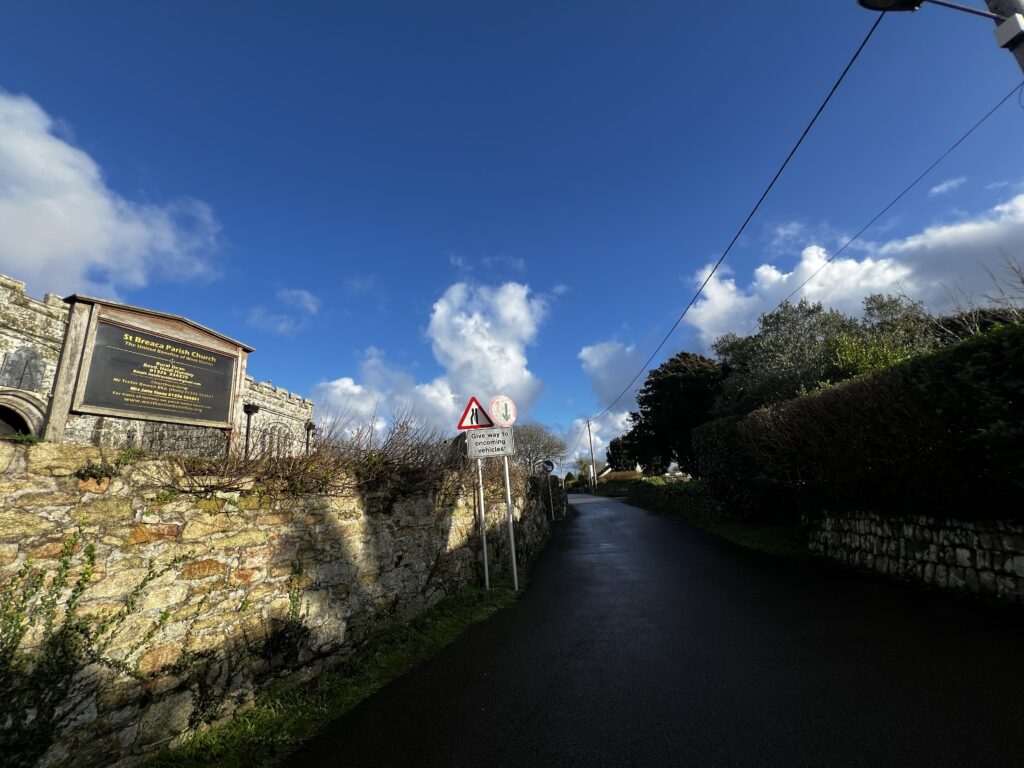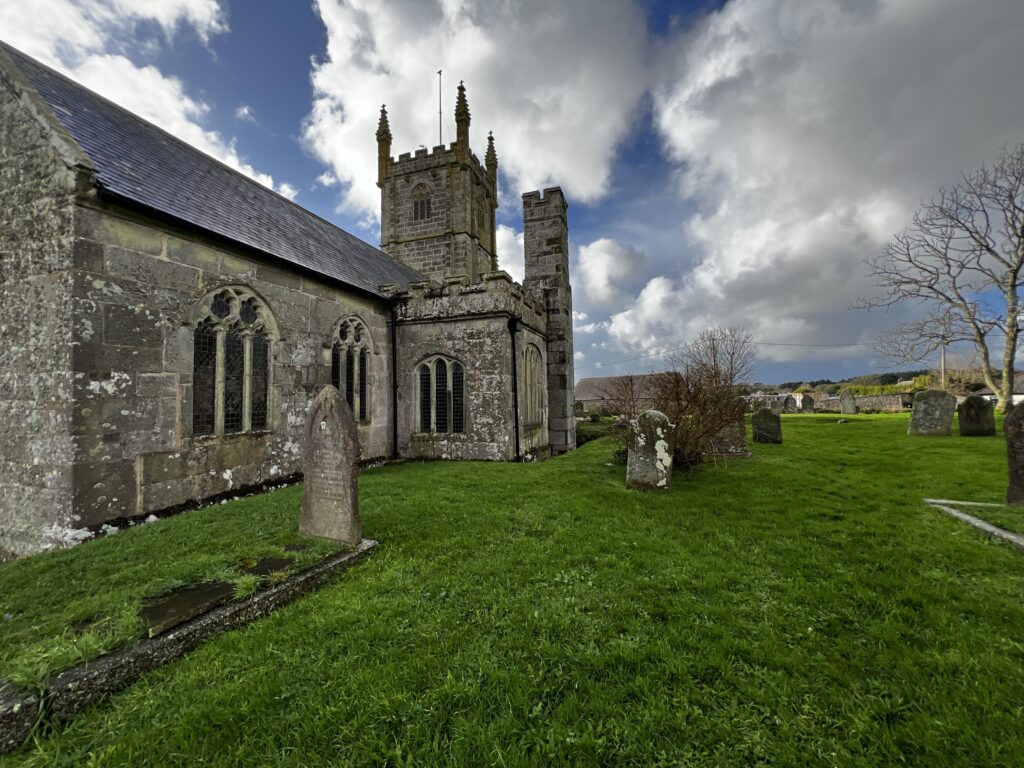
On my fourth afternoon in Cornwall, I drove east along the A394 toward Breage. The sky was clear, but the air still carried a chill. About half a mile from the village, the tower of St Breaca’s Church appeared above the surrounding houses and fields.
I had come to Breage because two branches of my Lemon family met there. One led to the churchyard, where Jane Lemon was buried in 1834. The other led a short distance down the road to Pellor House, once home to Jane’s brother Samuel and his family.
St Breaca’s Church
According to local tradition, Breaca and her brother Germoe came to Cornwall with a group of Irish Christian missionaries in the late fifth or early sixth century. Breaca settled near what became Breage, while Germoe established himself in the nearby valley that now bears his name.
The surviving accounts belong more to tradition than documented biography, but they connect the two villages I visited that day. I had driven the same road the previous day on my way to Germoe.
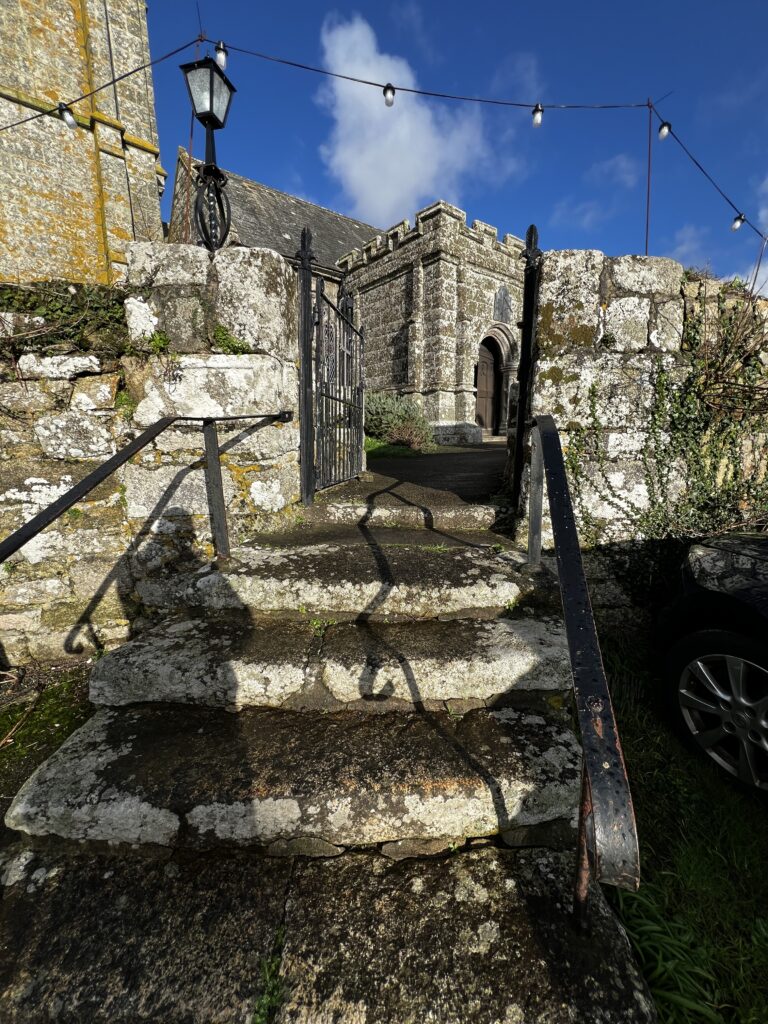
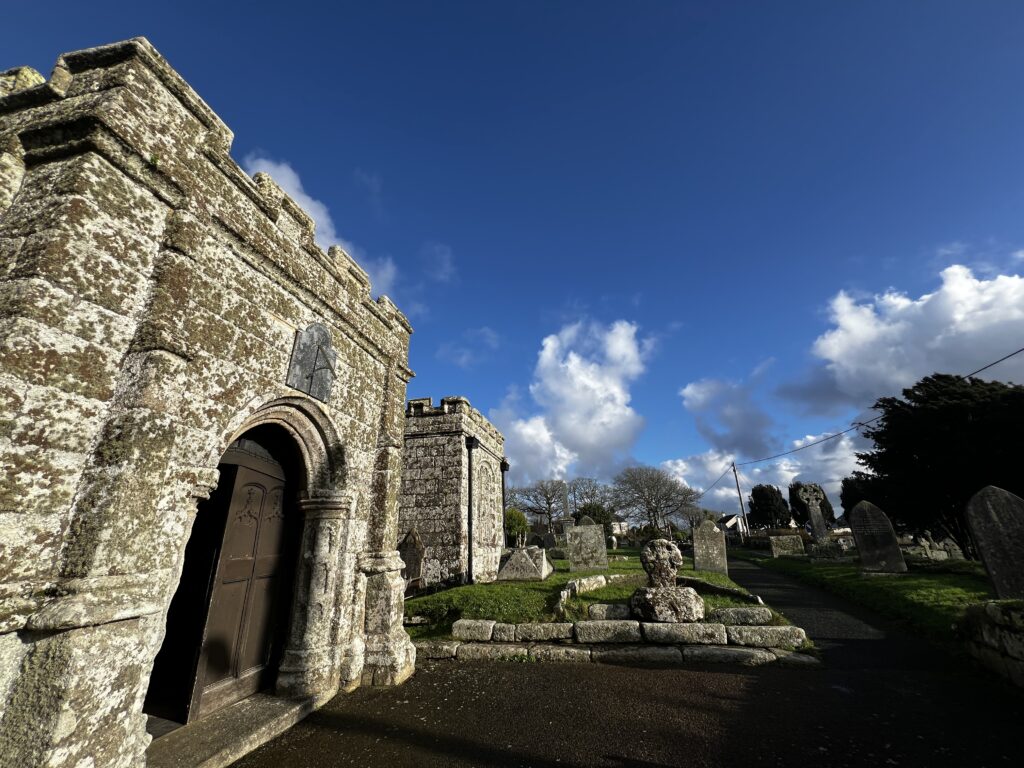
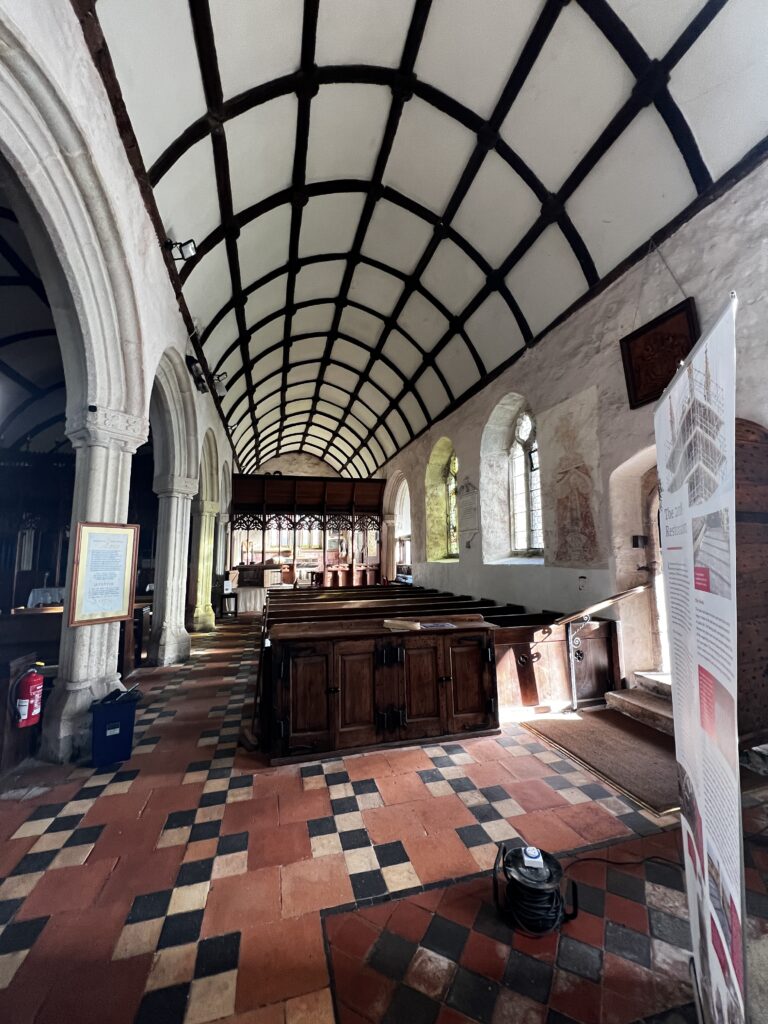
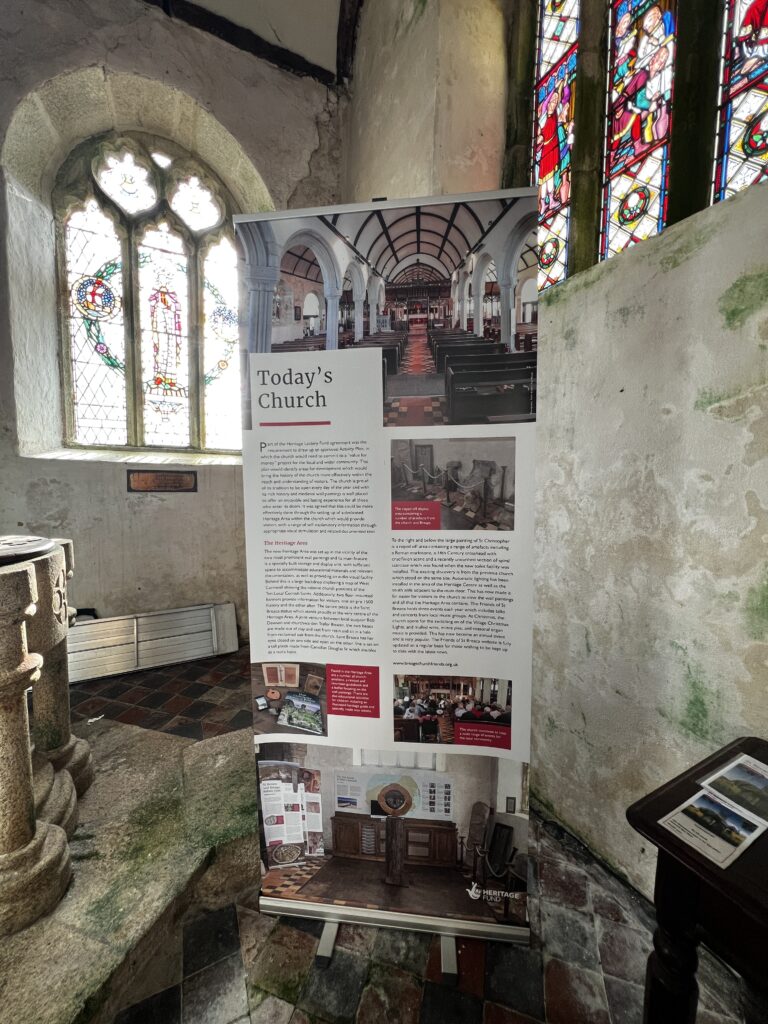
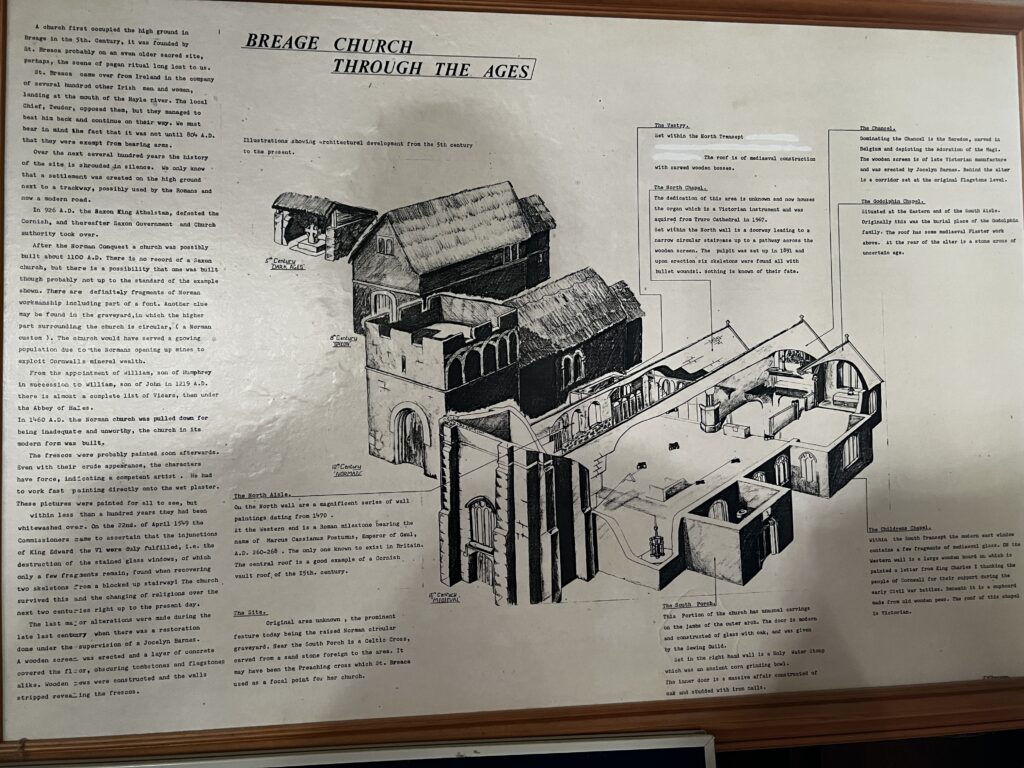
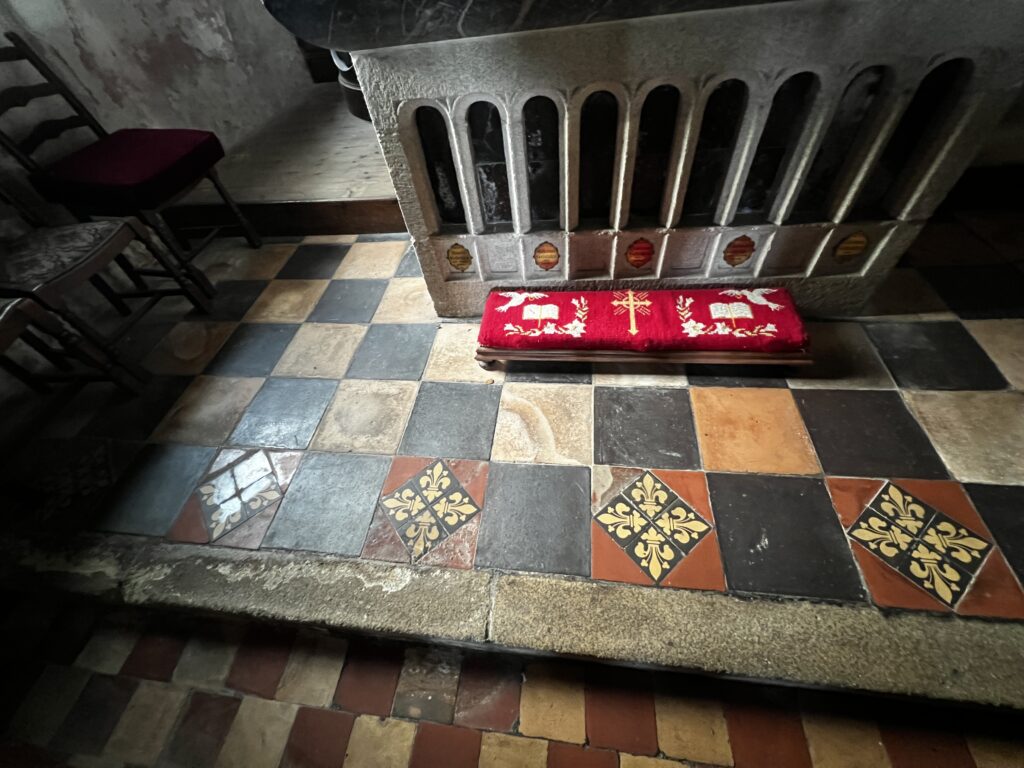
I parked near the former mortuary and climbed the stone steps to the church. Inside, the floor tiles reminded me of those I had seen at Germoe Parish Church. The present building dates mainly from the fifteenth century, though an earlier church stood on the site.
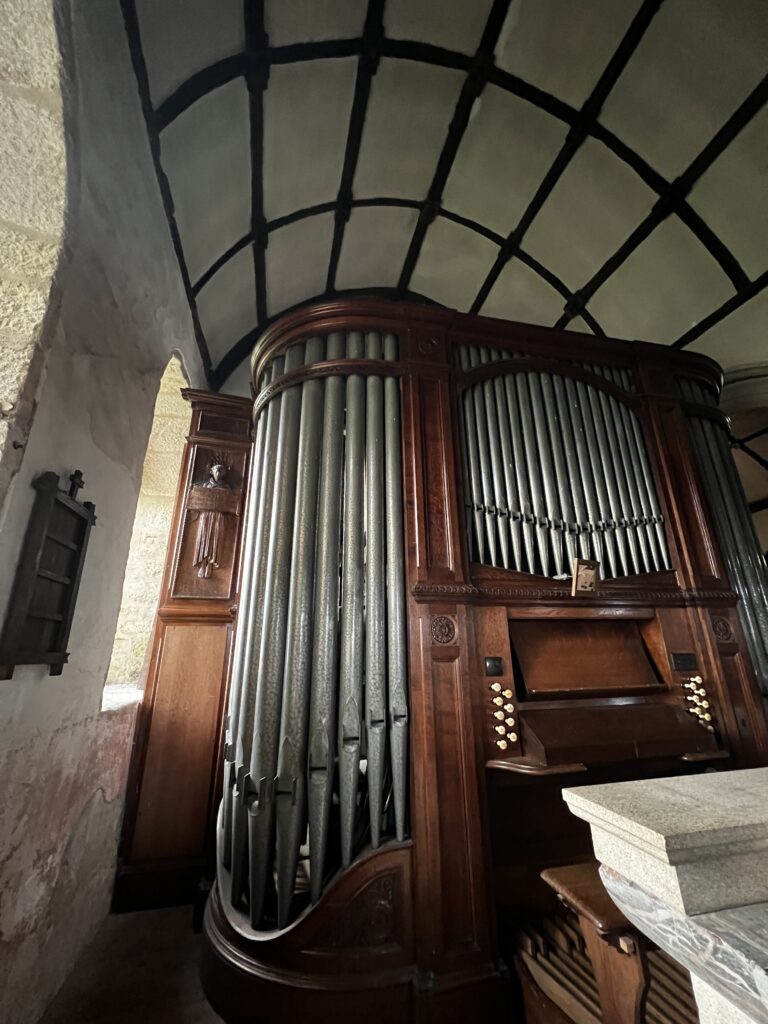
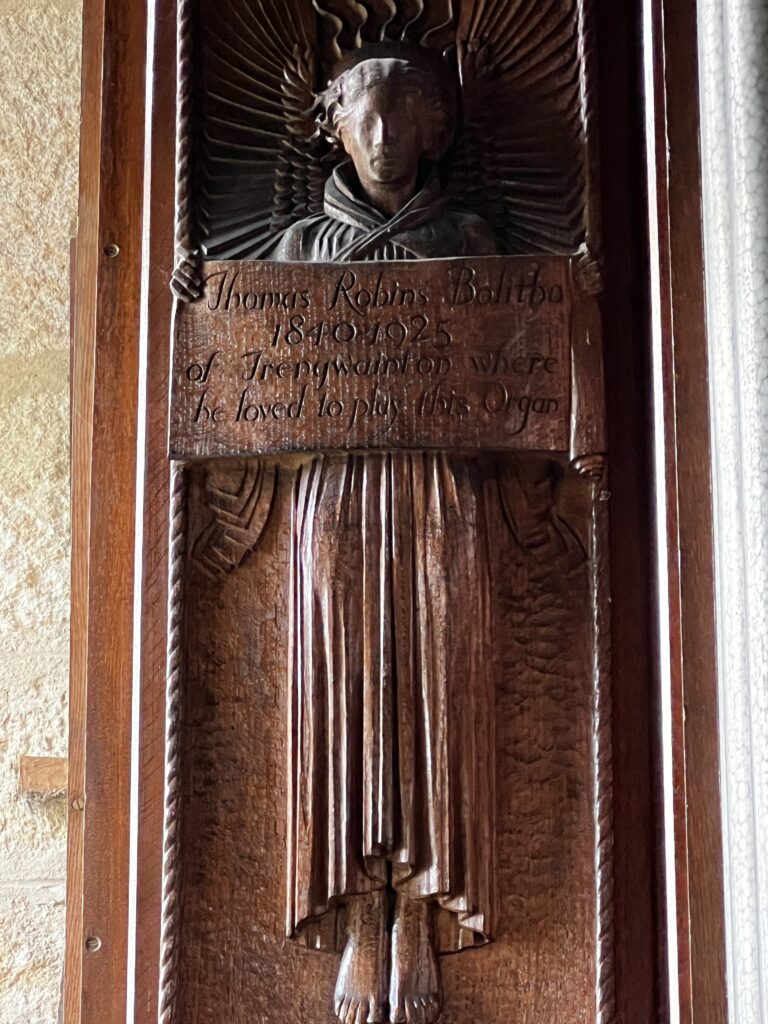
In the north chapel, I found the organ built for Thomas Robins Bolitho of Trengwainton. His widow gave it to Truro Cathedral after his death, and it came to Breage in 1967.
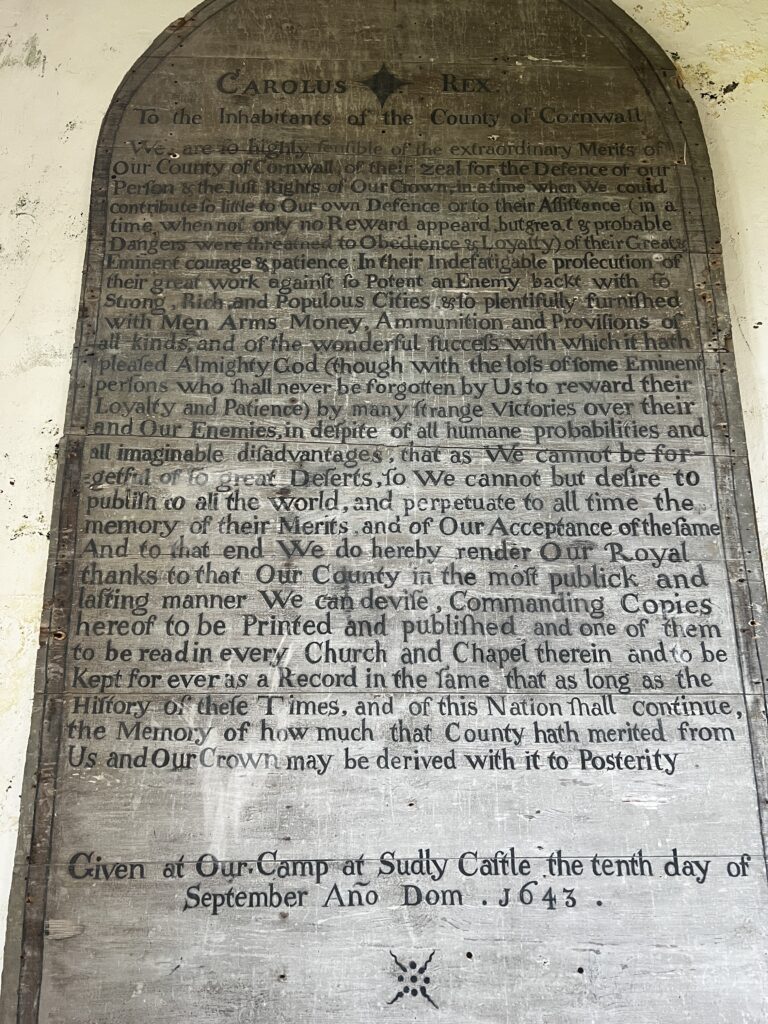
Another object on display was a painted copy of Charles I’s letter of thanks to the people of Cornwall. The king sent the letter from Sudeley Castle on 10 September 1643, during the English Civil War. He ordered copies read and kept in every church and chapel in Cornwall as a record of the county’s support for the Royalist cause. Several of the Cornish churches I visited still displayed one.
These pieces of history interested me, but my main reason for entering the church was waiting in a set of binders near the organ.
Grave 62
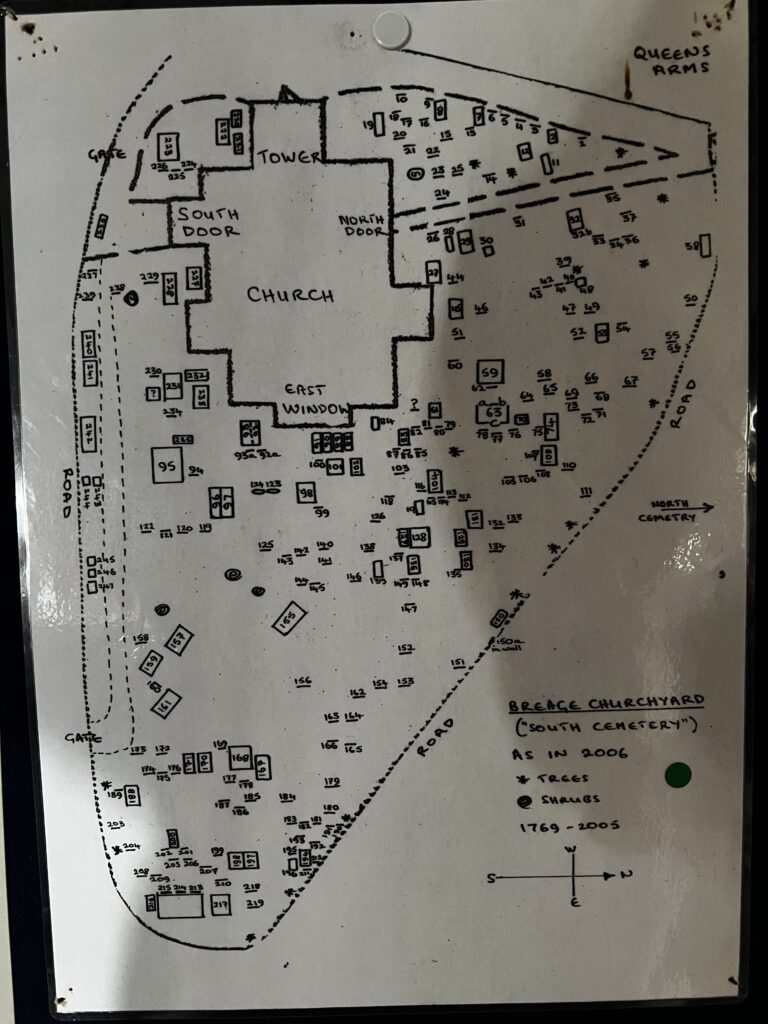
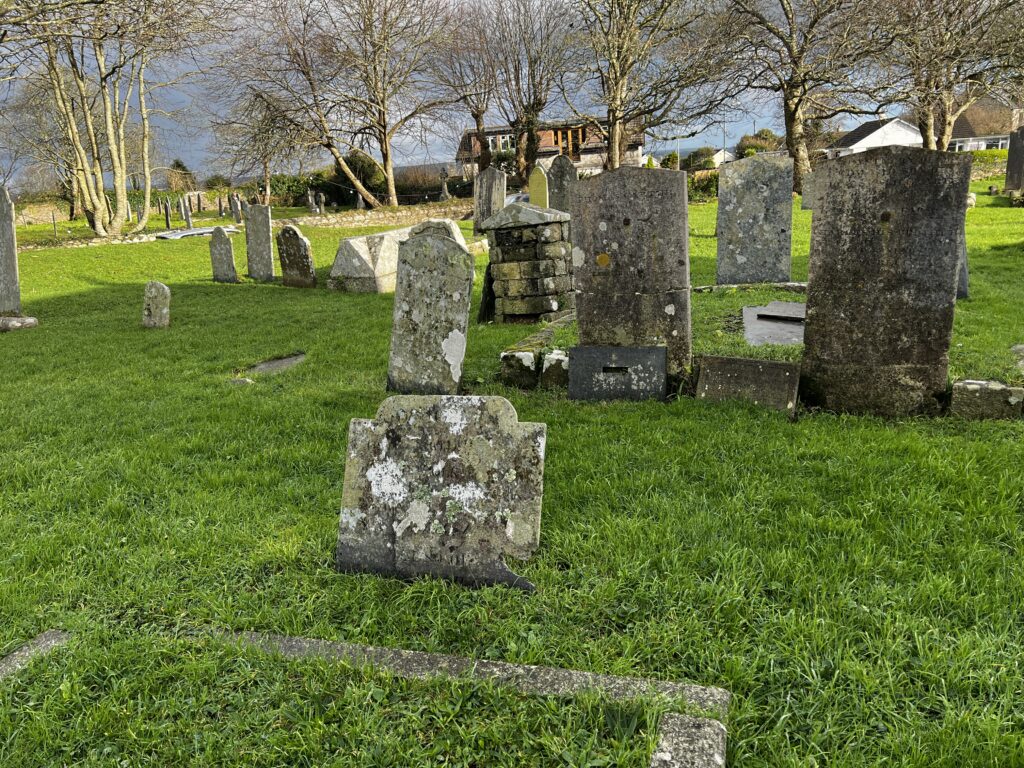
The binders contained an alphabetical guide to the churchyard burials and a plan showing the location of each grave. I needed both. Years of exposure had left many of the inscriptions difficult or impossible to read.
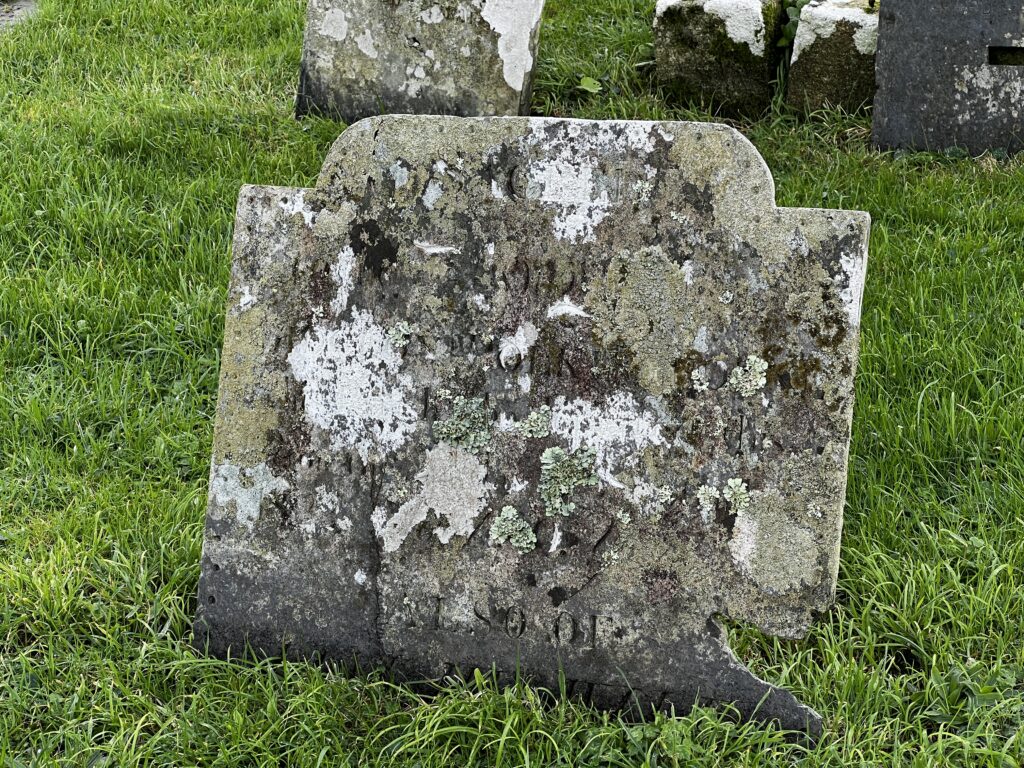
The guide directed me to grave 62, the burial place of Gideon and Jane Polkinghorne.
Jane was born Jane Lemon, the eldest child of Samuel Lemon and Margaret Nicholas, my seventh-great-grandparents. That made her my sixth-great-grandaunt. Her father was the same Captain Samuel Lemon whose one-forty-eighth interest in Great Work Mine was recorded in 1754.
Jane grew up in Germoe. In 1761, at about seventeen, she married Benjamin Rowe Cornish. They had six children before Benjamin died. She later married Gideon Polkinghorne and had another seven children with him.
Jane lived to the age of ninety and died in 1834. She and Gideon made their home at Trew, a hamlet north of Breage.
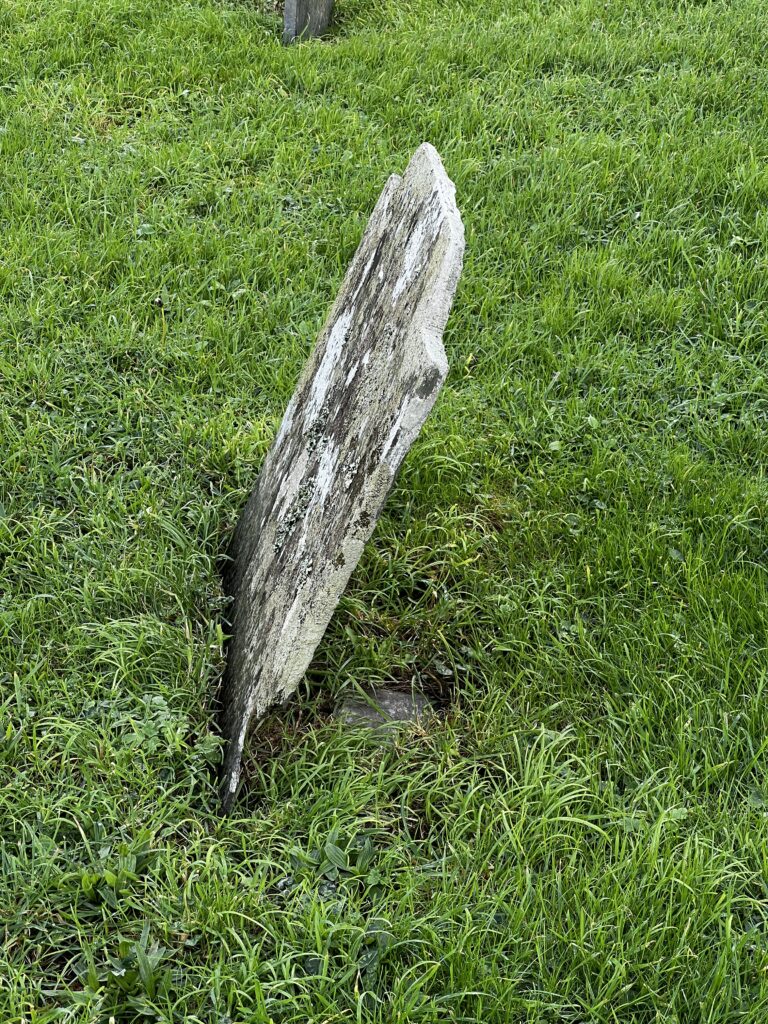
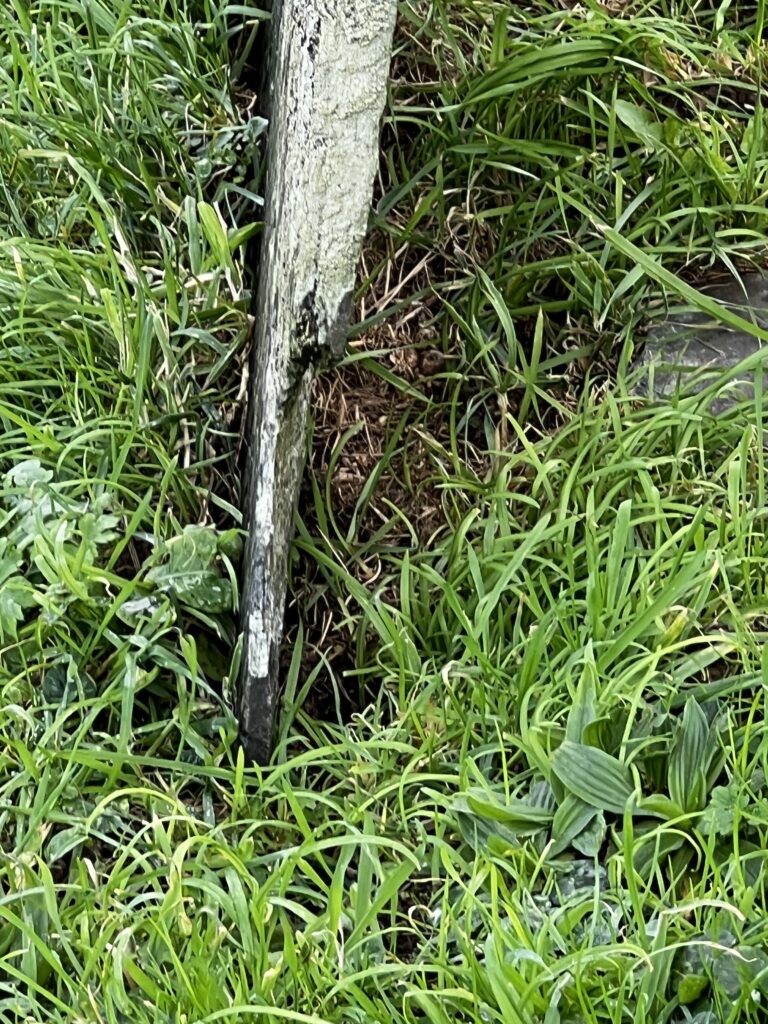
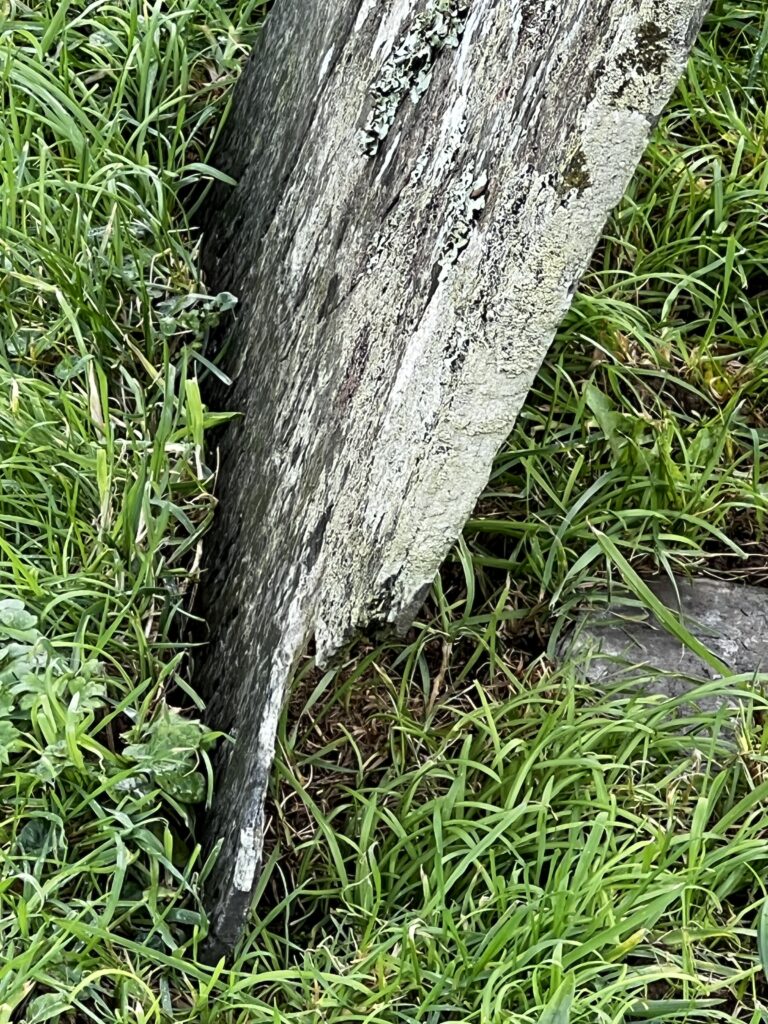
Without the churchyard guide, I doubt I would have identified their grave. The stone has thinned and cracked, and it now leans to one side. Much of its inscription has disappeared.
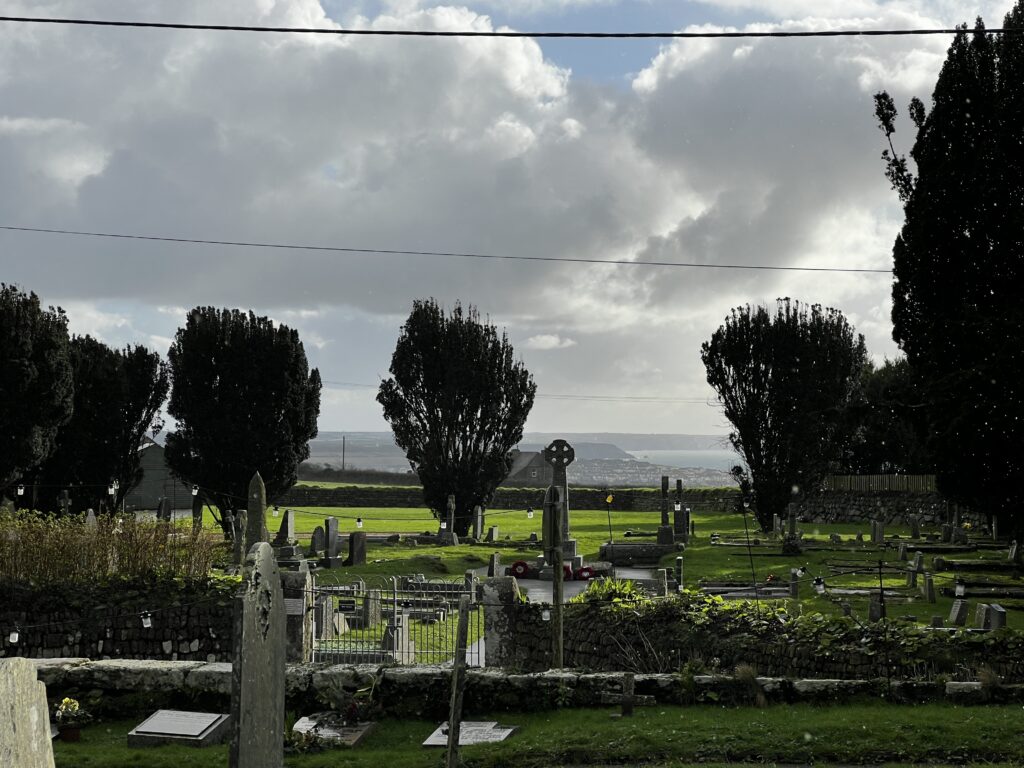
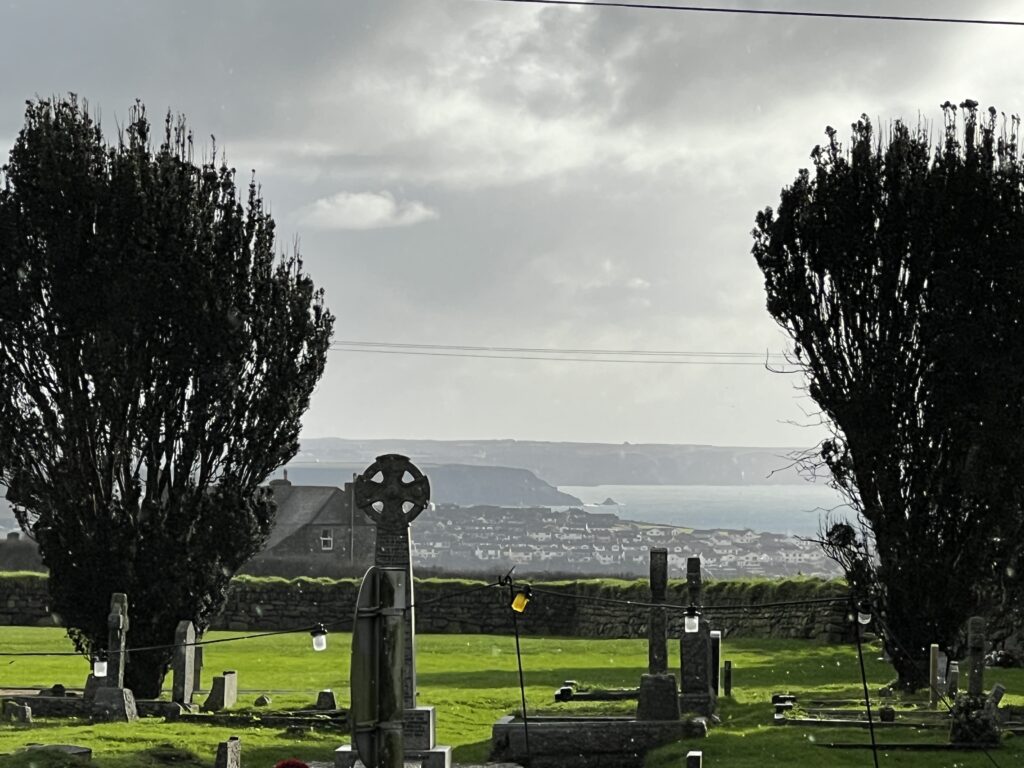
From the grave, I could see the coastline around Gunwalloe and, farther away, the Lizard Peninsula. I had not appreciated the churchyard’s elevation until I stood there. The fields seemed to descend from the grave toward the sea.
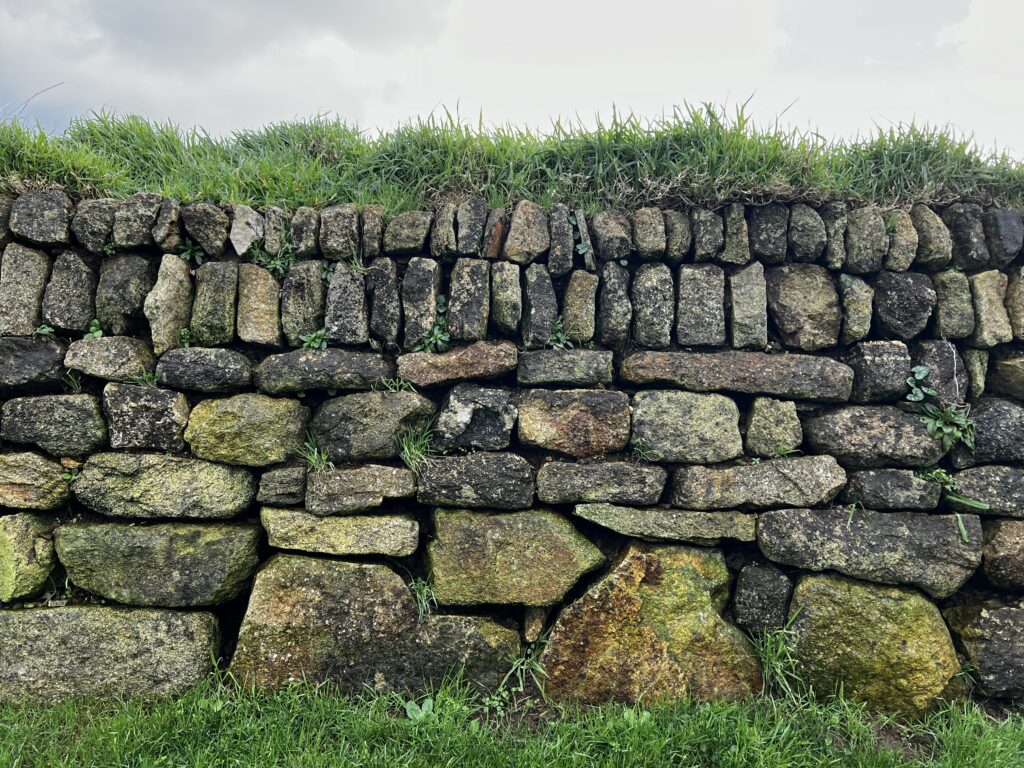
A fieldstone wall separated the churchyard from the neighbouring farmland. I stopped to look at how its uneven stones had been fitted together. Some projected farther than others, and few appeared to share the same shape, yet the wall had held its line through years of Cornish weather.
The Road to Pellor House
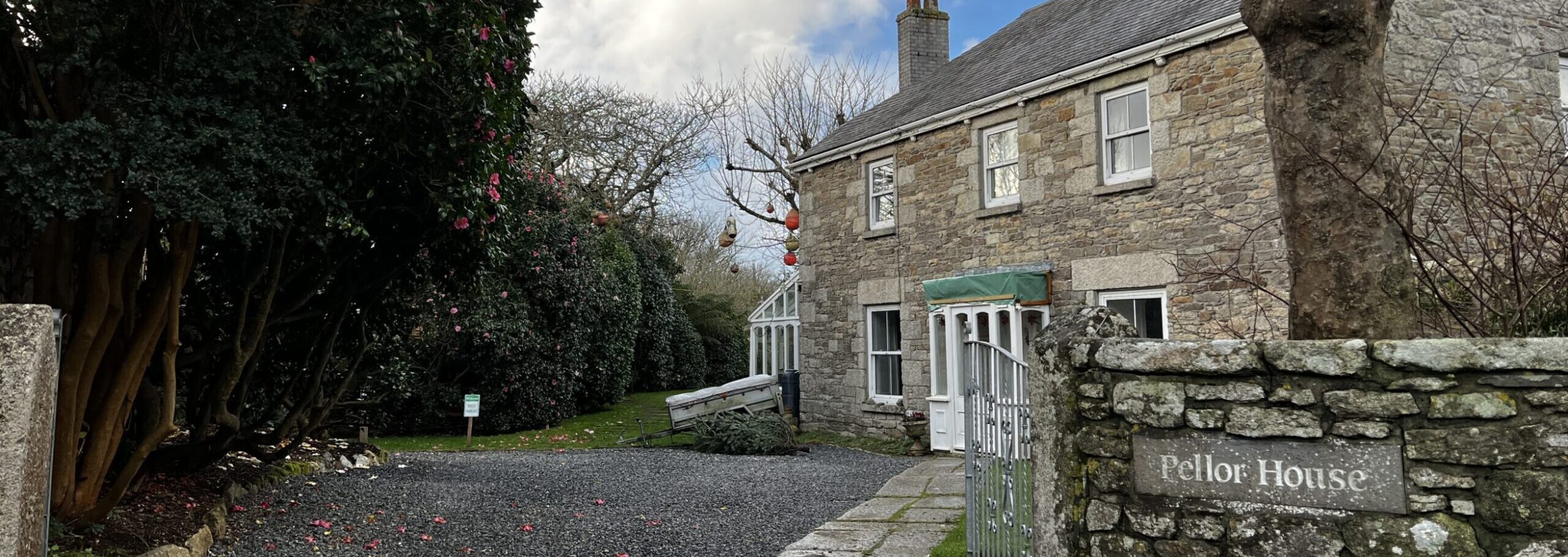
Before leaving Breage, I walked down the road from the church, passed the village pub and continued toward Pellor House.
My research places Jane’s brother Samuel Lemon and his wife, Elizabeth Williams, at Pellor House from about 1780 until Elizabeth’s death in 1805. Samuel and Elizabeth were my sixth-great-grandparents, and they raised eight children there.
The walk from the church took only a few minutes. Samuel, Elizabeth and their children would have known the road well. They may have followed it for baptisms, marriages, funerals and Sunday services. It was also the road home.
I tried to picture the family walking it, but I knew how easily imagination could supply details the records do not. The distance itself required no invention. Their house stood close to the parish church, with the Queens Arms between the two.
Pellor House survives, although the building I saw was not quite the one Samuel and Elizabeth would have known. Historic England describes it as eighteenth-century in part but mostly dating from the early nineteenth century. The house underwent substantial enlargement, and its present arrangement incorporates an older section. Some of the structure belonging to the family’s time may remain within it.
Before visiting Cornwall, I knew Breage as a place name in my research. It appeared beside marriages, burials and other events in the Lemon family’s history. That afternoon gave those records a physical arrangement.
Jane’s grave stood beside the church, overlooking the fields and distant coast. Her brother’s house was down the road. I could walk between the two in minutes.
The records had already told me that the Lemon family lived in Breage. Walking from the churchyard to Pellor House showed me the small part of the village in which some of their lives unfolded.