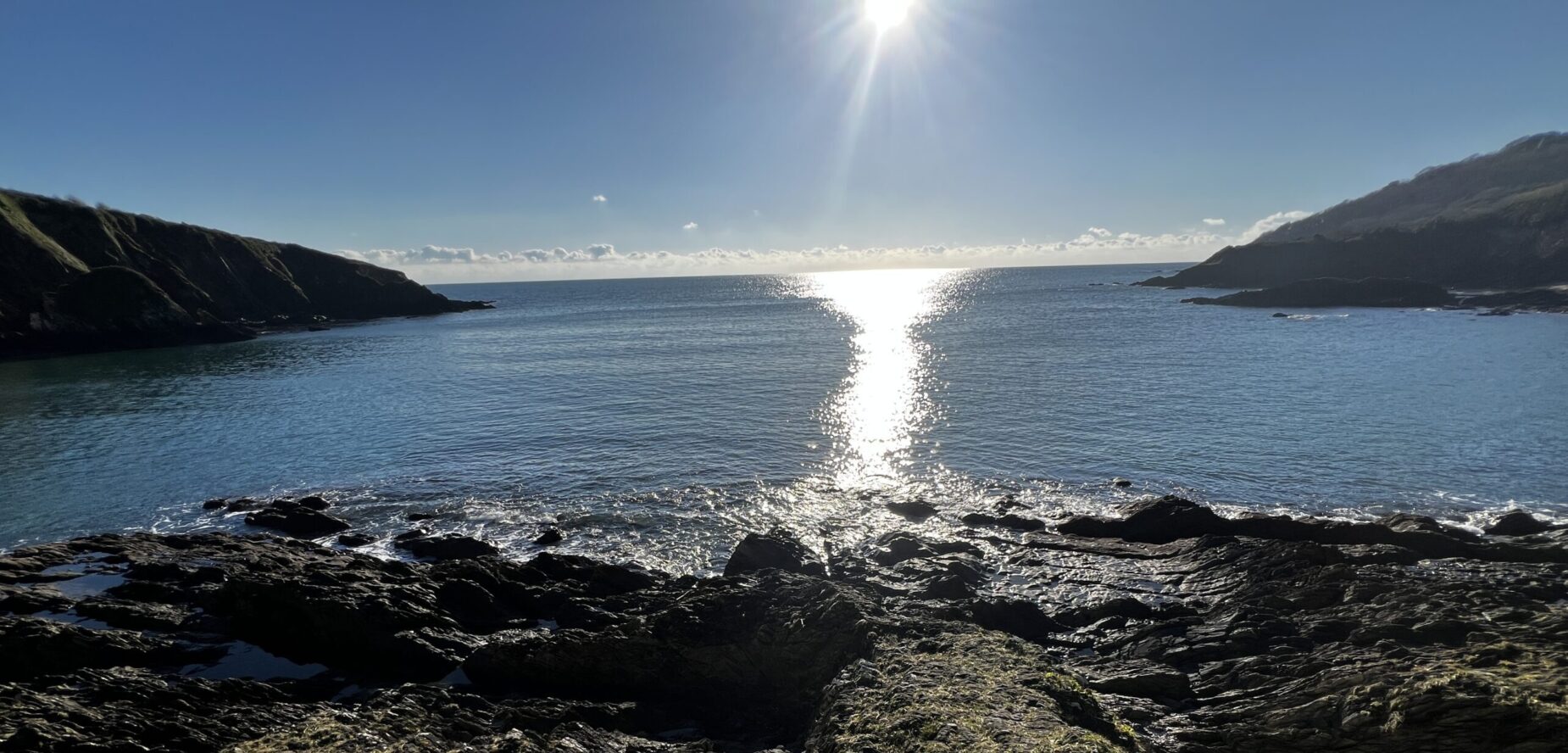
I drove from Penzance towards Menabilly on the morning of 7 January 2024. I had reserved the afternoon for Heligan, where I planned to explore my connections to the Lemon and Tremayne families. Menabilly gave me a chance to begin the day with another branch of my family.
Rachel Rashleigh, my 7x great grandmother, belonged to the Rashleigh family of Menabilly. She married Dr John Gould, and their descendants lead to my maternal grandmother Anne, whom I knew as Nana.
Menabilly House remains private. My visit would take me past the estate entrance and Menabilly Barton, then down the footpath to Polridmouth Cove. I hoped that seeing the surrounding landscape would add something to the names and relationships I had found in the records.
The Rashleighs of Menabilly
The Rashleigh family came to Cornwall from Barnstaple in Devon. In the early sixteenth century, Philip Rashleigh established himself as a merchant in Fowey. The family acquired property through the marriage of his son to Alice Lanyon and became part of Fowey’s merchant community. The family acquired large estates during the dissolution of the monasteries during the reign of King Henry VIII.
In 1596, Philip’s grandson John Rashleigh purchased property at Menabilly and began building a house there. His son Jonathan completed it. Parliamentary forces looted the house during the Civil War, and the family rebuilt it between 1710 and 1715.
Several generations of Rashleighs developed the grounds. Philip Rashleigh, who inherited Menabilly in 1764, built a grotto near Polridmouth and engaged Thomas Gray to redesign parts of the landscape. William Rashleigh inherited the estate in 1811 and expanded its collection of exotic plants through connections with the Royal Botanic Gardens at Kew.
Historic England’s register entry for Menabilly records the development of the house, gardens and surrounding parkland.
The estate also has a close association with Daphne du Maurier. She first heard about Menabilly during the late 1920s and became fascinated by the secluded house. During the Second World War, she rented it from the Rashleigh family and made it her home for twenty-six years.
Menabilly appears in, or helped shape, Rebecca, The King’s General and My Cousin Rachel. The official Daphne du Maurier website gives an account of her first attempts to find the house and her years as its tenant.
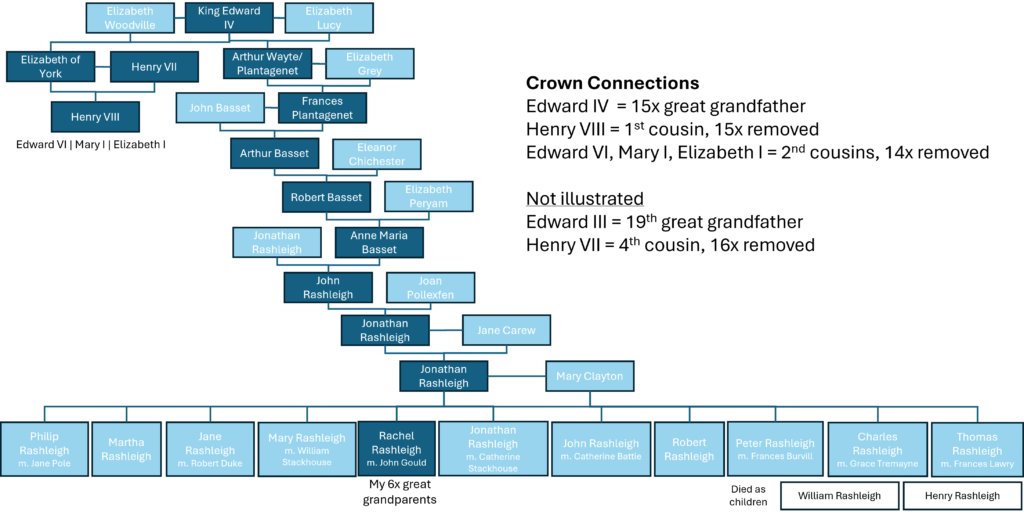
The road to Menabilly
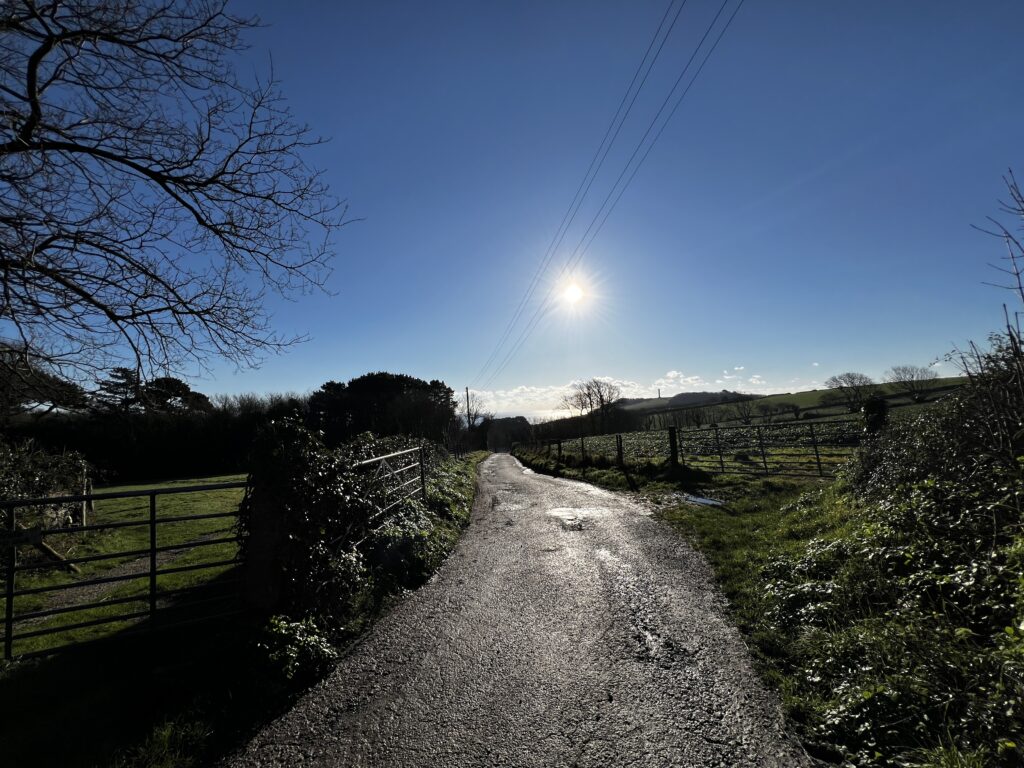
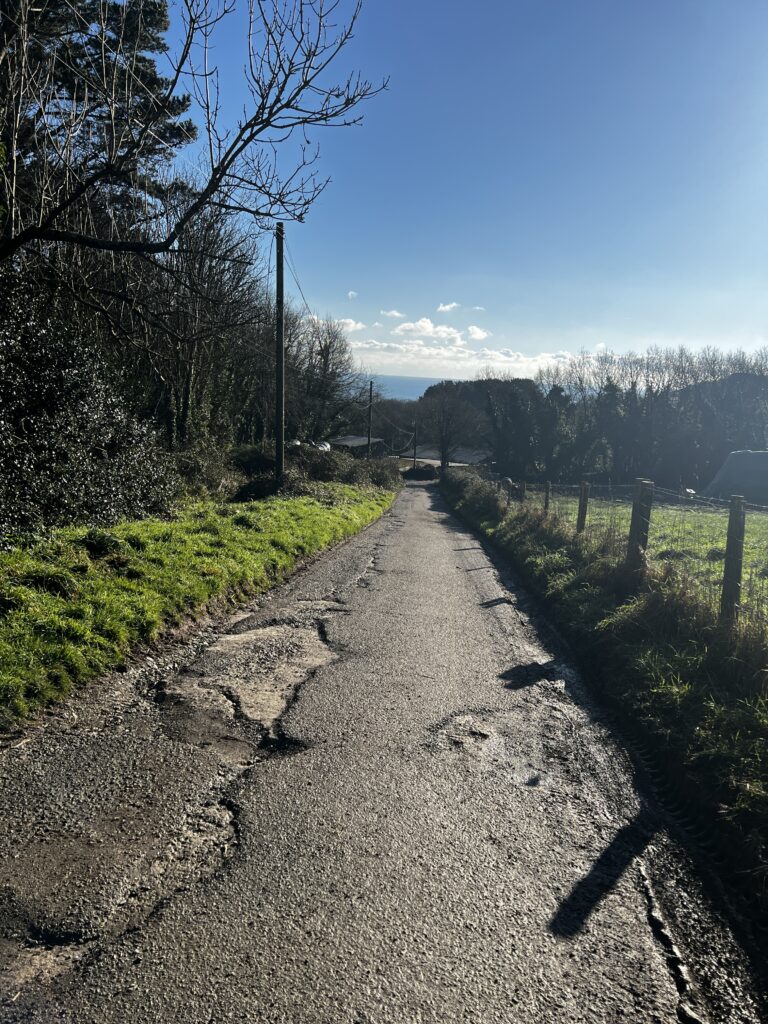
Near St Blazey, my GPS directed me onto Driving Lane, a muddy single-track road. Before long, I met a tractor carrying hay bales. There was no room for us to pass.
The farmer reversed around a bend and into the entrance to Kilhallen Farm. I thanked him as I drove past and continued towards Par.
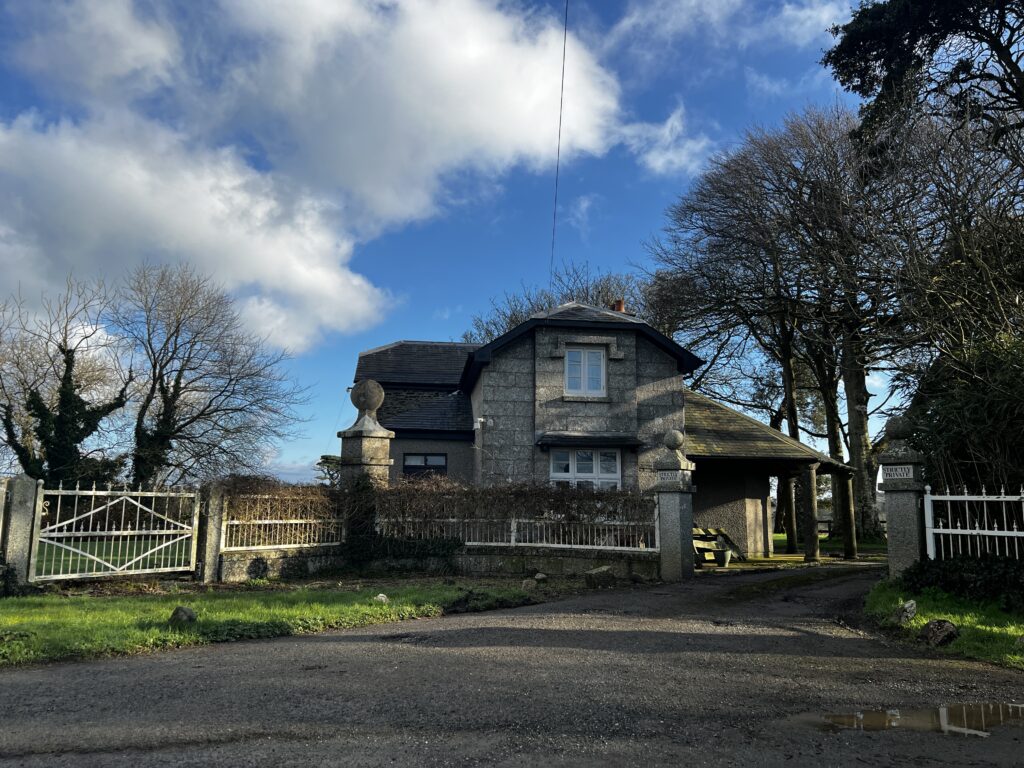
From Polmear Hill, I followed signs for the Rashleigh Inn at Polkerris Beach and then for Menabilly. The road passed the Menabilly gatehouse before leading to a small car park on the hill above Menabilly Barton.
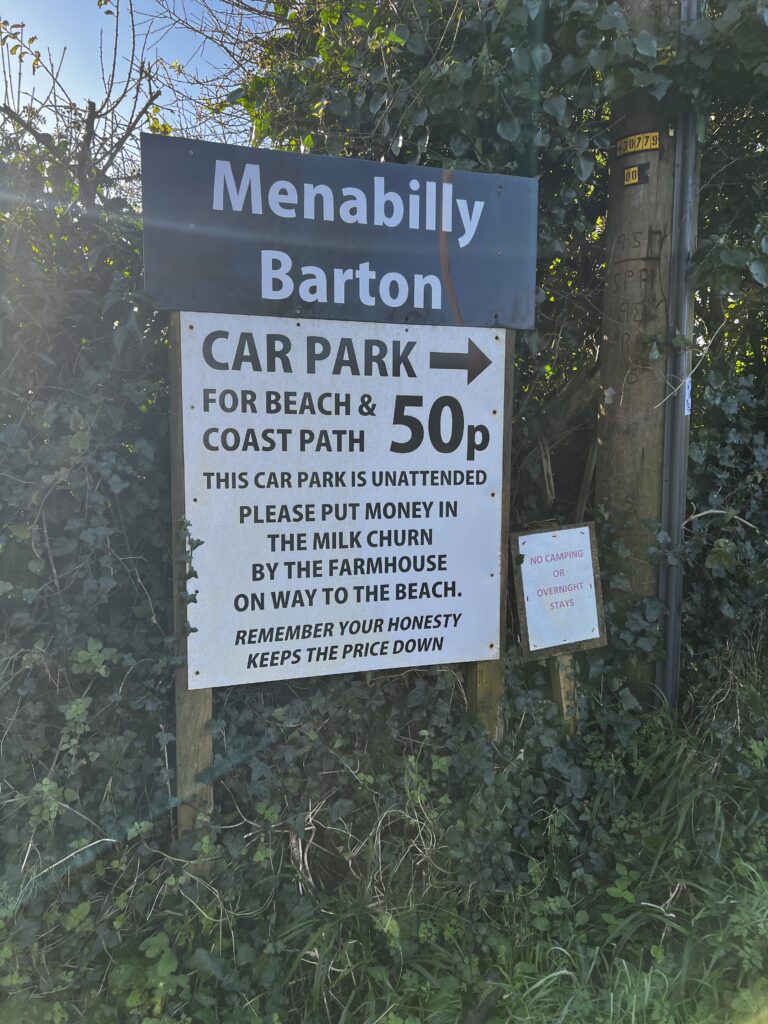
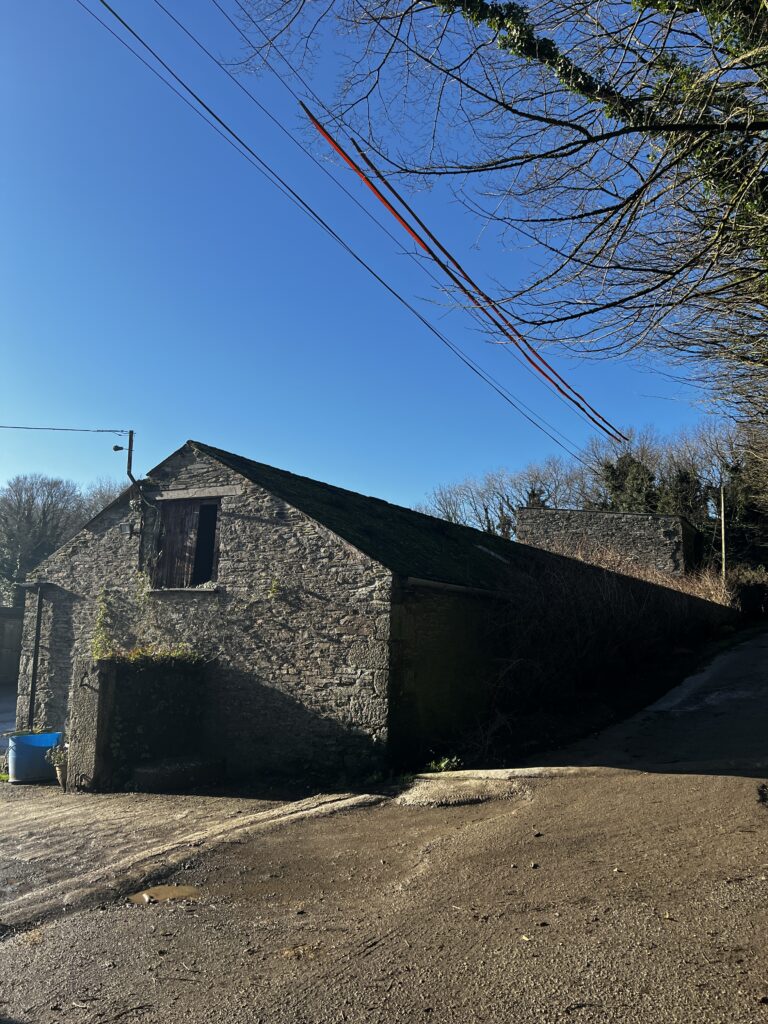
A sign requested a parking contribution of 50p, which visitors were to leave in a milk churn beside the farmhouse.
Storm Henk had brought strong winds and heavy rain to Cornwall during the previous week. The car park showed the effects. The ground was soft, with patches of standing water and deep mud near the edges.
The sun had come out that morning, and I began to regret wearing my coat as I set off down the hill.
Walking to Polridmouth Cove
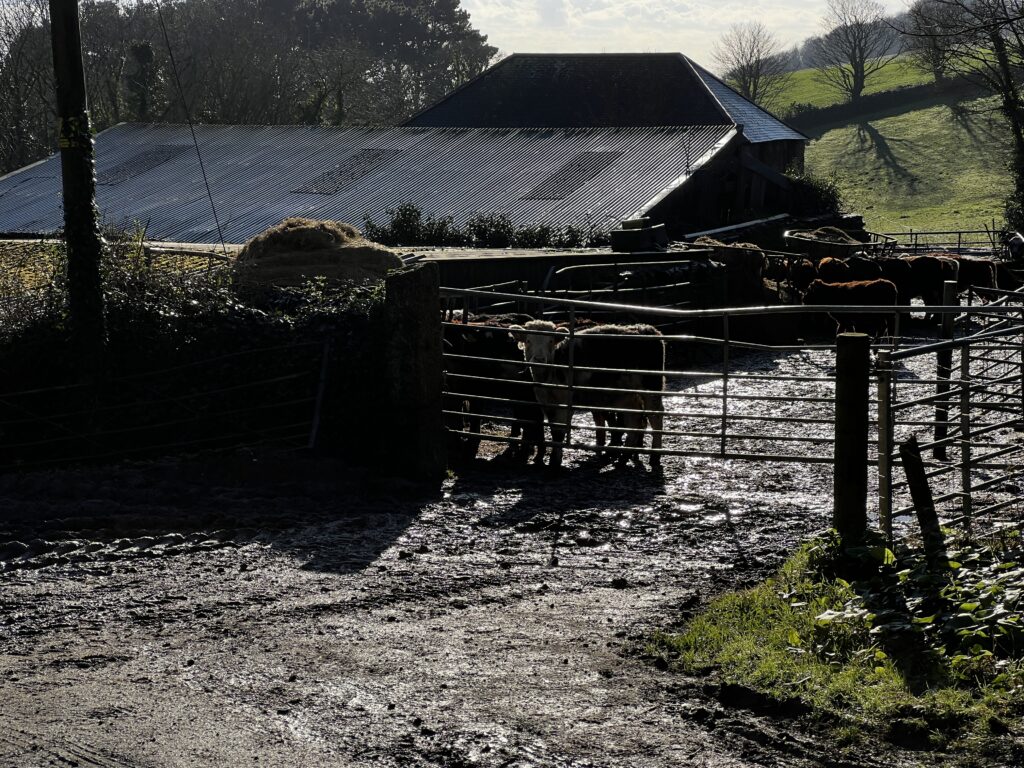
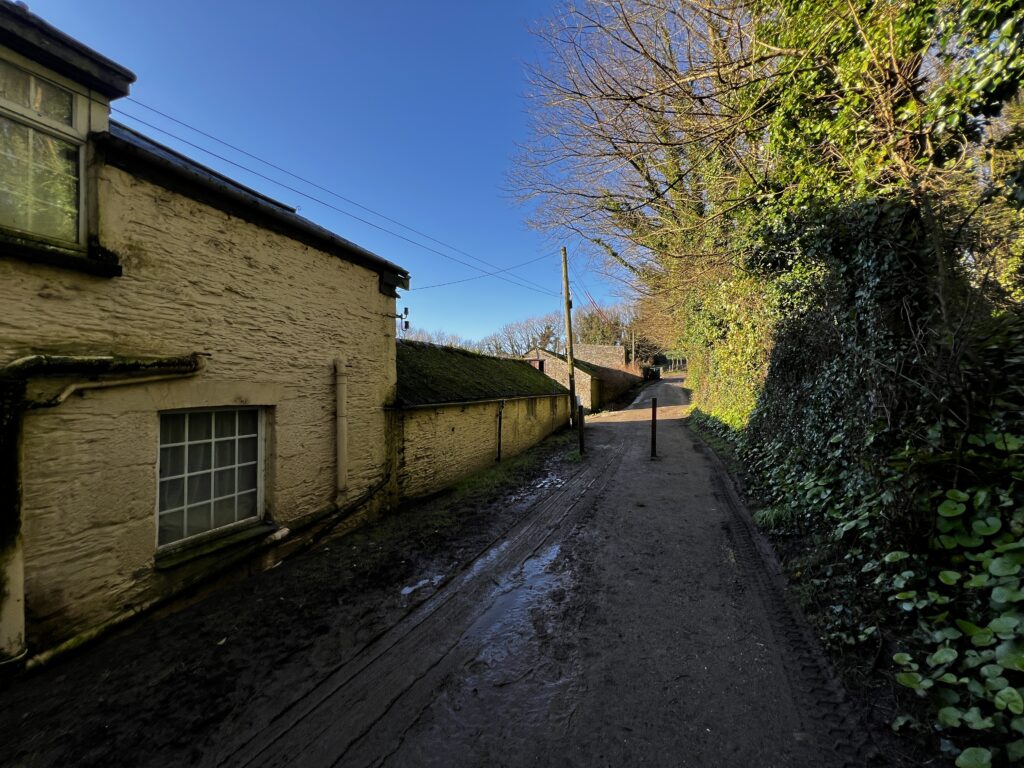
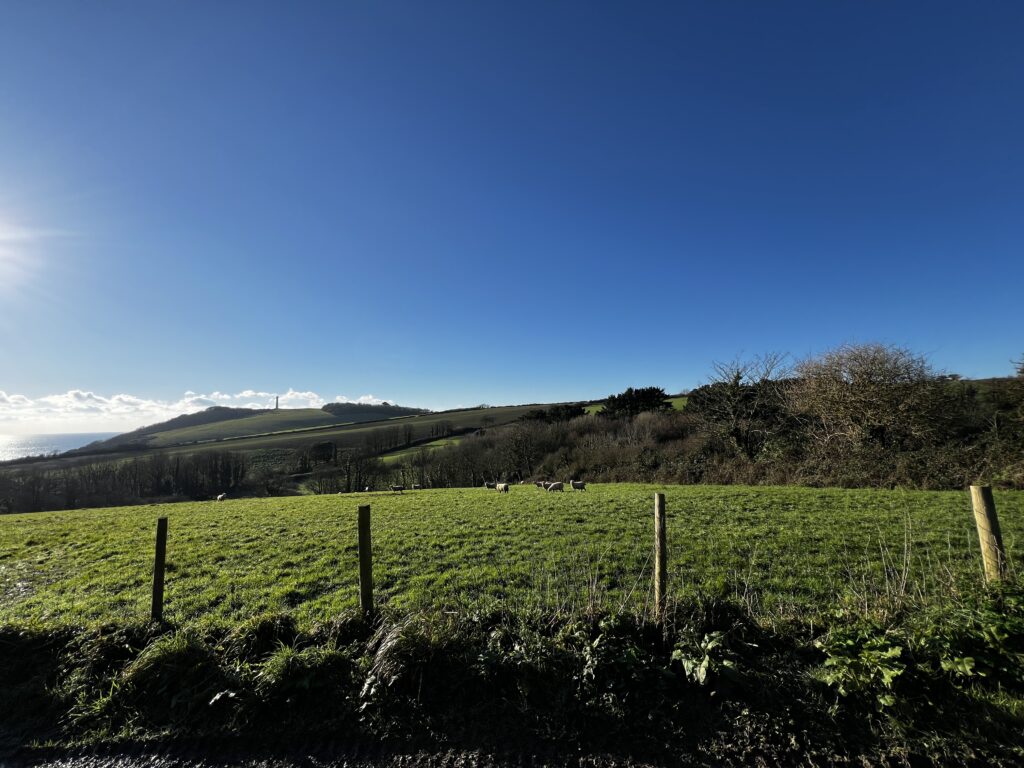
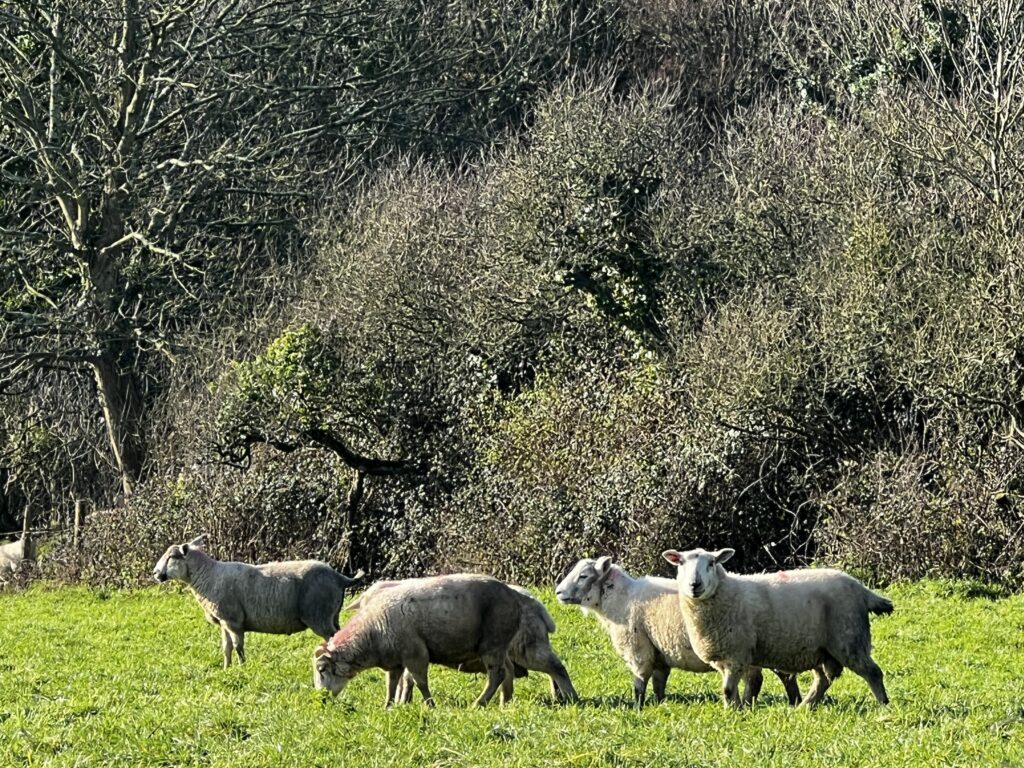
The route passed through Menabilly Barton, where sheep and cattle grazed in the surrounding fields. At the foot of the hill, a cow stood beside the point where the path turned towards the coast. It watched me pass with enough interest to make me glad I had paid my 50p.
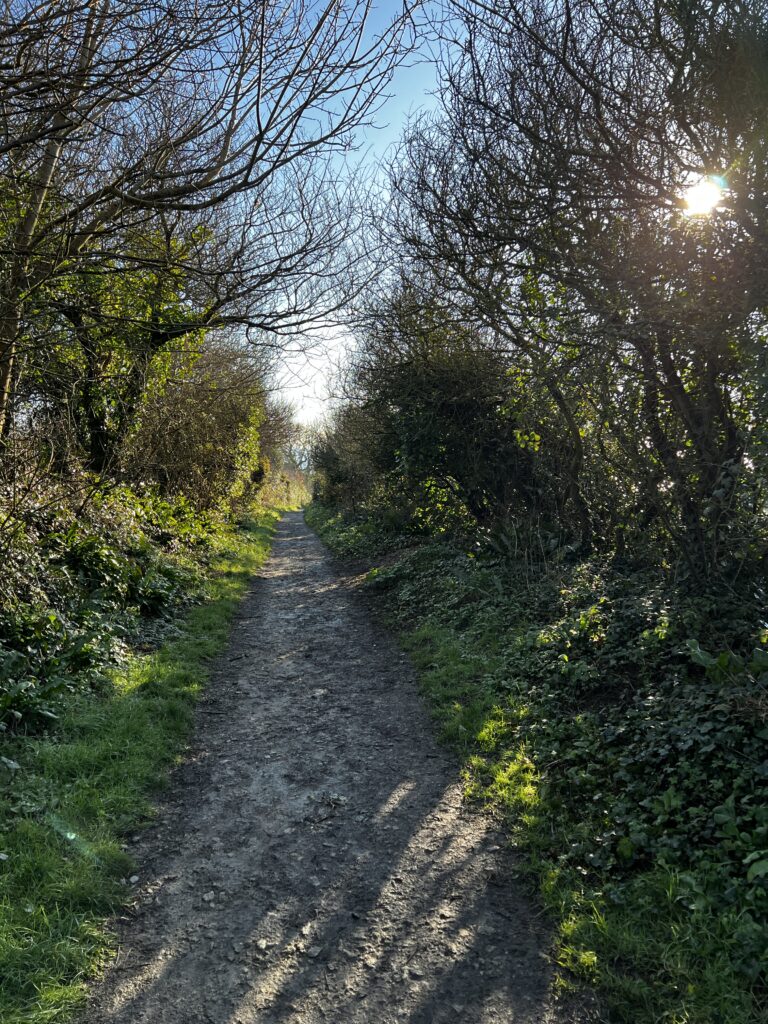
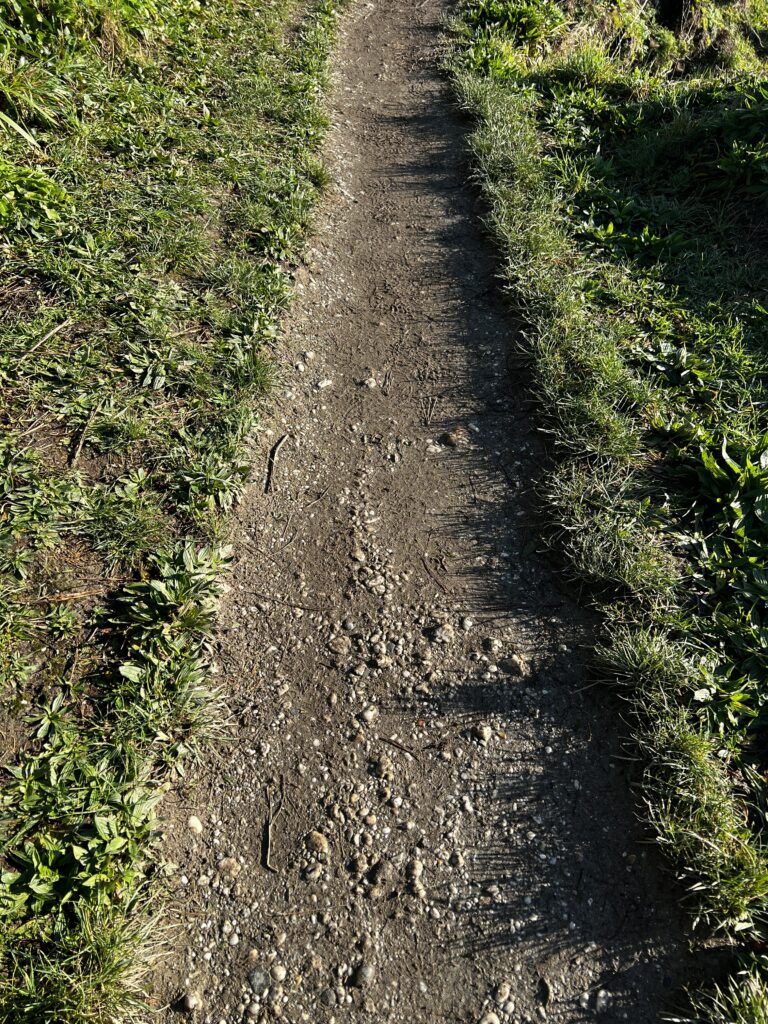
The path soon became a stretch of thick mud. My hiking shoes were decent, though a pair of wellies would have made more sense.
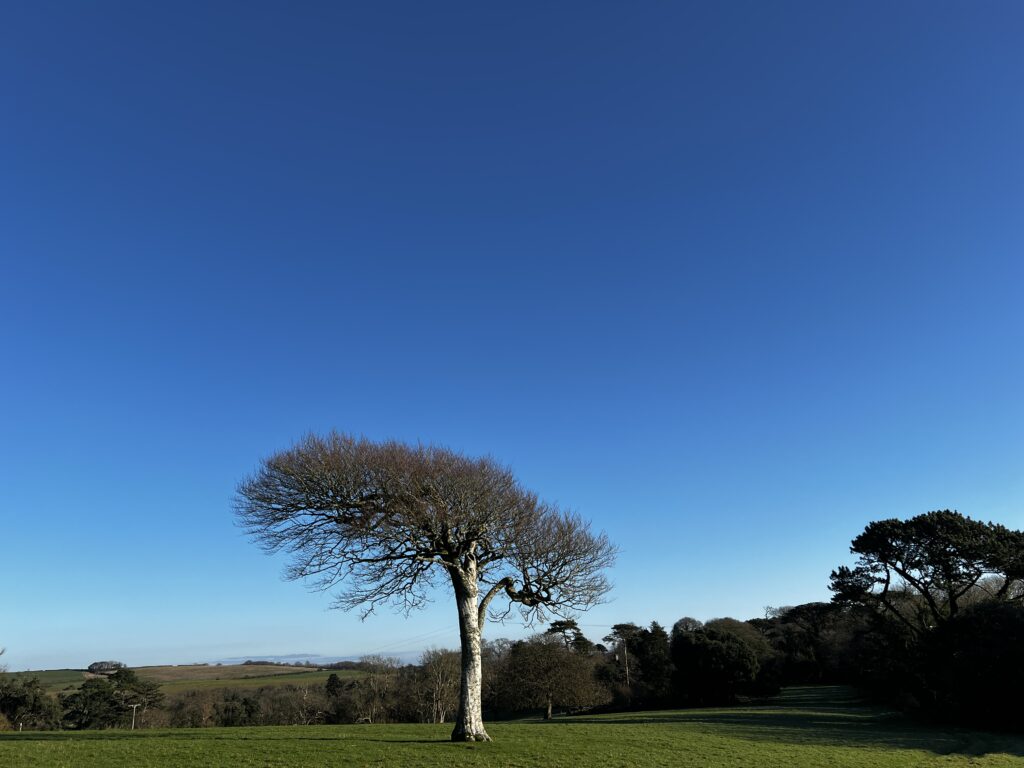
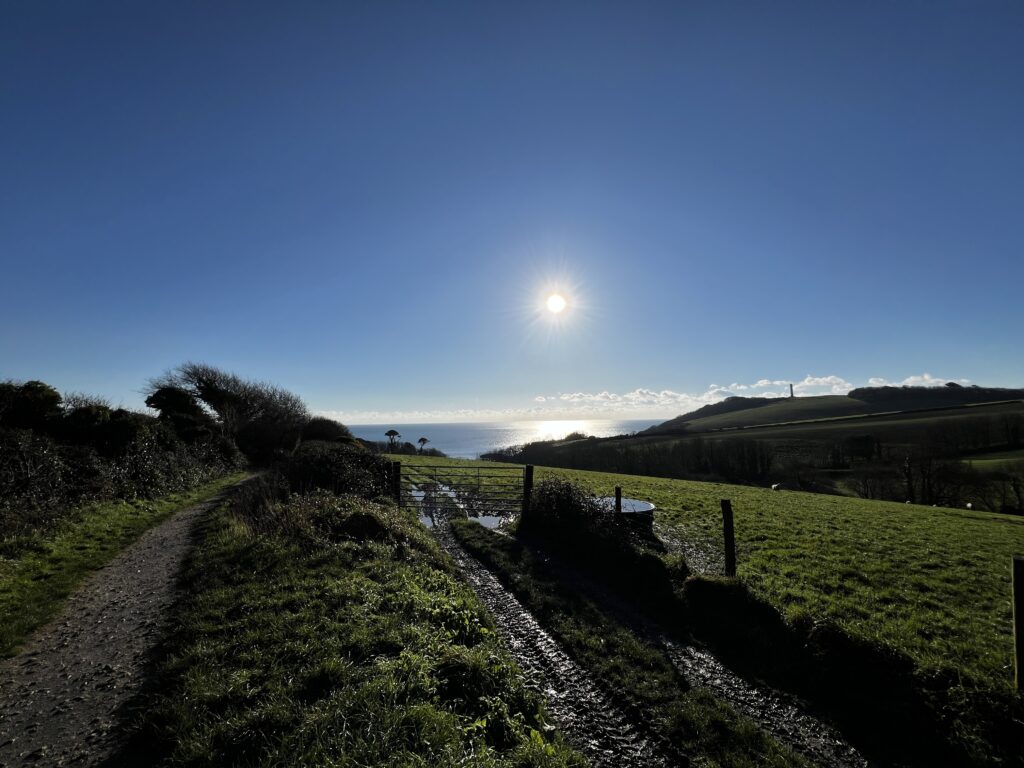
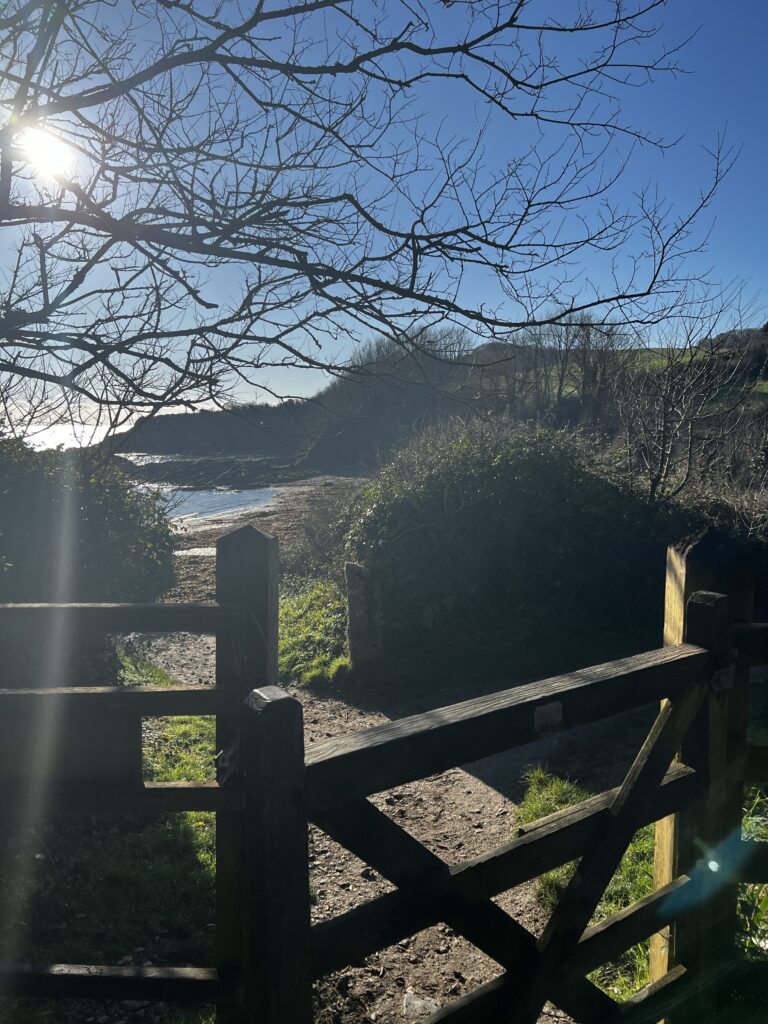
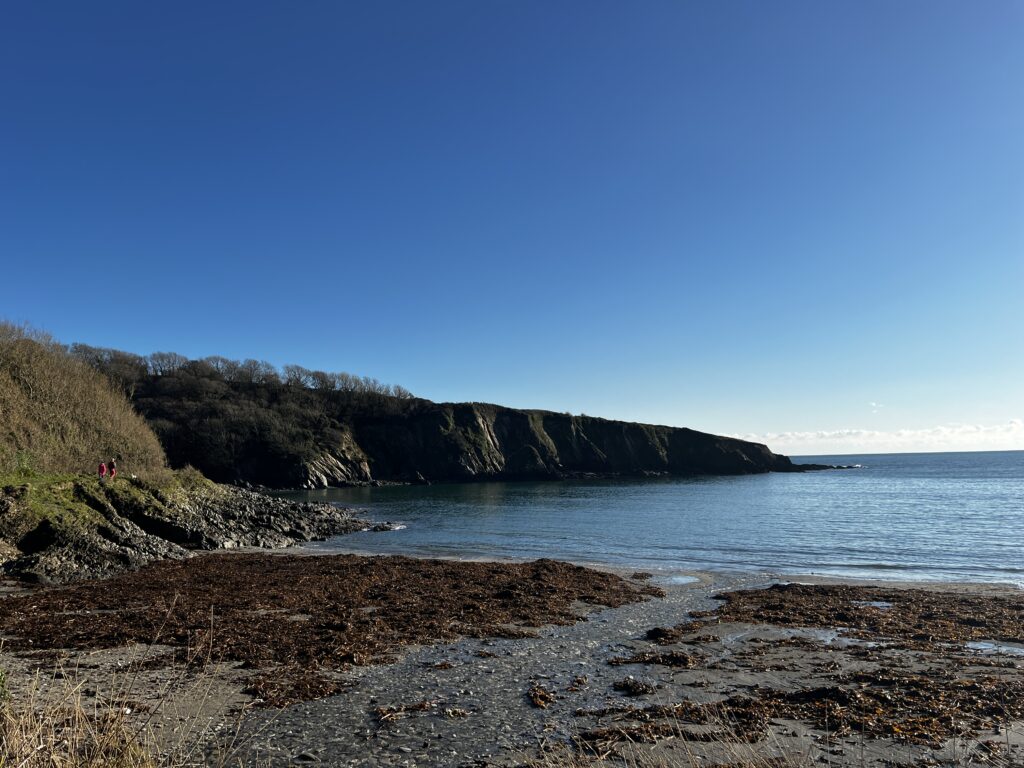
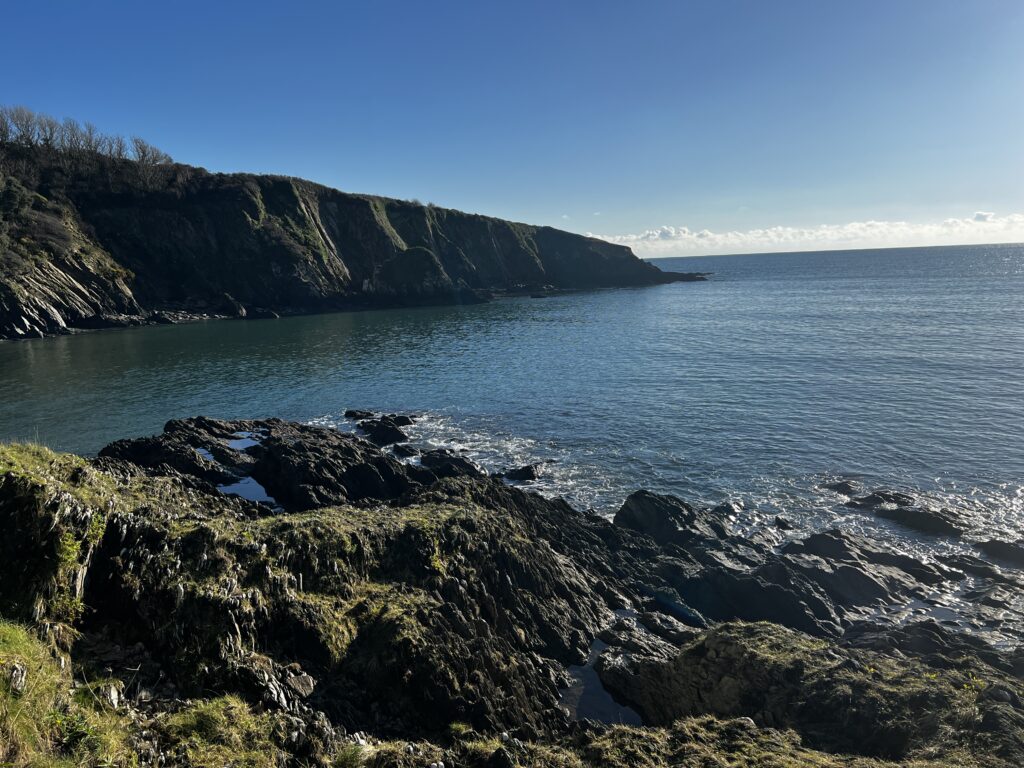
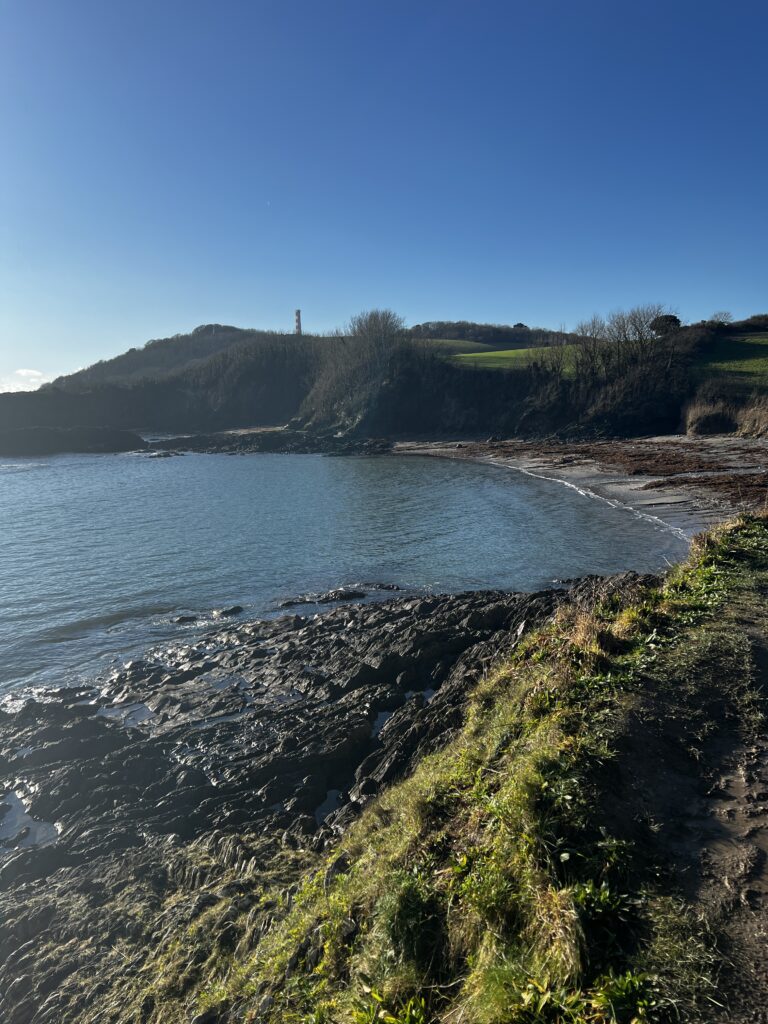
The surface changed to gravel beside a meadow. Sheep grazed on the slope, and beyond them I could see Polridmouth Cove and the red-and-white daymark on Gribbin Head. I stopped several times to take photographs as I walked towards the water.
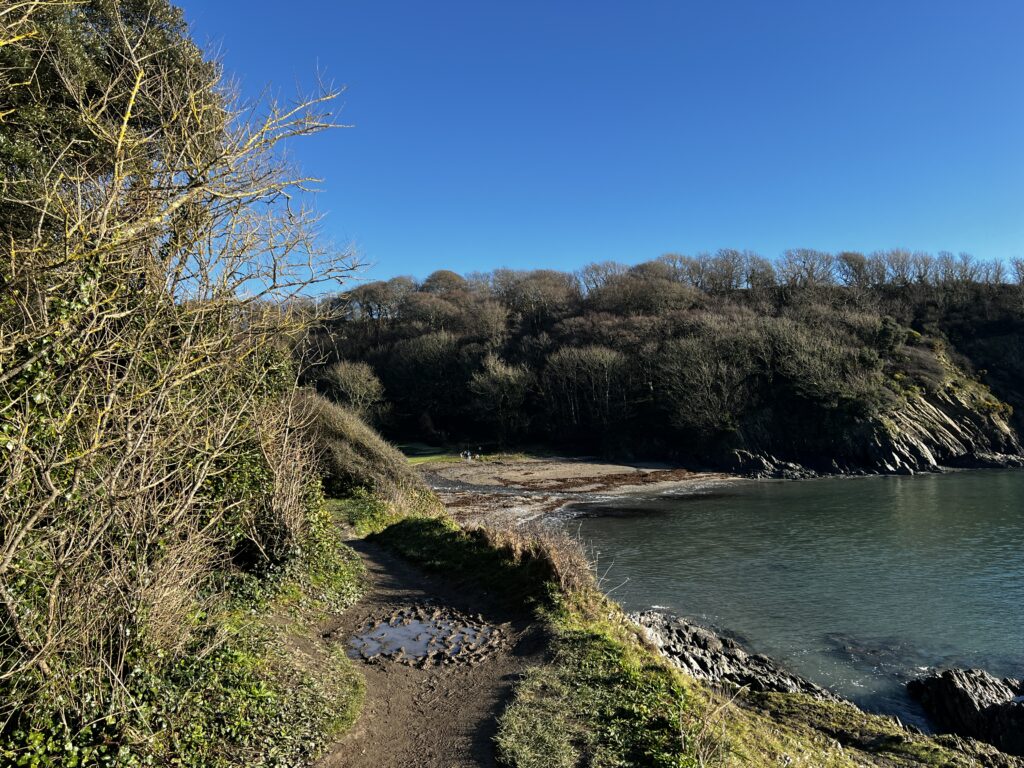
Storm Henk had left seaweed across much of the cove. A wooden walkway crossed the vegetation and a small stream flowing towards the beach. Dogs ran in and out of the water while their owners followed along the path.
The temperature was about 12°C, but the sun and shelter from the wind made it feel warmer. After several wet days in Cornwall, I was glad to spend part of the morning outside without rain.
I took photographs from the footpath and then turned back towards the farm. I learned after the visit that I had stopped about twenty steps short of Polridmouth Cottage.
The cottage dates from the early nineteenth century and overlooks the lower pool and beach. I had been close enough to see it, but the bend in the path had kept it out of view. Next time, I will keep walking.
Hooker’s Grove
My research after the visit helped me understand more of the landscape around the cove.
The route between Polridmouth and Menabilly House passes through Hooker’s Grove. William Rashleigh developed this part of the estate and maintained connections with Kew. The grove commemorates his friendship with Sir Joseph Dalton Hooker, whose plant-collecting work supplied British gardens with species from India and the Himalayas.
Kew sent plants to Menabilly during the nineteenth century, including rhododendrons planted beneath the ornamental trees and conifers. Heligan also grew rhododendrons from seed collected during Hooker’s 1847–1851 expedition to India. The collections provide another link between Menabilly and Heligan, the two estates I planned to visit that day.
Stuck in the car park
I followed the same path through the farm and climbed the hill to the car park.
My car had sunk into the soft ground while I was away. The front wheels sat in the mud, and pressing the accelerator produced little more than spinning tyres. The rental car had summer tyres, which offered no help on the waterlogged grass.
I got out and tried to push, but the car did not move.
A couple arrived soon after, and I asked if they could help. I needed one of them to sit behind the wheel and reverse while I pushed from the front. Neither had driven an automatic car before, so the rescue began with a short lesson on the controls.
One of them took the driver’s seat and selected reverse. I pushed as they pressed the accelerator. After several attempts, the wheels found enough grip and the car came free.
They had driven an automatic for the first time, and I could continue to Heligan. We thanked one another, and I checked that the car was on firm ground before leaving.
I had come to Menabilly hoping to see a place connected to the Rashleigh side of my family. The house remained hidden, but I saw its gatehouse, farm and coastal landscape. I also left with a better idea of how the estate connected with Polridmouth, Kew, Heligan and Daphne du Maurier.
Next time, I will continue along the path to Polridmouth Cottage. I will also bring wellies.