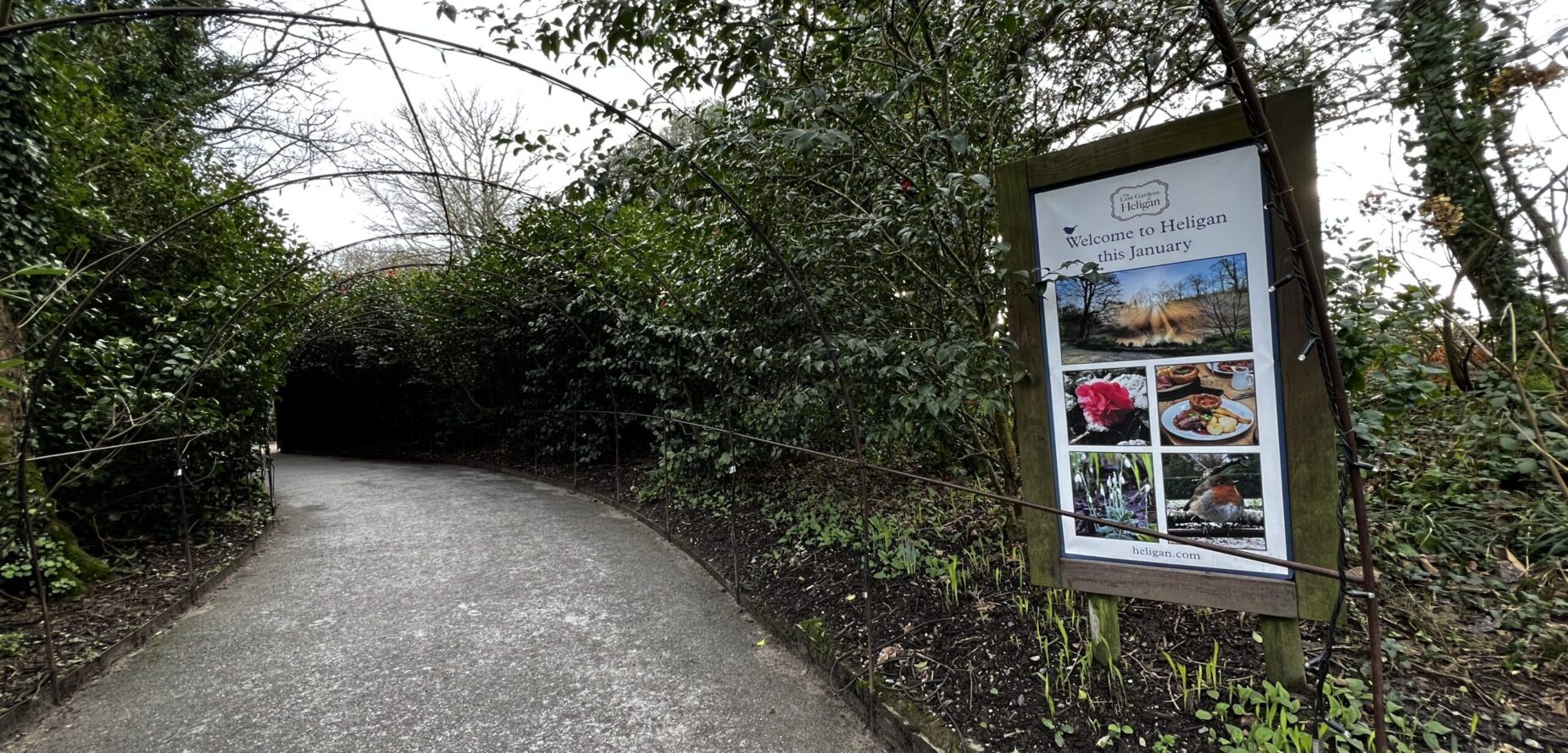
January 7, 2024 – I arrived at The Lost Gardens of Heligan with mud on my shoes and car mats.
That morning, my rental car had become stuck in the Menabilly car park. After getting it free, I stopped at a petrol station for paper towels, garbage bags and water, then found a quiet car park in Mevagissey where I could clean up. I had booked Sunday roast at Heligan and did not want to arrive coated in Cornish mud.
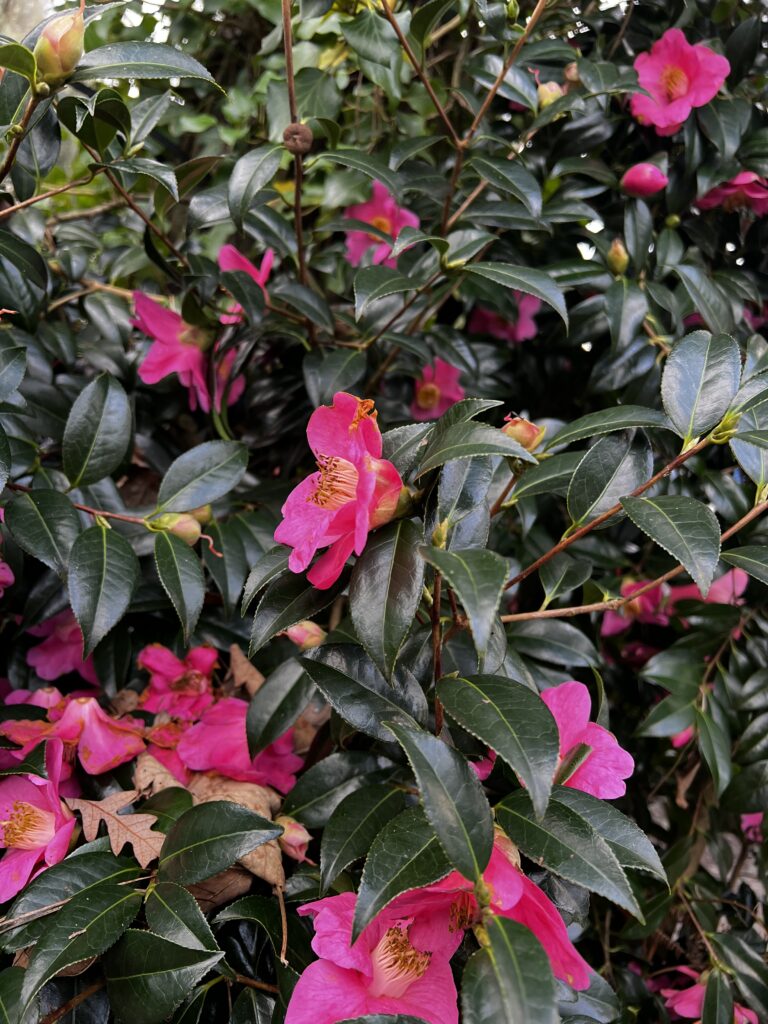
The narrow streets through Mevagissey slowed me down, but I reached Heligan at about two in the afternoon. Pink camellias grew beside the car park, their flowers standing out against dark green leaves. Even in January, there was plenty to see.
Heligan and the Tremayne family
Heligan Manor dates from the 1200s. Sampson Tremayne completed his purchase of the estate in 1569, beginning more than four centuries of Tremayne ownership. Successive generations enlarged the house, developed the gardens and collected plants from abroad.
The estate changed after the First World War. Heligan House served as a convalescent hospital for officers from 1916 to 1919, while the loss of gardeners and estate workers contributed to the gardens’ decline. The house was later let, converted into flats and sold.
Tim Smit and John Willis, a Tremayne descendant, found the gardens in a derelict state in 1990. John Nelson began the work of clearing them. Their project grew into a major restoration of the productive gardens, pleasure grounds and plant collections. Today, Heligan covers more than 200 acres. Its gardeners continue to use many of the methods practiced by their nineteenth-century predecessors. Heligan’s timeline and the Historic England register entry give fuller accounts of the estate’s development.
I had come to see that history, but my interest in Heligan was also personal.
Historic England | Spotlight on Heligan
My family connections to Heligan
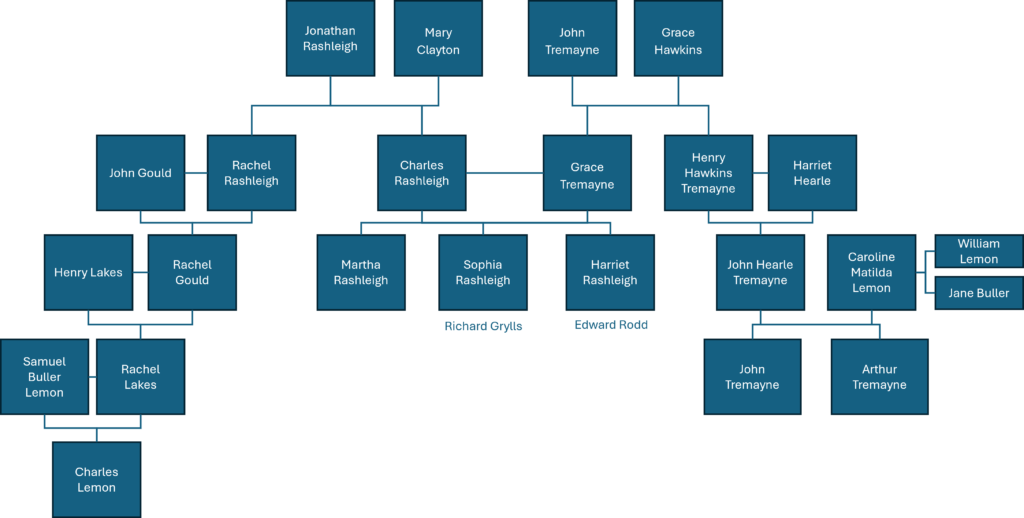
Grace Tremayne married Charles Rashleigh, the younger brother of my sixth great-grandmother, Rachel Rashleigh. Rachel married Dr John Gould. Their descendants lead to my maternal grandmother Anne, whom I knew as Nana.
A second connection runs through the Lemon family. John Hearle Tremayne married Caroline Matilda Lemon in 1813. Caroline belonged to the Lemon family of Carclew and was a cousin in my family line. Their son John inherited Heligan in 1851, while another son, Arthur Tremayne, inherited Carclew from Sir Charles Lemon in 1868.
These marriages connected the Tremaynes of Heligan, the Lemons of Carclew and the Rashleighs of Menabilly. They also explain why the gates from Carclew now stand at Heligan.
Around 1900, John Claude Lewis “Jack” Tremayne married Eleanor Rashleigh, a daughter of Jonathan Rashleigh of Menabilly. Jonathan descended from the same Rashleigh family I had been tracing during my visit to Cornwall.
I knew these relationships from family trees and records. At Heligan, I was about to encounter them in a different form.
Family Tree
Lunch with Heligan’s historian
Before leaving Canada, I had reserved a table for Sunday roast at the Heligan restaurant. I mentioned when booking that I was researching my family’s connection to the estate.
The restaurant manager put me in touch with Candy Smit, Heligan’s historian and archivist. Candy met me on the path to the restaurant, and we sat near the fireplace for lunch. It was my first Sunday roast in England.
Candy explained how Heligan’s farm supplies food to its kitchen and how the estate combines historic growing practices with its present-day work. During lunch, she introduced me to Sir Tim Smit, who helped restore Heligan and later co-founded the Eden Project.
After we ate, Candy took me through the grounds.
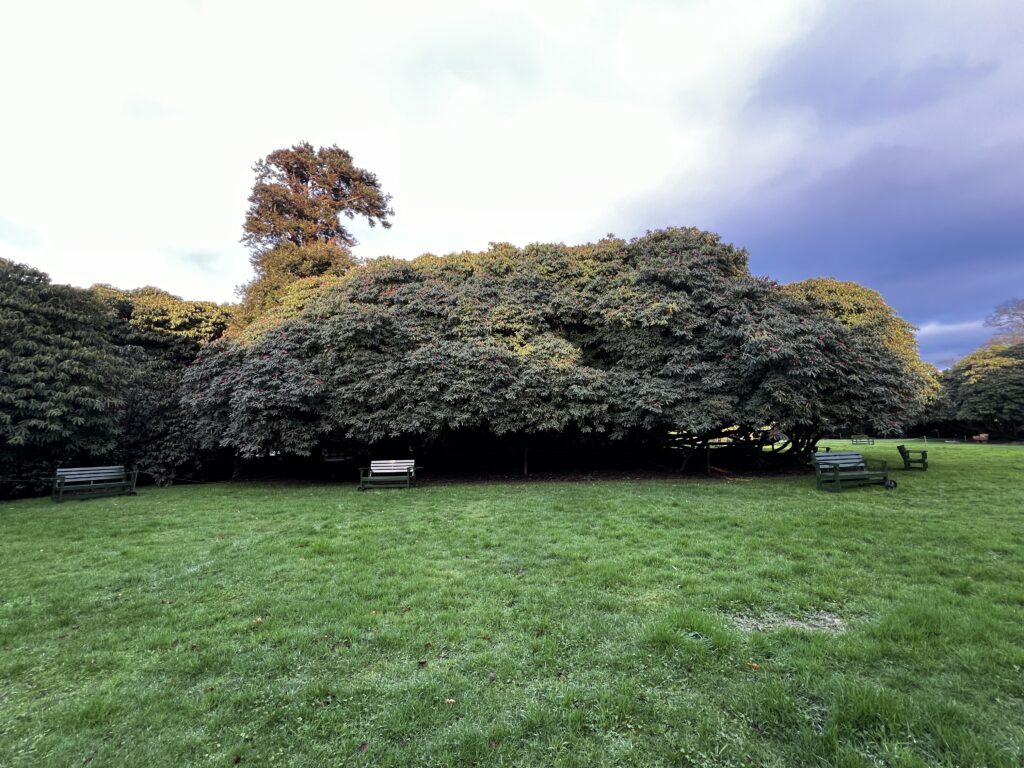
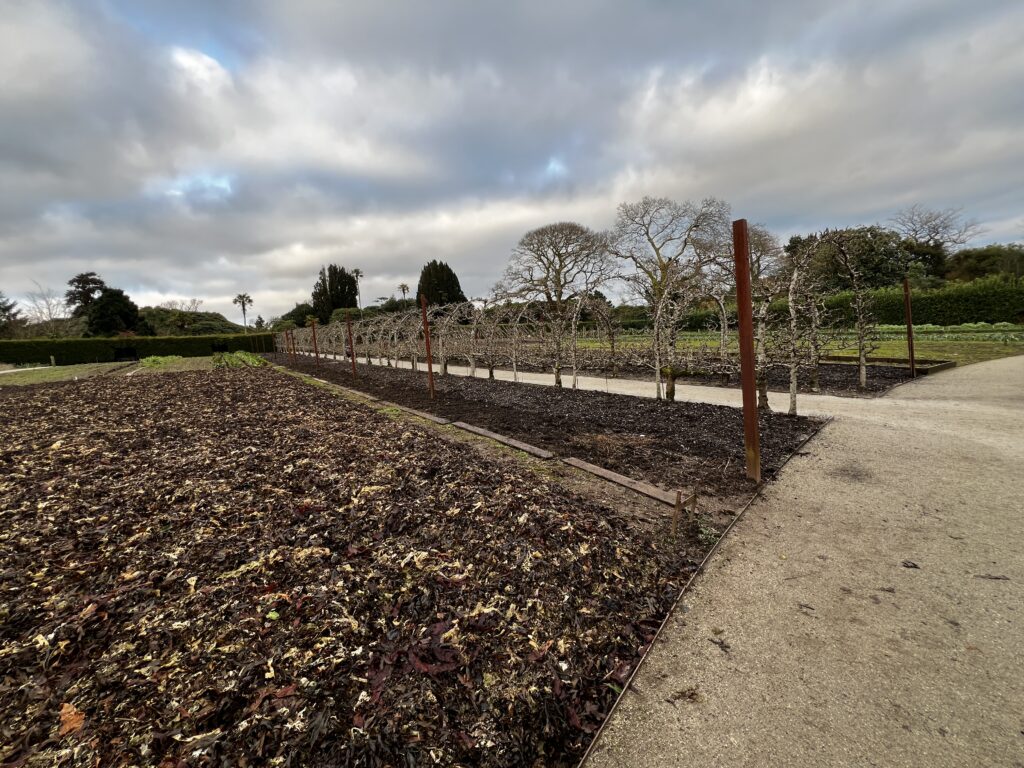
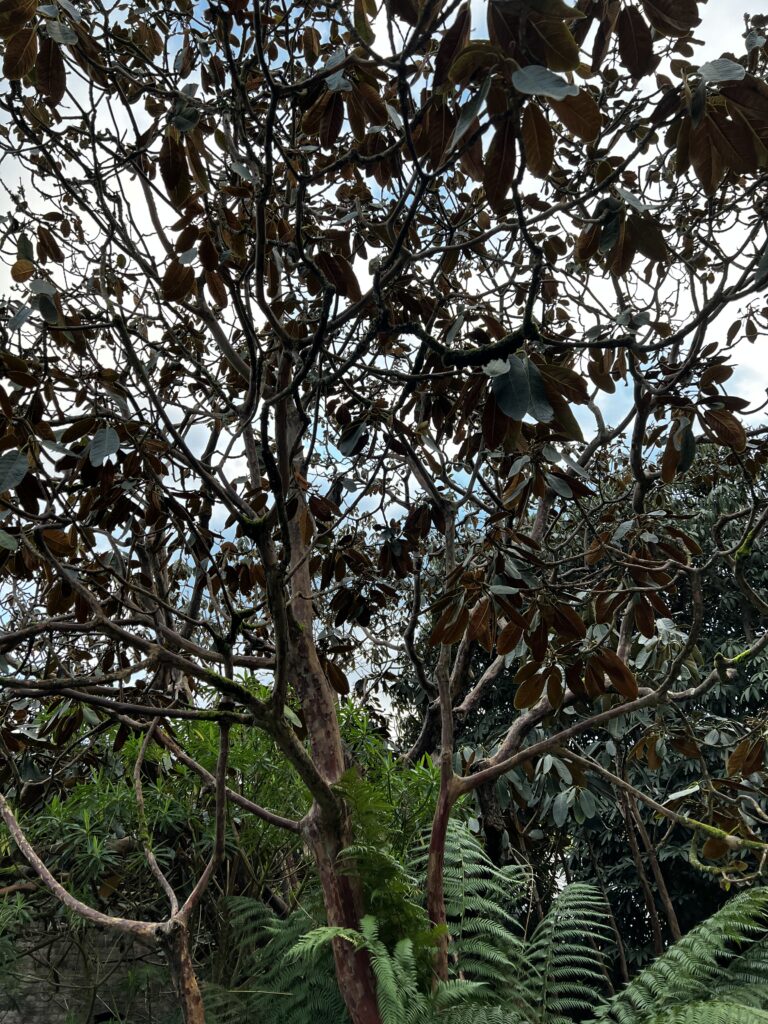
We began near Flora’s Green in the Northern Gardens. Camellias and rhododendrons planted by earlier generations of the Tremayne family still grow there. Some came from seeds collected during nineteenth-century expeditions.
We met a woman who had grown up on the estate. She remembered her father packaging flowers for Kew Gardens and recalled exploring the basement of Heligan House as a child.
From there, Candy and I walked through the Kitchen Garden, Flower Garden and Melon Yard.
The Pineapple Pit
The Melon Yard contains Heligan’s working pineapple pit. British gardeners once struggled to grow pineapples in a climate far removed from the fruit’s natural habitat. At Heligan, they filled trenches with manure. Heat from the decomposing material warmed the soil and allowed pineapples to grow inside the surrounding glass structure.
The restoration team rebuilt the neglected pit using the old method. Heligan now describes it as Europe’s only working pineapple pit. It is an impressive piece of horticulture, but it also shows how much labour and knowledge went into supplying a country house. Heligan’s Productive Gardens preserve that part of the estate’s history.
Our last stop gave me the clearest connection to my own family.
The Family Connection
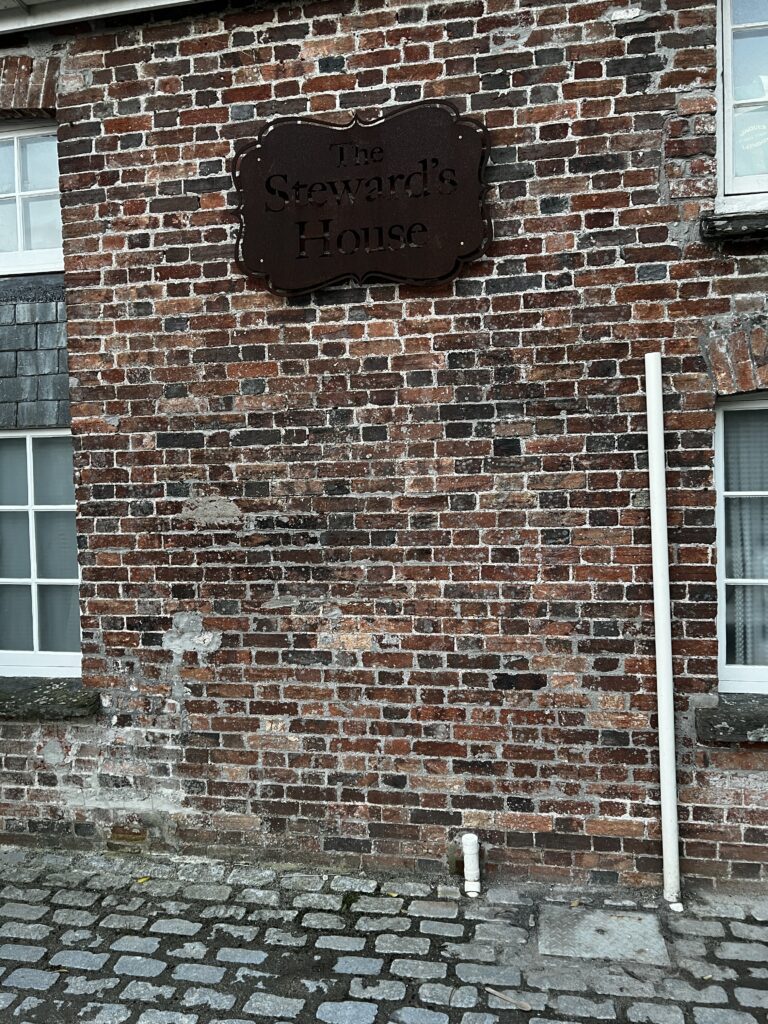
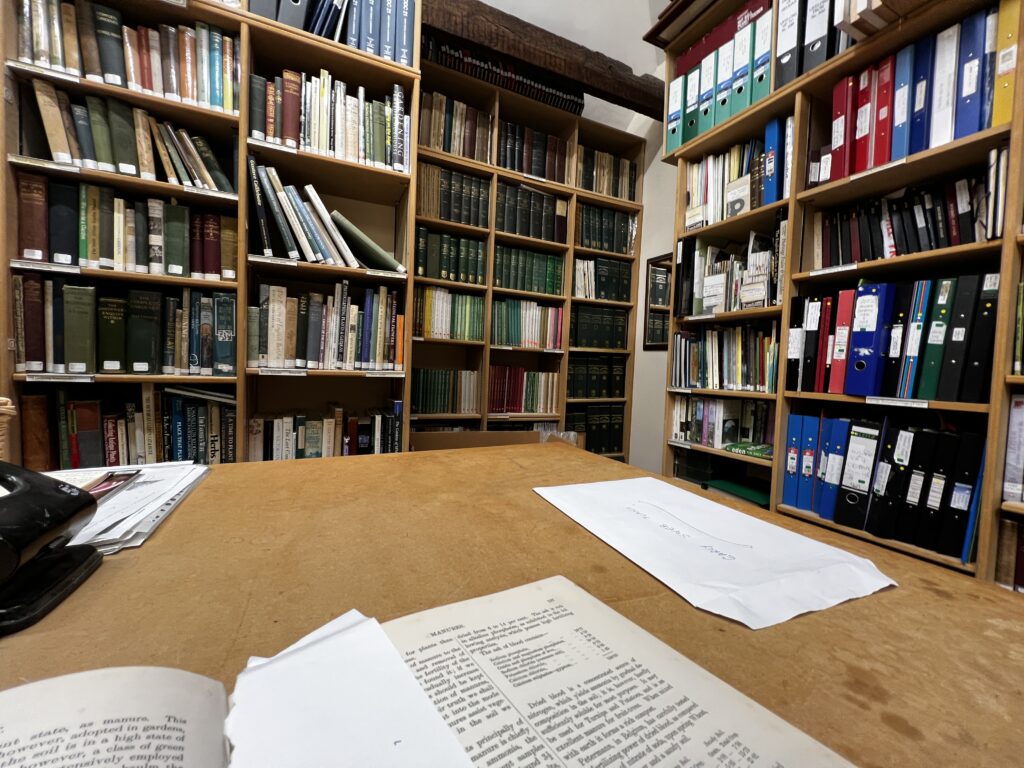
On our way to the Steward’s House, Candy showed me a rhododendron named for Sir Charles Lemon. We then went upstairs to the library and compared our research.
Candy brought out family trees linking the Tremayne, Lemon and Rashleigh families. She also retrieved a wrapped bundle of small diaries. They had belonged to Grace Tremayne, who married my sixth great-granduncle Charles Rashleigh.
I opened one of the diaries from 1776. Its pages were almost 250 years old.
Grace’s entry for Thursday, 21 March, contained one short sentence:
“Doctor Gould and his little boy dined here.”
Dr John Gould was my sixth great-grandfather. The little boy was his son John.
Another entry, dated Sunday, 1 September, read:
“At church in the morning. We drank tea at the old Mrs. Polkinghorne’s, Doctor and Mrs. Gould also there. Mr. Rashleigh came here in the evening.”
I had spent years following these people through pedigrees and historical records. Grace recorded them eating dinner, drinking tea and visiting one another.

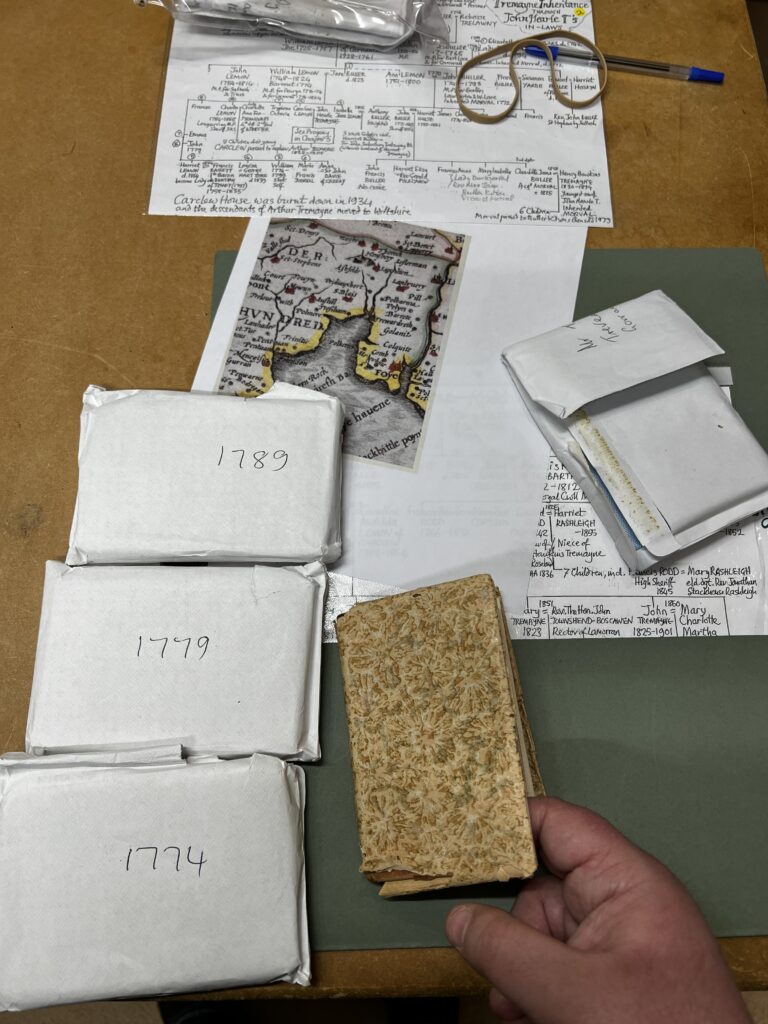
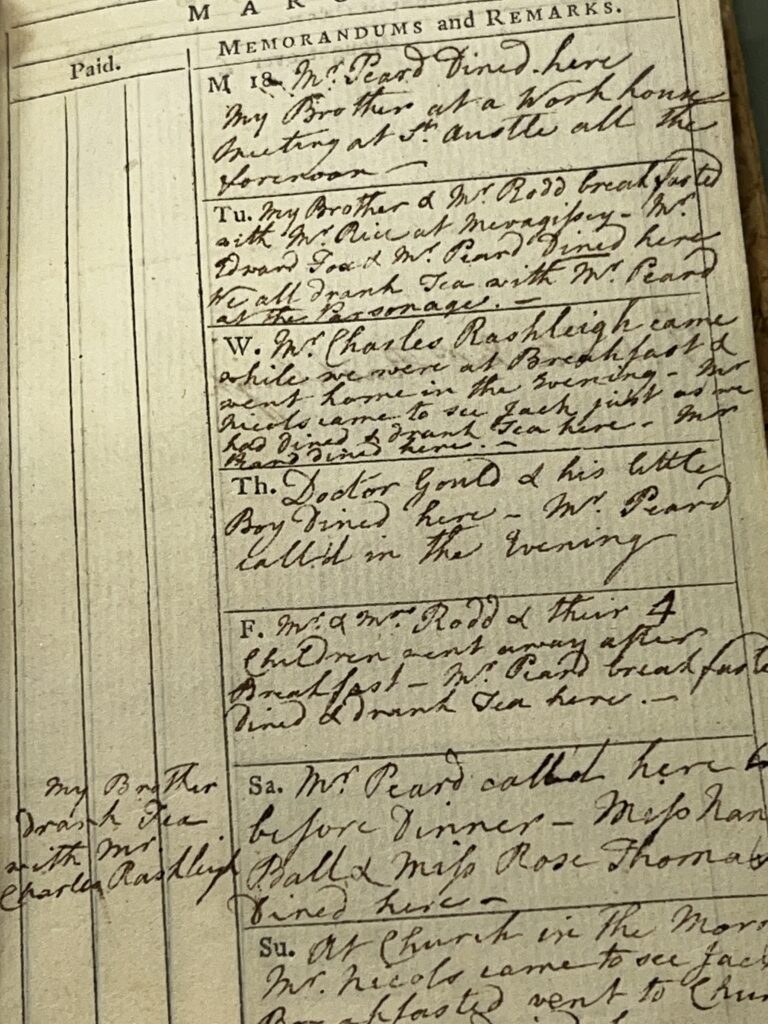
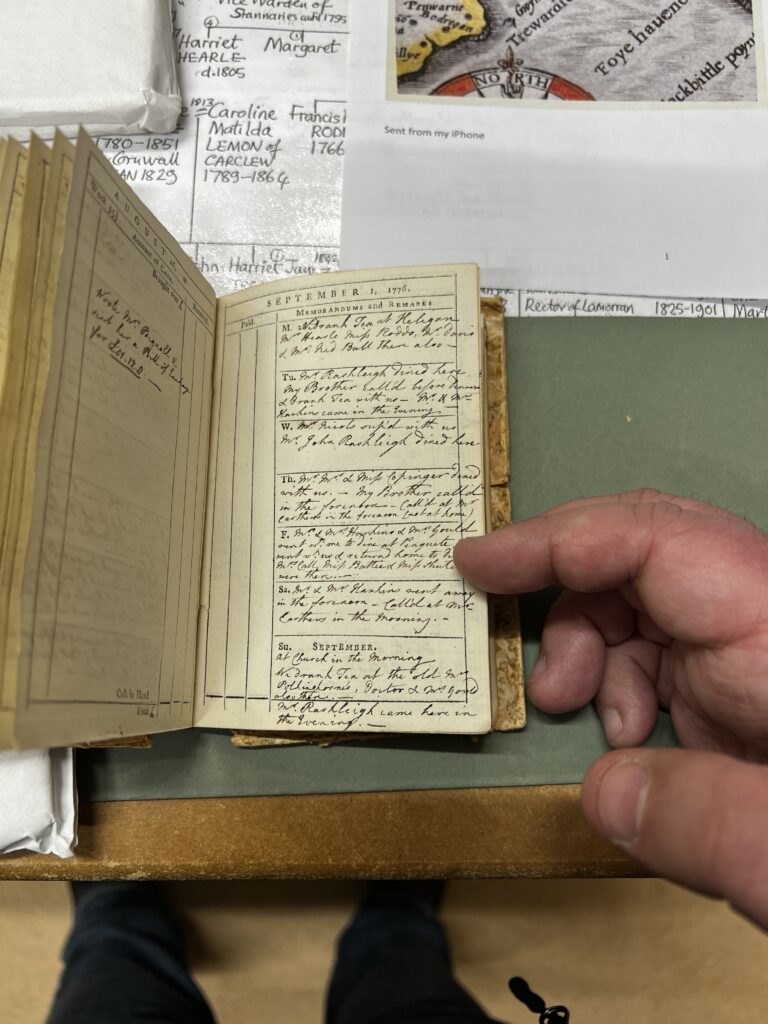
Those ordinary details brought me closer to them than a list of names and dates could. Dr Gould was no longer confined to a family tree. On a Thursday in March 1776, he brought his young son to Heligan for dinner.
Candy and I walked back to the car park as daylight began to fade. I thanked her and set off for the two-hour drive to Penzance.
I had arrived at Heligan hoping to understand how the Tremaynes, Rashleighs and Lemons fitted together. I left having held a diary written by one of them and having read her account of my ancestors at her table.
My thanks to Candy, Tim and the Heligan team for their time, their welcome and their care for the records entrusted to them.