In February 1754, the Great Work Mine Book listed my seventh great-grandfather, Captain Samuel Lemon, among the mine’s adventurers. His one-forty-eighth share entitled him to the same proportion of any profits and made him responsible for the same proportion of its costs.
Samuel joined the venture during a period of change. The Eastern and Western Great Work mines had become expensive to drain and had failed to produce enough ore to cover their costs. The adventurers surrendered the former mining sets, and Lord Godolphin granted a new set to George Blewett on 1 May 1753 for the benefit of a new group of partners.
The following February, the Mine Book recorded their names and shares. Samuel Lemon held one forty-eighth. The account identifies John Nancarrow, another shareholder, as the mine’s manager.
The partners then spent more than £7,000 on a pumping engine, shafts and adits. Profit remained uncertain. Some investors withdrew rather than accept further costs, while others increased their interests. A legal account concerning the mine preserves these details because one disputed share became the subject of a court case.
Samuel’s entry places him within that risky enterprise.
What did Samuel’s share mean?
Cornish mine investors were known as adventurers. They supplied capital and received a portion of the returns when the mine produced enough ore to make a profit. They also faced calls for more money when operating costs exceeded income.
A one-forty-eighth interest might appear small, but Great Work required substantial expenditure. Samuel had committed himself to a venture that needed pumping equipment, labour and continued underground development before its investors could expect a return.
The record calls him “Captain Samuel Lemon.” Mine captains supervised underground work or managed parts of a mining operation, but this entry does not identify Samuel as the manager of Great Work. It names John Nancarrow in that role.
Samuel may have gained mining experience before he invested, but I have not found a record that defines his duties at Great Work. His title and ownership share provide leads for further research rather than a complete account of his occupation.
The two Lemon brothers
Samuel’s elder brother William left a larger mark on Cornwall’s mining history.
Later accounts describe William as a mining boy who became involved with a tin-smelting works at Chyandour near Penzance. In 1724, he married Isabella Vibert. Money associated with her inheritance appears to have helped him invest in Wheal Fortune near Ludgvan.
Contemporary evidence for the precise amount remains difficult to establish, but later historians report that Wheal Fortune produced about £10,000 in profits for William. He moved to Truro and invested in the copper mines around Gwennap. He also served as mayor of Truro and sheriff of Cornwall.
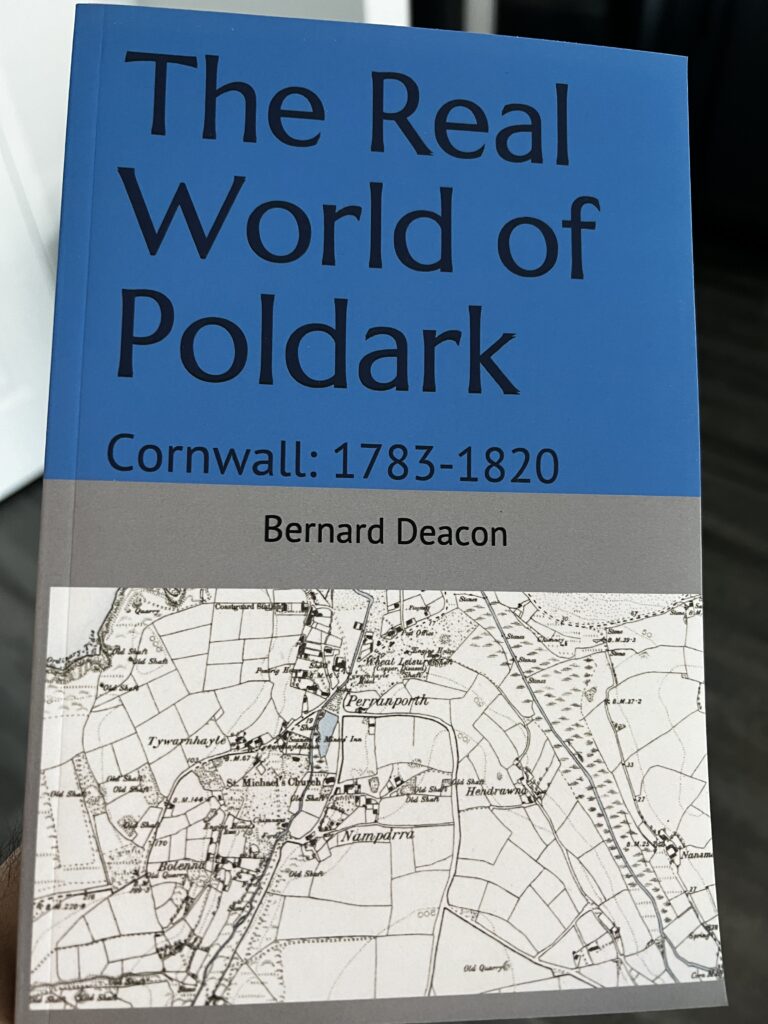
William’s mining interests helped carry the Lemon family into the county’s landed and political circles. Bernard Deacon discusses the family as an example of the social mobility created by Cornish mining wealth in The Rise of the Lemons.
Samuel’s surviving record tells a smaller story. His investment in Great Work shows that he participated in the same mining economy, though on a different scale.
Six years after the Mine Book entry, Samuel obtained a lease for a dwelling and land at Trennal from the Earl of Godolphin. Trennal stood close to Great Work and kept Samuel within the same part of Germoe parish. Its location would have made travel to the mine straightforward, but the lease does not prove that he supervised the workings from the farm.
Driving to Great Work
I visited Great Work Mine in January 2024 after spending part of the afternoon at Germoe Parish Church.
The route took me along narrow lanes bordered by high hedges. At one blind corner, I met a white Land Rover coming in the opposite direction. Neither of us had room to pass.
The other driver reversed to a farm entrance about a hundred yards behind her. As I drew alongside, I lowered my window to thank her. She apologized for her reversing, and I admitted that I was still learning how to drive on Cornish lanes.
She asked where I lived. I told her I had come from near Toronto, Canada. Her daughter lived in Toronto and had returned from a visit home a short time before. We spoke for a minute before continuing in opposite directions.
A Toronto connection was not what I expected to find on a single-track road outside Germoe.
The mine today
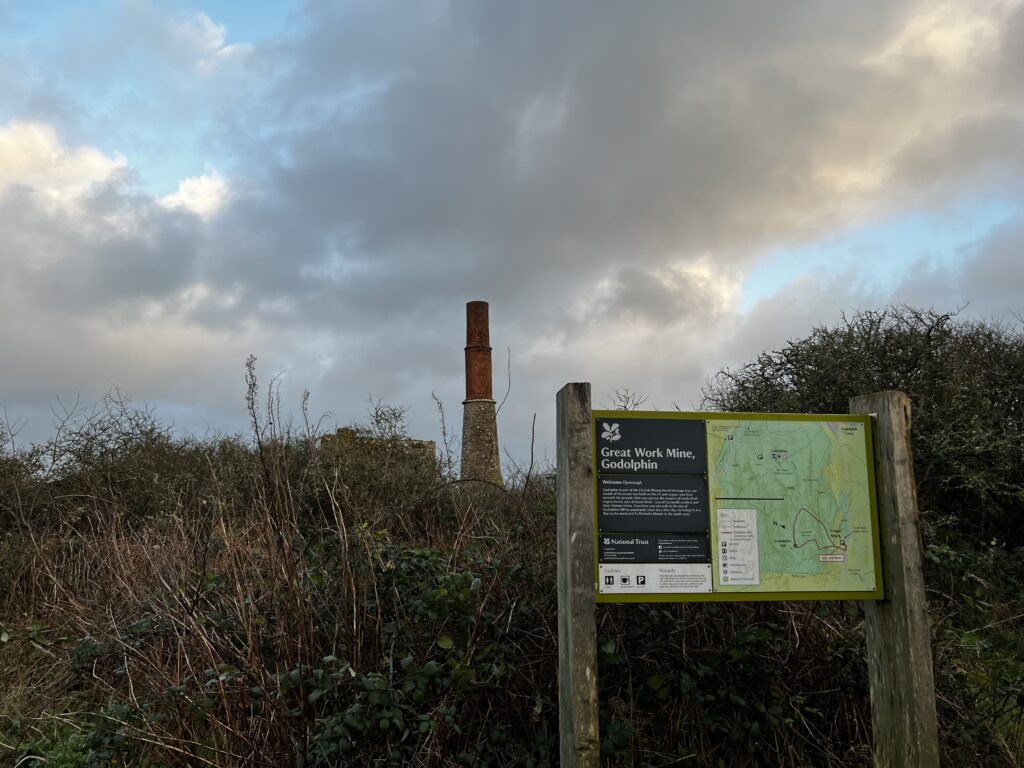
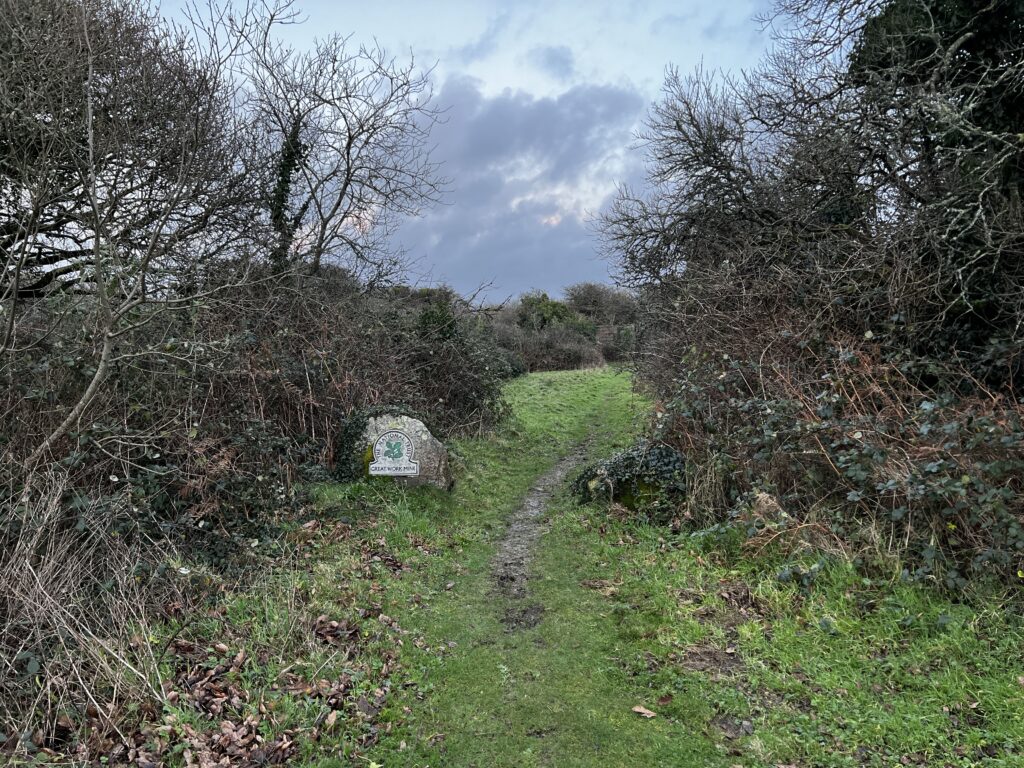
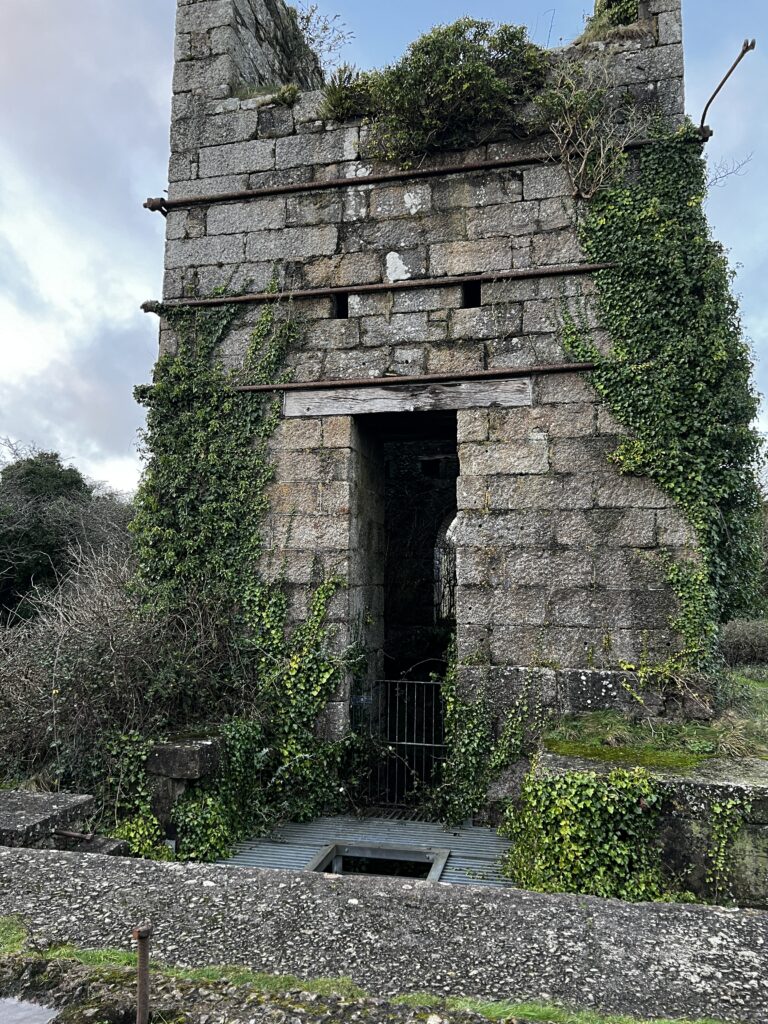
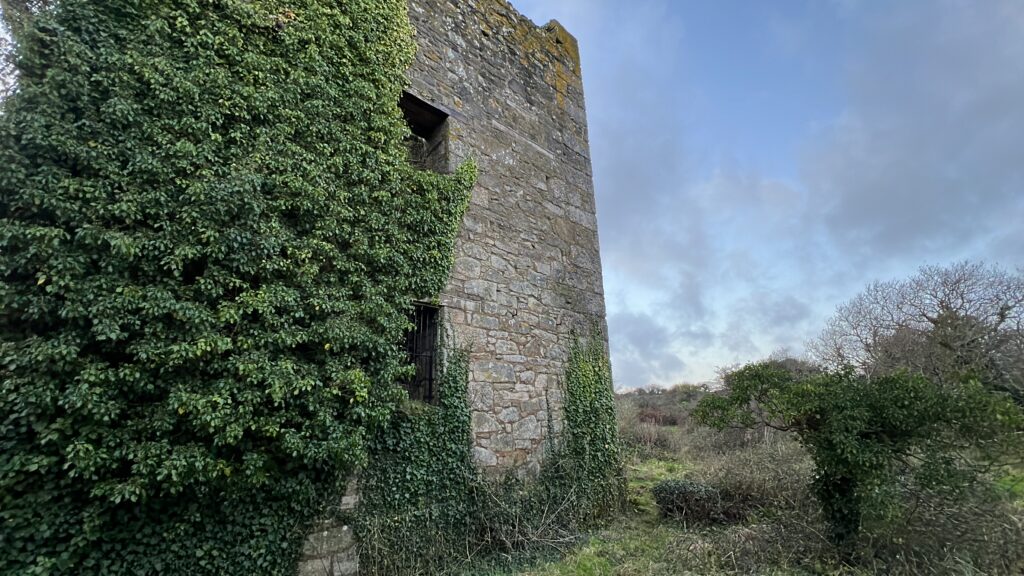
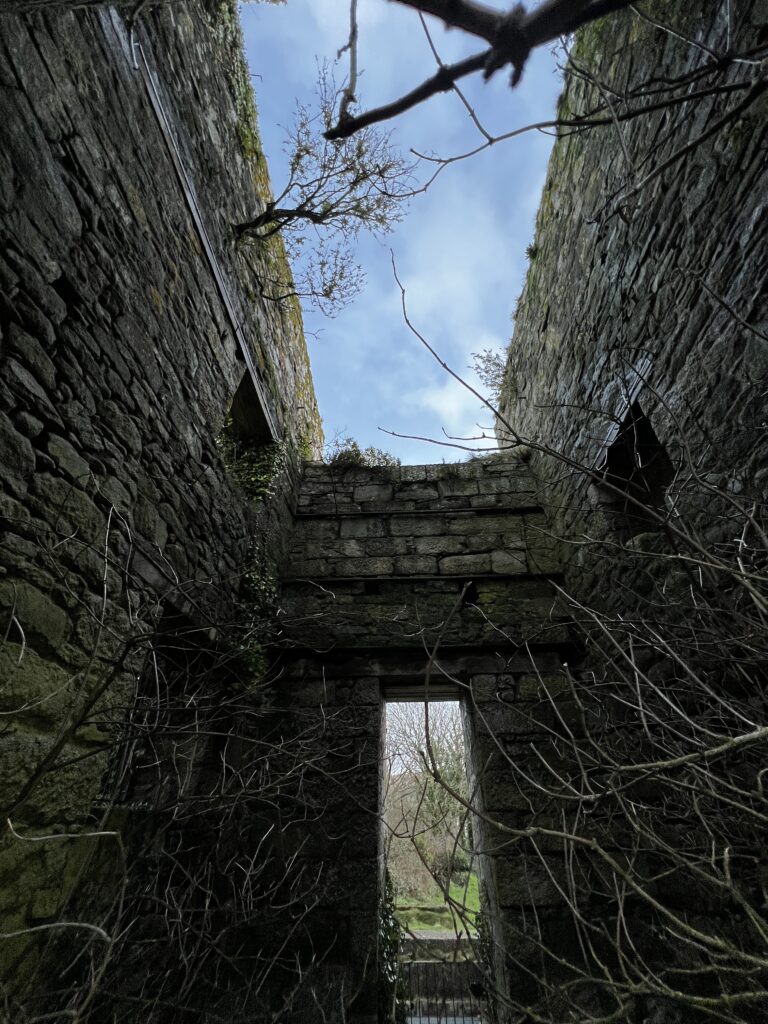
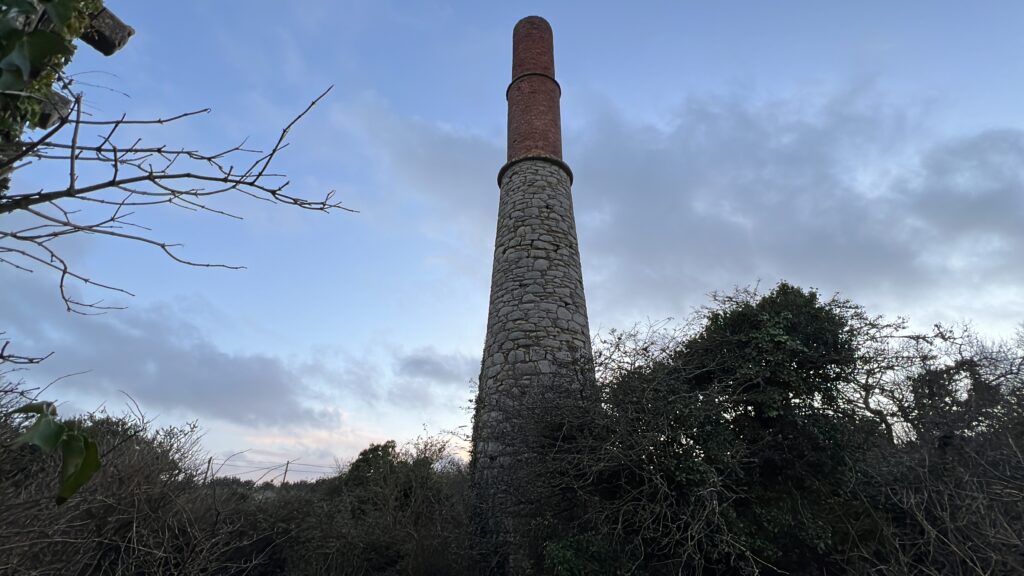
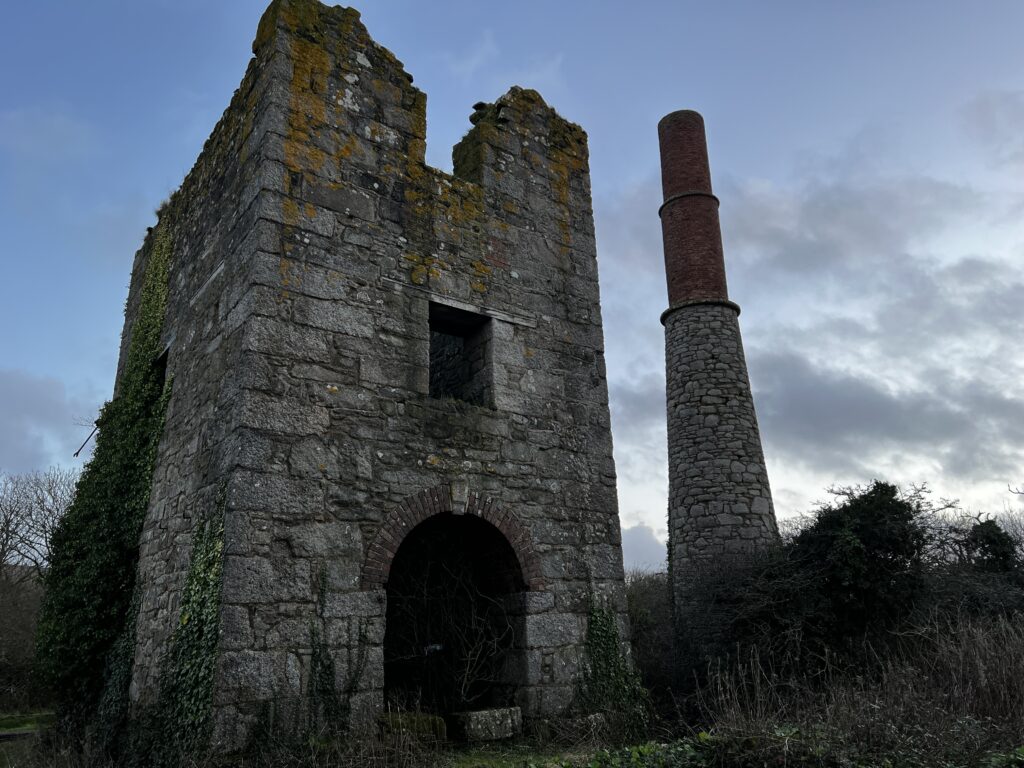
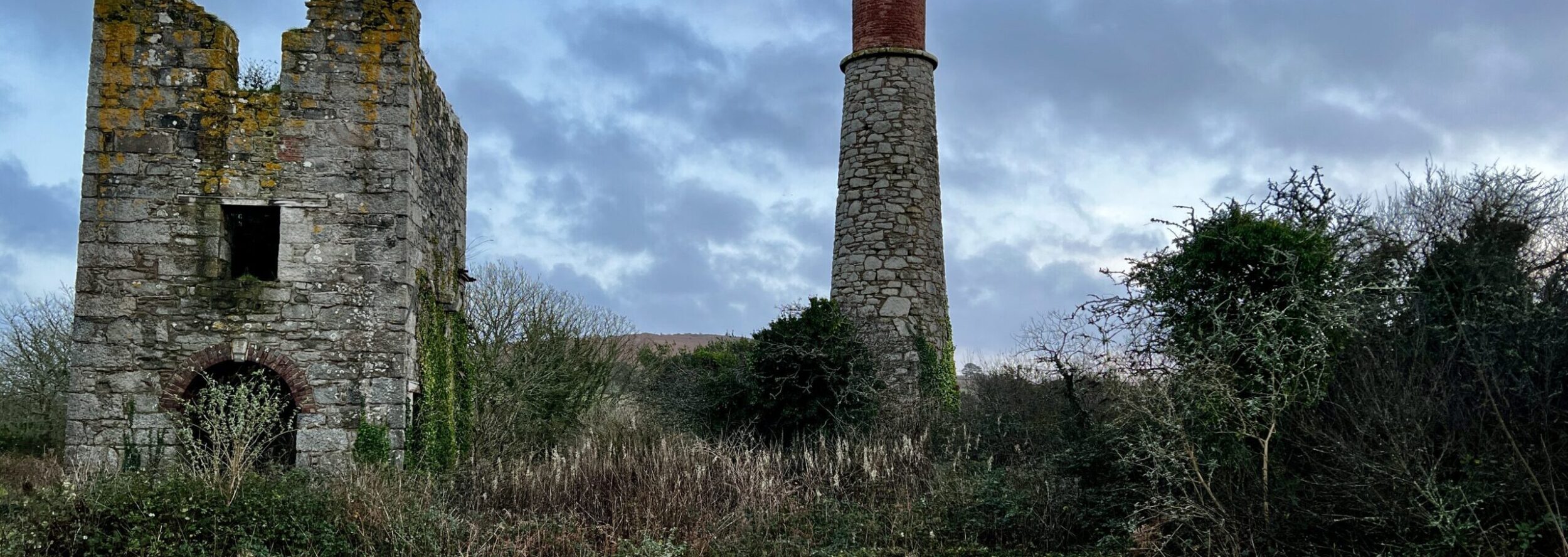
The chimney stack appeared above the trees before I reached the entrance. Great Work lies between Godolphin Hill and Tregonning Hill on the former Godolphin estate.
Mining took place in this area by the sixteenth century and may have begun much earlier. Miners followed tin-bearing lodes underground and relied on adits and pumping equipment to remove water. The mine passed through several periods of closure and reopening as prices, technology and the condition of its workings changed.
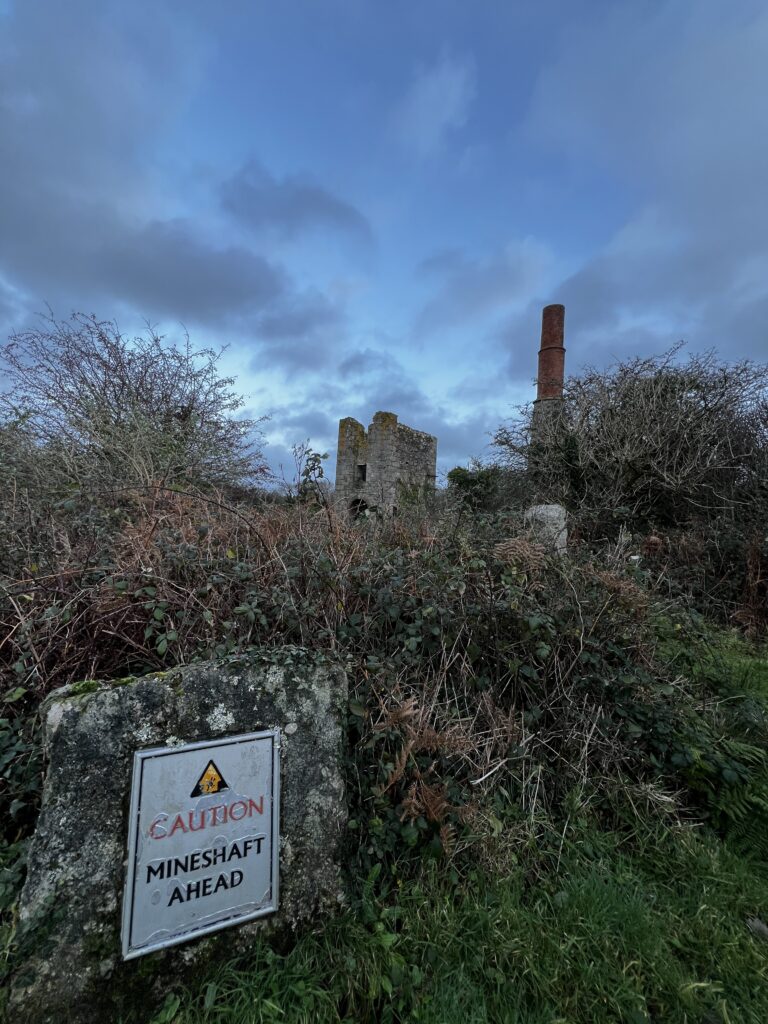
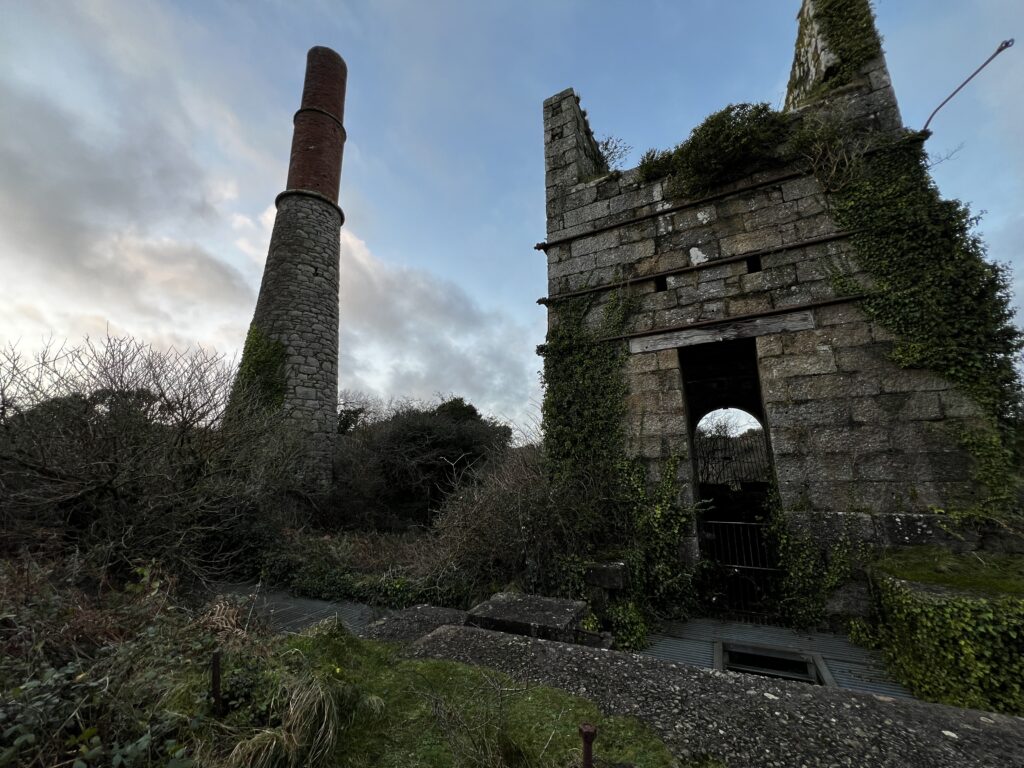
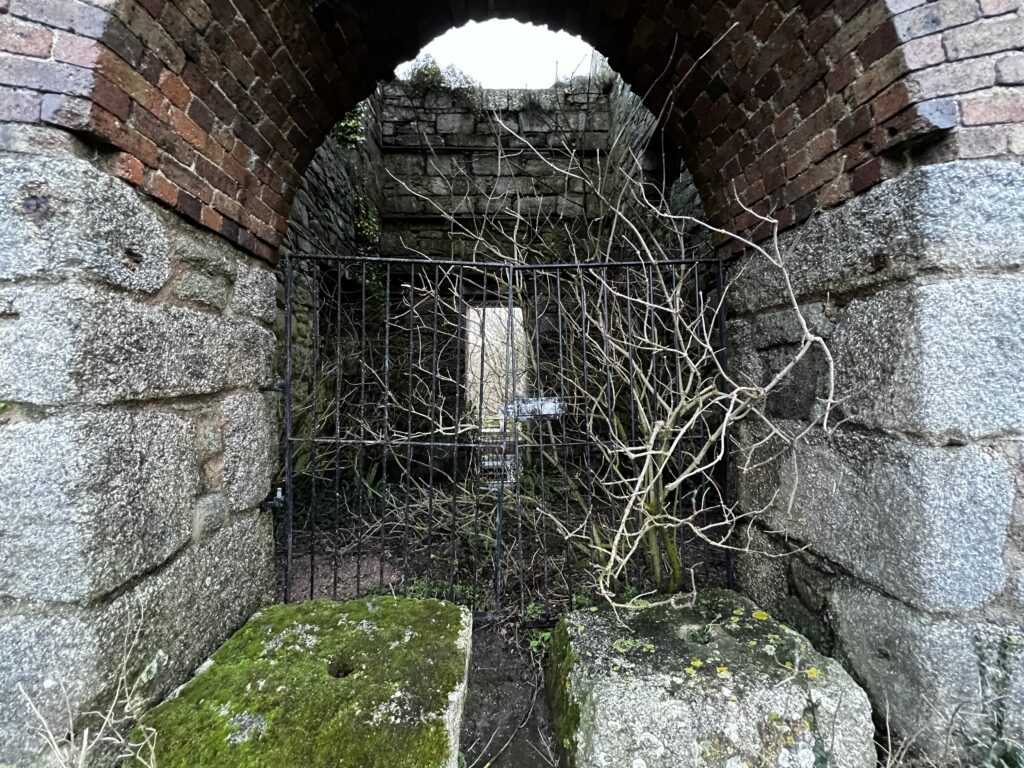
The ruins visible today belong to a later phase than Samuel’s investment. The surviving engine house and chimney served Leeds Shaft during the nineteenth century, about eighty years after the Mine Book recorded his share. Samuel would not have known these particular buildings.
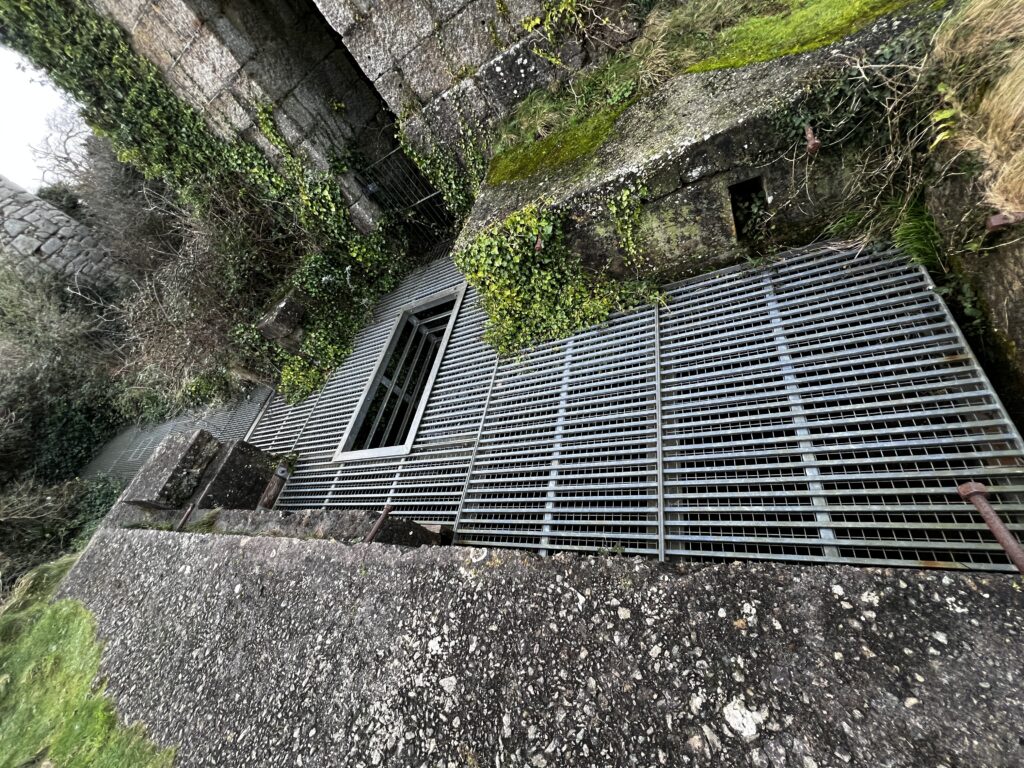
Leeds Shaft reached a depth of about 160 fathoms, or 293 metres. Its adit lay about 30 fathoms below the surface. A metal grate now covers the opening.
I stood at its edge and looked down. At close to 1,000 feet, the shaft approaches the height of First Canadian Place in Toronto. The comparison gave me a sense of its depth, although most of the workings remained hidden beneath the water and darkness.
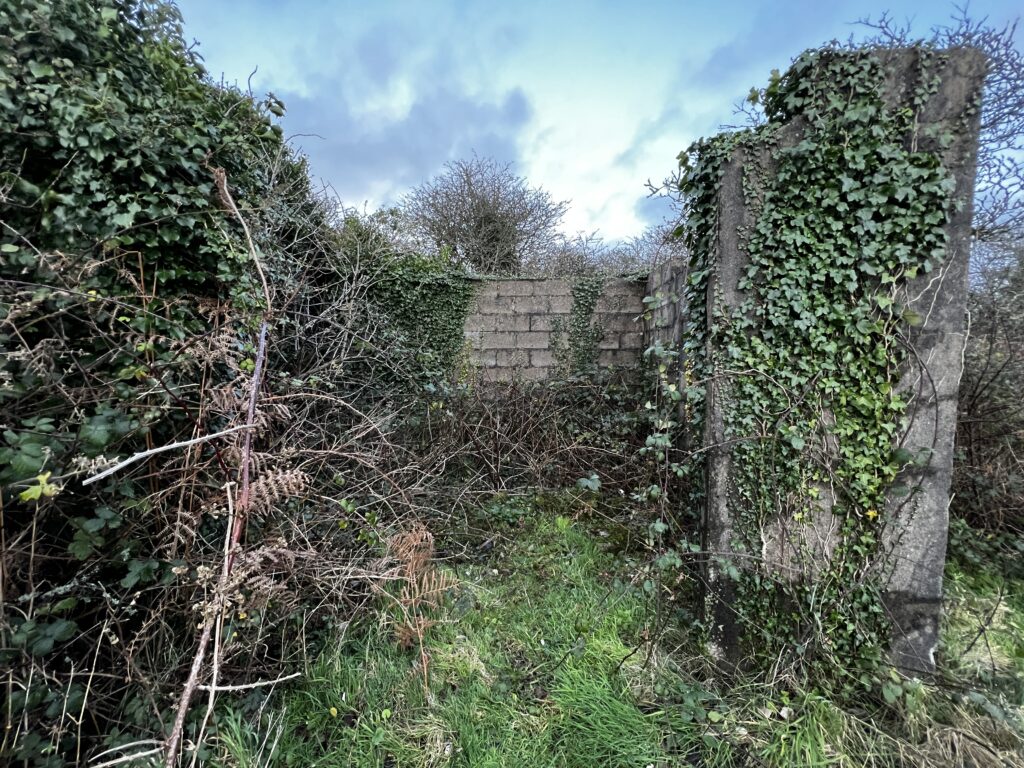
Around the engine house, vegetation covered the foundations of former buildings. The site gave few clues to the number of workers, engines and surface structures that had occupied it during different periods.
Great Work’s main operations ceased around 1930. Mining companies attempted to reopen parts of the workings during the 1930s, with activity at Deerpark Shaft ending in 1938. The National Trust now records and cares for the mining remains as part of the Godolphin estate and the Cornwall and West Devon Mining Landscape. National Trust Heritage Records documents the later workings.
Connecting the record with the place
The surviving engine house does not date from Samuel’s time, but the mine beneath it forms part of the same long-running enterprise. Standing beside Leeds Shaft helped me understand the scale of the ground in which he had invested.
The Mine Book establishes Samuel’s ownership and financial exposure. It does not tell me how often he visited, whether he worked underground or how much he gained or lost from his share. Records from later years may show how long he retained the interest and whether he invested in other mines.
His 1760 lease at Trennal adds another part of the picture. Samuel lived close to Great Work, acquired property in Germoe and participated in the parish as a churchwarden. The records place him within the local network of landowners, mine adventurers and estate tenants.
I left Great Work with fewer assumptions about Samuel and better questions about his life. His name in the Mine Book provides the starting point. The next task is to find out what he did with that one-forty-eighth share.